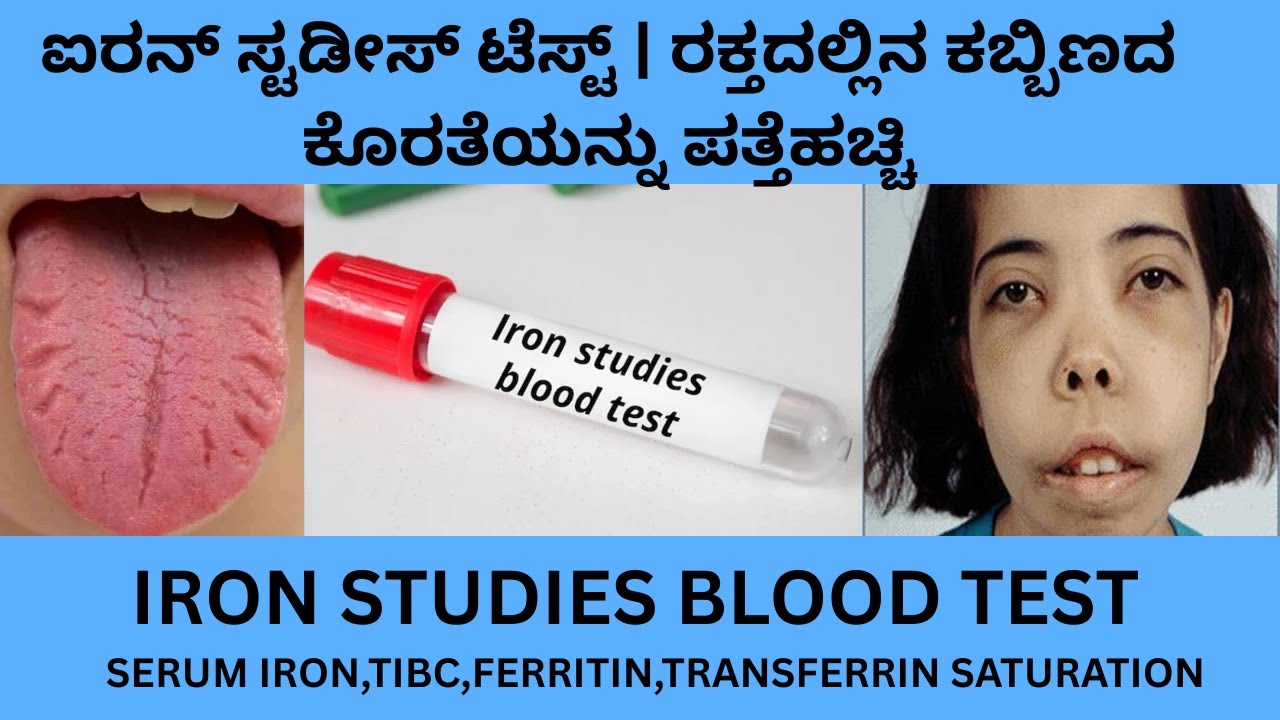
IRON STUDIES BLOOD TEST IN KANNADA.SERUM IRON FERRITIN TIBC AND TRANSFERRIN SATURATION IN KANNADA.
Автор: labdoctor #lab doctor #labdoctor
Загружено: 2026-01-15
Просмотров: 330
Connect with us for queries an
PHONE/Whats ap 7012398263
Email doctorlab78@gmail.com
Instagram - / labdoctor78
DISCLAIMER
Information provided on this channel is for educational purposes only, and does not substitute for professional medical advice. Advise users to consult a medical professional or healthcare provider if they're seeking medical advice, diagnoses, or treatment
DISCLAIMER
ಈ ಚಾನಲ್ನಲ್ಲಿ ಒದಗಿಸಲಾದ ಮಾಹಿತಿಯು ಶೈಕ್ಷಣಿಕ ಉದ್ದೇಶಗಳಿಗಾಗಿ ಮಾತ್ರ ಮತ್ತು ವೃತ್ತಿಪರ ವೈದ್ಯಕೀಯ ಸಲಹೆಯನ್ನು ಬದಲಿಸುವುದಿಲ್ಲ. ವೀಕ್ಷಕರು
ವೈದ್ಯಕೀಯ ಸಲಹೆ, ರೋಗನಿರ್ಣಯ ಅಥವಾ ಚಿಕಿತ್ಸೆಯನ್ನು ಬಯಸುತ್ತಿದ್ದರೆ ವೈದ್ಯಕೀಯ ವೃತ್ತಿಪರರು ಅಥವಾ ಆರೋಗ್ಯ ರಕ್ಷಣೆ ನೀಡುಗರನ್ನು
ಸಂಪರ್ಕಿಸಬೇಕು
ಕಬ್ಬಿಣ ಅಧ್ಯಯನ ಪರೀಕ್ಷೆ / ಪೂರ್ಣ ಕಬ್ಬಿಣ ಪ್ರೊಫೈಲ್ ಪರೀಕ್ಷೆಯ ಬಗ್ಗೆ
ಸೀರಮ್ ಕಬ್ಬಿಣದ ಪರೀಕ್ಷೆ:
ಟ್ರಾನ್ಸ್ಫೆರಿನ್ ಪರೀಕ್ಷೆ:What is an iron studies blood test?
Iron is an important nutrient that plays an essential role in many cells in your body, including your blood cells. Iron is a vital part of haemoglobin, a protein found in red blood cells that helps carry oxygen around your body.What tests are included in an iron studies blood test?
There are a few different blood tests that look at the amount of iron in your body.
A ferritin test — measures the amount of stored iron in your body.
A serum iron test — measures the iron circulating in your blood.
A transferrin test or a total iron-binding capacity test (TIBC) — measures how well your body transports iron in your blood.
Transferrin saturation — is a calculation to find the percentage of your transferrin that contains iron.How do I prepare for an iron studies test?
How you prepare will depend on which type of blood test you're having.
For some iron studies tests, you will need to fast for 12 hours. This is because other foods and drinks can affect your results. In this case, you can only drink water.
Most people have the test in the morning, so it doesn't interfere with their meals. If you take iron supplements, do not take them before the test.What tests are included in the iron studies panel?
The tests used to assess your iron status include:
Ferritin – iron storage
When the iron stored in ferritin is released into the blood stream it is transported to the bone marrow where it is incorporated into new red blood cells. As this happens, a small amount of ferritin is released from the cells and circulates in the blood. Measuring the level of ferritin in your blood is a good indication of the amount of iron stored in your body.
Transferrin and total iron binding capacity (TIBC) - iron transportation
Your body makes transferrin in relation to your need for iron. When iron stores are low, transferrin levels increase. When there is too much iron in the body transferrin levels are low.
Transferrin and TIBC are different tests that measure the same thing — the amount of iron that can be transported in your blood. TIBC is an older test that is no longer routinely used by most labs.
Serum iron concentration
The amount of iron that circulates in the blood varies markedly throughout the day.
Measurement of iron alone is rarely helpful and needs to be combined with the results of other iron study tests to provide accurate results. It is most useful in calculating transferrin saturation.
Transferrin saturation
The serum iron result and the transferrin results can be combined to calculate the transferrin saturation (TFSAT). The TFSAT shows what percentage of all the transferrin in the blood contains iron. The TFSAT level is usually between 15 and 45 per cent. In iron deficiency, the TFSAT level will be low, and if there is too much iron in the body the TFSAT will be high.
Testing for iron status
If a problem with iron is suspected, your medical team may first request a full blood count (FBC), which gives information on the number, size and shape of your red blood cells and how much haemoglobin is in the blood. If the FBC suggests iron deficiency, iron studies will be requested as the next investigation.
Iron-related health disorders
Too little iron (iron deficiency)
Causes of iron deficiency include:
Not enough iron in your diet, for example, vegetarian and vegan diets.
Pregnancy, because you need more iron to support the growing baby.
An inability to absorb iron, for example if you have had bowel or stomach surgery or have Inflammatory Bowel Disease (IBD).
Chronic bleeding, for example, iron loss from a bleeding stomach ulcer.
Iron deficiency comes on gradually. When the rate of iron loss is more than the amount of iron you absorb from your diet the first thing that occurs is that iron stores are used up. At this stage, ferritin will be low, but iron and transferrin may be normal and there is no anaemia.
As iron deficiency worsens, blood iron levels fall, TIBC and transferrin rise, and red blood cells may start to become small and pale, but there are still enough red blood cells.
Too much iron (iron overload, haemochromatosis)
I
Доступные форматы для скачивания:
Скачать видео mp4
-
Информация по загрузке: