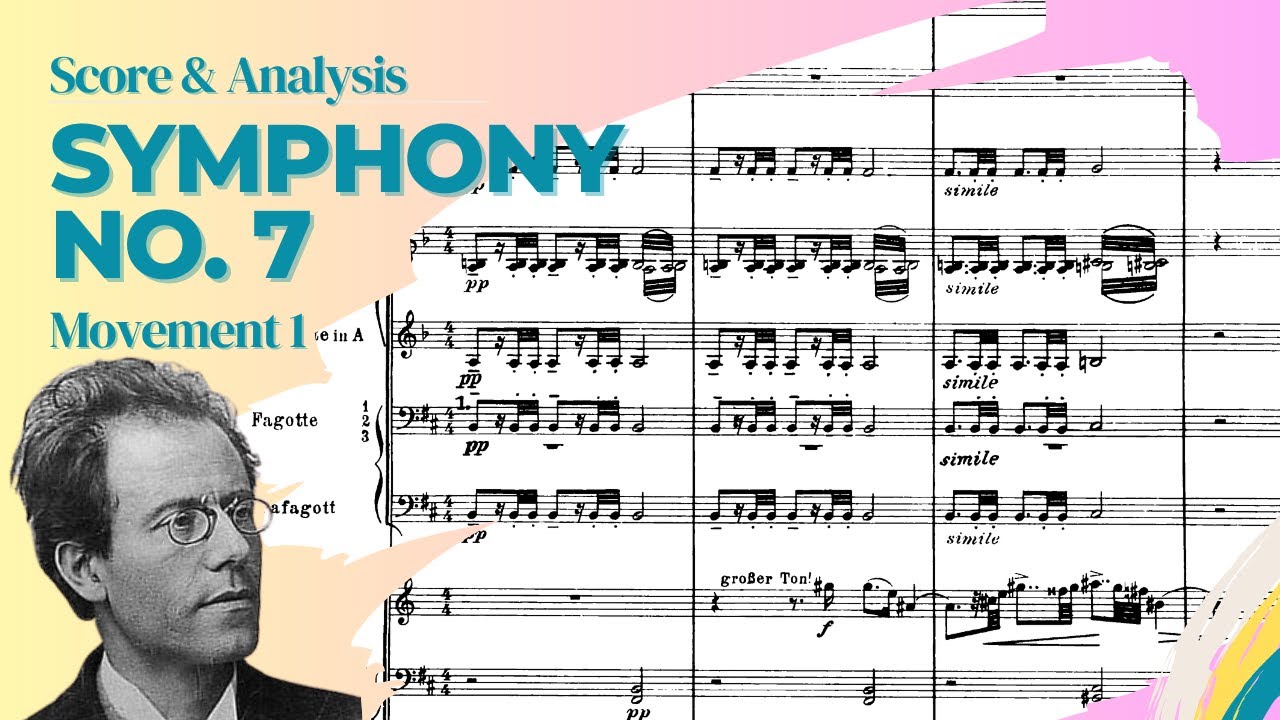
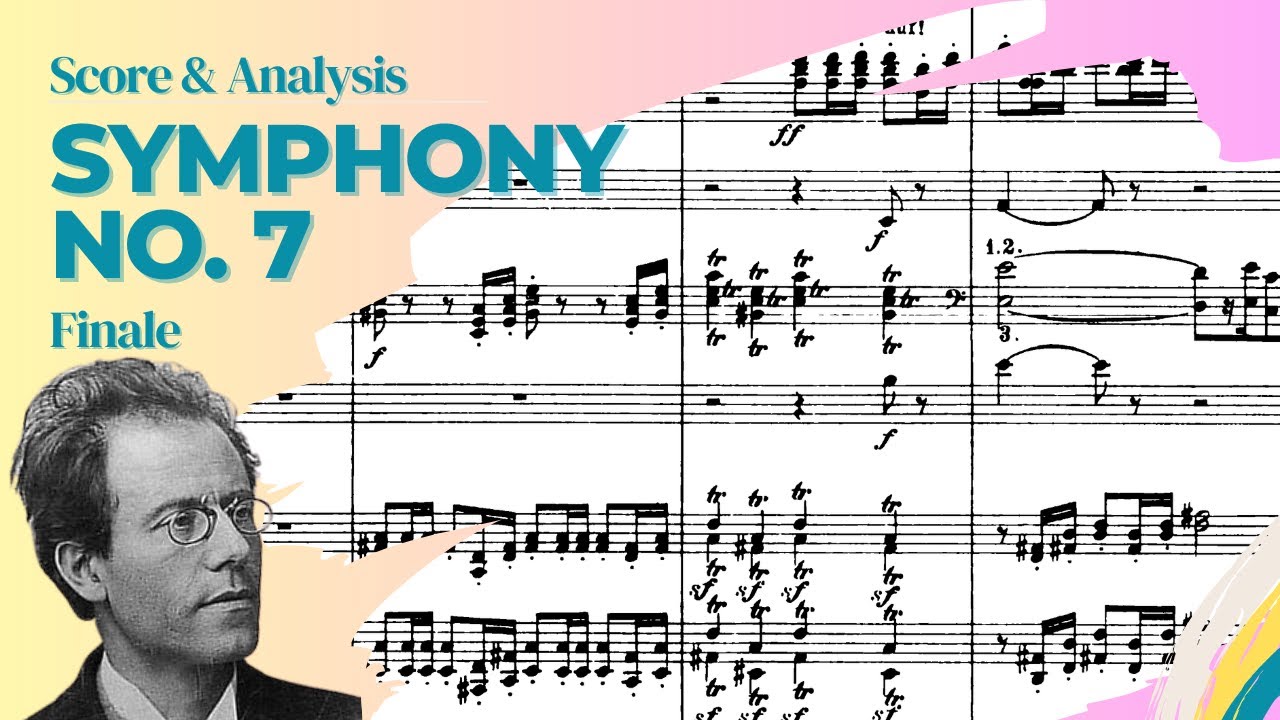
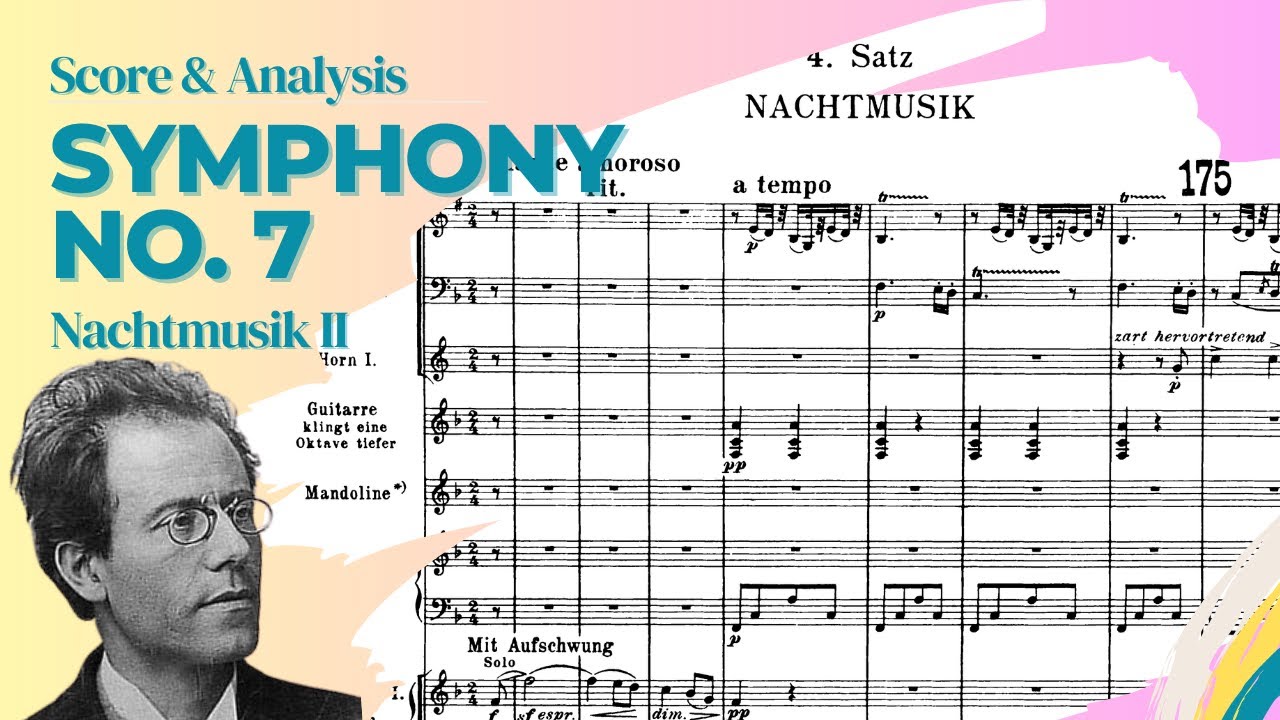
Mahler - Symphony no.7 (movement 1): Score and Analysis
Автор: Jakob Spindler
Загружено: 2023-03-31
Просмотров: 5200
Bernstein & New York Philharmonic
Introduction to the symphony in the pinned comment
INTRODUCTION
0:00 – B minor. Over a brooding, dissonant march, a tenor horn introduces us to the main theme. Raw, undeveloped, filled with tritones and forceful rhythms. The motives engage in development right away through constantly varying their pitches, recycling parts of themselves as accompaniment, passing material from one instrument to the next, and violently modulating.
EXPOSITION
3:17 – Theme 1, E minor. The march quality of the introduction intensifies, and the motives from the introduction gain sufficient momentum to assemble into a stable theme. The melodic tritones are “tempered” and the rhythms are much less forceful. The constant stream of thematic development continues, with each of the theme’s 3 phrases offering us a new version of the core motives, until giving birth to an important oscillating triplet figure in the third phrase.
3:43 – Transition. Dotted leaps and the triplet figure of T1 begin to transform.
4:40 – Theme 2. Born through thematic development and transformations of T1 motives. Highly chromatic, melodic, expressive and suspended.
5:34 – T2’s attempt to cadence is poised by the return of T1.
DEVELOPMENT
6:13 – Different phrases of T1 all play at the same time, acting as accompaniment to each other. The theme is consequently shortened.
6:22 – Transition, with different versions of core motives all comingled. T2’s accompaniment takes on the rhythm of T1, while T1’s figures take on the melodic shape of T2.
6:49 – This leads us to the music of the introduction, where motives from both themes are interpreted, developed, and combined through the grotesque atmosphere. The line is especially blurred between the rising gestures of T2 and the oscillating triplet figures of T1.
8:28 – Trumpet fanfares halt the sonata process and open a new world. Music is suspended below a pedal tone in the violins. Motives from the introduction are tempered and played in the background. The development tries to continue but is again silenced and the new environment is soon fully set.
11:30 – A harp glissando brings back the sonata themes, now completely transformed by their surroundings into gorgeous melodies. T2 blossoms in the violins, while T1 acts as gentle accompaniment in the horns and winds.
RECAPITULATION
12:59 – Cadence interrupted by the return of the sonata – recapitulation of the introduction. T1 instantly returns to its grotesque version. T2 motives creep in but are denied power in the world of the introduction and merge with motives from T1.
15:29 – T1, E minor. More agitated. Each phrase is lengthened and made less stable through constant motivic development.
16:24 – Transition.
17:14 – T2, accompanied by motives from T1. Manages to secure an active dominant of the major tonic, supported by a four-sharp key signature.
18:35 – Cadence even more graphically denied with the return of T1, collapsing into minor. Despite this critical structural failure, an insanely exciting coda follows, where T1 combines all of the different versions of its motives so far with each other in a series of clean and stable phrases. The movement ends triumphantly in E major.
Mahler symphony no.7 analysis playlist: • Mahler - Symphony no.7: Score and Analysis
Доступные форматы для скачивания:
Скачать видео mp4
-
Информация по загрузке:






![Anton Bruckner - Symphony No.4 [w/Score]](https://imager.clipsaver.ru/CsL_GWAobRk/max.jpg)




![Mahler's 10th Symphony [MIS/Cooke III] (Audio + Handwritten Score)](https://imager.clipsaver.ru/2bWykCZXGDs/max.jpg)
