Gerunds and Infinitives (Verbs): Fun & humorous ESL video to peak your students’ engagement!
Автор: oomongzu oomongzu
Загружено: 2016-08-03
Просмотров: 590936
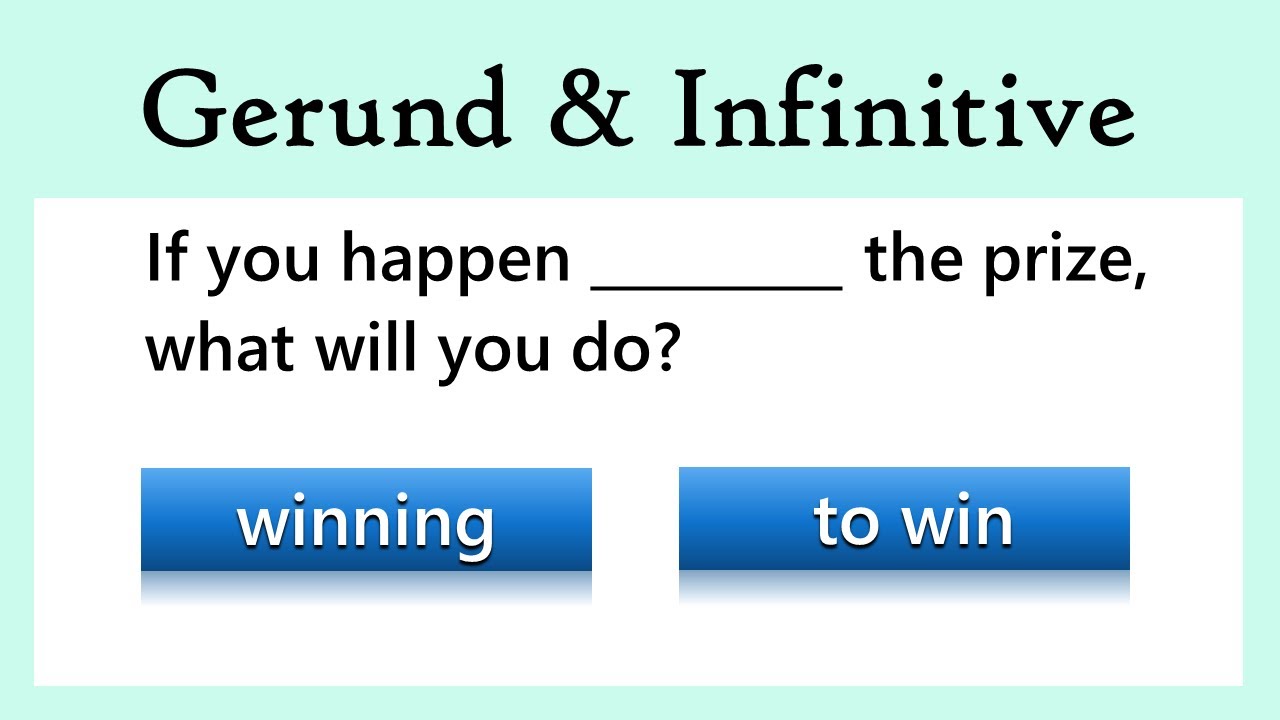
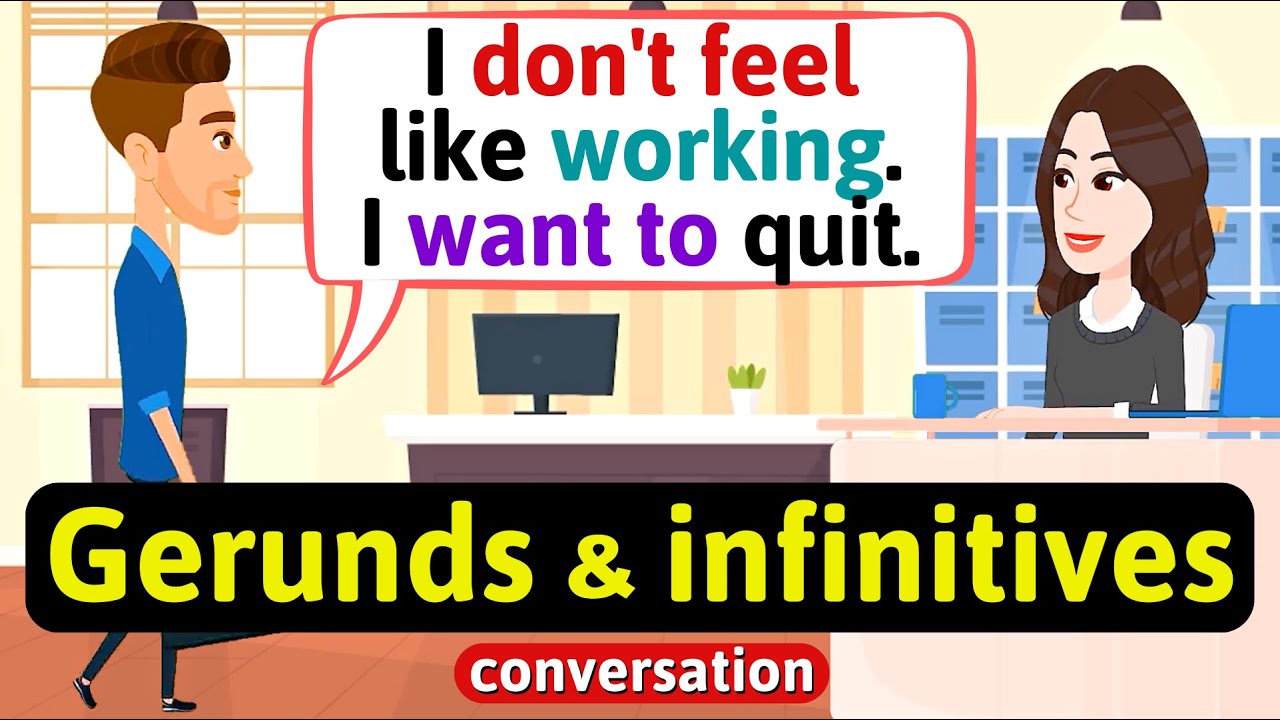
This creative & engaging animated ESL video teaches learners about gerunds and infinitives (verbs) at the upper-intermediate level. Use this in class and have a blast!
If you love our videos, please support us at Patreon: / oomongzu
WEBSITE: http://oomongzu.com
For more creative, engaging and interactive animated grammar teaching videos, please visit our website.
For the “No Music” version of this video, please go here: • Gerunds and Infinitives (Verbs) (No Music)
Title of English / ESL Video:
Gerunds and Infinitives (Verbs)
Target English Grammar:
Gerunds and Infinitives (Verbs):
– Gerund verbs.
– Infinitives with “to”.
– Infinitives without “to”.
Student Proficiency Level:
Upper-intermediate level grammar.
Suggested Courses:
General English
Instructions:
– Play the video in class after delivering a warm-up activity first.
– Pause the video whenever the narrator asks students a question to give students time to answer. For example, after elicitations and concept checking questions (CCQs).
Summary of English Grammar: Gerunds and Infinitives (Verbs)
Approximate chronological order:
Gerunds:
– Elicitation of target grammar.
Form:
– Verb + ing
Function:
– Gerunds act as nouns or pronouns.
Specific Uses:
– Likes/dislikes: I love shopping.
– General activities: I’m good at dancing.
– Abstract ideas: I’m not used to working late.
– When there is no noun to describe something: Catching the train during peak hour is really annoying.
– When speaking or writing in incomplete sentences: What are your hobbies? Watching TV and surfing the Internet.
Use Gerunds:
– As the subject of a sentence: Flying makes me nervous.
– As the object of a sentence: I find listening to music very relaxing.
– After prepositions: The police arrested her for speeding.
– After phrasal verbs: She ended up going to prison.
– After some verbs including: admit, avoid, can’t help, carry on, consider, deny, finish, give up, imagine, involve, keep on, miss, postpone, practice, risk, spend, stop, suggest.
– Example: You should avoid taking a stroll outside during a hurricane.
– After words for expressing like/dislike: can’t stand, crazy about, enjoy, fancy, hate, like/dislike, keen on, love, don’t mind, prefer.
– Example: I love skydiving.
Use Infinitives (with “to”):
– To express a reason or purpose: He ran to avoid being caught.
– After adjectives: This safe is easy to break open.
– After some verbs, including: can/can’t afford, agree, appear, be able to, can’t wait, decide, expect, forget, happen, have (got), help, hope, learn, manage, need, offer, plan, pretend, promise, refuse, remember, seem, teach, tend, threaten, try, want, would like.
– Example: He threatened to hurt the man.
*Infinitives are not generally used as the subject of sentences.
Use the Infinitive (without “to”) after:
– Modal verbs: You should see a doctor.
– Auxiliary verbs: We‘ll go swimming tomorrow.
– let, make and help.
– Example 1: Let‘s go shopping.
– Example 2: Help me carry my shoes.
– Example 3: Sometimes she makes me want to scream!
Negative Forms:
Target language form the negative with “not”:
– Gerunds: I don’t like shopping.
– Infinitives (with “to”): I don’t want to go shopping.
– Infinitives (without “to”): I won’t go shopping.
These verbs can be followed with either the gerund or infinitive (with “to”) with no difference in meaning:
– begin, continue, prefer, start. For example:
– I prefer doing yoga.
– I prefer to do yoga.
These verbs can be followed with either the gerund or infinitive (with “to”), but the meaning is different:
– try, remember, forget, need.
– Example 1:
– Try not to hurt yourself again. (This means, make an effort to do something.)
– You should try going to an Italian restaurant. (This means, try something to see if you like it.)
– Example 2:
– Remember to fasten your seatbelt. (This means, don’t forget something.)
– I remember seeing you in high school. (This means, having a memory of something.)
– Example 3:
– I forgot to bring my luggage. (This means, you didn’t remember something.)
– I’ll never forget seeing the beautiful scenery. (This means, you did something and you won’t forget it. It’s more common in the negative form.)
– Example 4:
– You need to buy a new car. (This means, you must do something.)
– That car needs repairing. (This means, the subject needs something.)

Доступные форматы для скачивания:
Скачать видео mp4
-
Информация по загрузке: