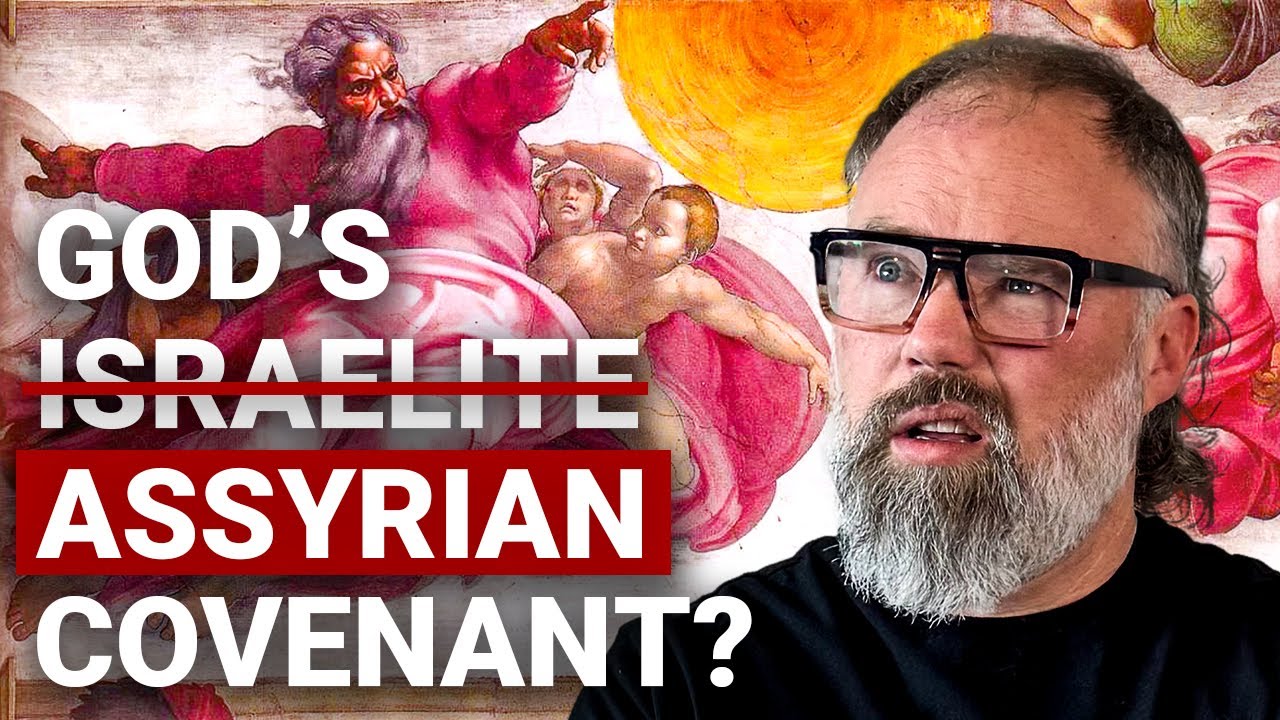
Must Christians Keep Kosher? Decoding Matthew’s Answer
Автор: Bart D. Ehrman
Загружено: 2026-01-20
Просмотров: 11514
Links Mentioned in this Episode:
https://www.bartehrman.com/500 - Dive into the complex history, diverse beliefs, and political evolution of early Christianity with one of the world’s most acclaimed historians, Paula Fredriksen. We start Jan 27 and run through April 23. And if you sign up to the Biblical Studies Academy this month (bartehrman.com/bsa) and as well as gaining access to this and all of the courses in our catalogue, once your 14-day free trial ends and you've made your first payment, we'll send you a free copy of Dr. Fredriksen’s book Ancient Christianities: The First 500 Years to act as your textbook for the course. Offer applies until Jan. 27th.
Episode Description
The rise and spread of Christianity from its Jewish roots posed fundamental questions about religious identity: Should Gentile (non-Jewish) followers of Jesus be expected to follow the Jewish law, including keeping kosher? Should Jewish followers abandon these practices? In Episode 170, Megan Lewis and Bart Ehrman unpack the complexities of Matthew’s approach to Jewish law—exploring what “keeping kosher” means, how Jesus’ teaching in Matthew both affirms and reinterprets traditional law, and the practical and theological distinctions made for Jews and Gentiles as Christianity evolved.
The episode opens with a clear introduction of the central dilemma. Megan Lewis frames the historical setting: The initial Jesus movement was thoroughly Jewish, but the inclusion of Gentiles brought real tensions around food laws, circumcision, and Sabbath observance. Bart Ehrman then explains how keeping kosher in Jewish tradition means following dietary codes from the Law of Moses, with rules about what foods can be eaten and how they must be prepared—practices still observed by many Jews today.
Diving into Matthew’s Gospel, Bart Ehrman highlights the famously ambiguous nature of Matthew’s position. While Jesus in Matthew says he has “not come to abolish the Law but to fulfill it" (Matthew 5:17-20), he rarely specifies whether this includes ritual observance such as dietary laws. Rather, Matthew’s Jesus intensifies the moral commands—teaching that anger carries the weight of murder, or lust that of adultery—without directly addressing kosher or circumcision.
Crucially, Matthew includes subtle hints about ritual observance. Bart Ehrman points out that, unlike Mark, Matthew omits the line “thus he declared all foods clean,” suggesting he does not explicitly override kosher laws. Similarly, Matthew assumes Sabbath observance but does not make it central to salvation. Instead, the main focus for both Jews and Gentiles is radical love—doing unto others as you would have them do to you (the Golden Rule), loving God, and loving your neighbor.
The conversation clarifies that for Matthew, one’s ultimate acceptance into God’s kingdom hinges not on ritual law but on ethical practice—helping those in need, living justly, and enacting compassion. In memorable passages like the parable of the sheep and the goats (Matthew 25), Bart Ehrman demonstrates that Matthew sees salvation as rooted in action, not ethnicity, religious status, or even formal conversion.
The episode closes with a Q&A segment addressing topics such as: Why were Greek-speaking Gospel writers so concerned with Jesus’ fulfillment of Jewish prophecy? Who really killed Jesus—the Jews or the Romans? Why don’t the New Testament books say more about the destruction of the Temple? Bart Ehrman explores these tough questions with scholarly nuance and trademark clarity.
3 Key Takeaways
Matthew upholds the Jewish law, but its core is radical love. For Matthew, ritual observance matters—especially for Jewish followers of Jesus—but the true heart of the law is ethical: loving God and loving others.
Gentile followers are not explicitly required by Matthew to keep all Jewish ritual commandments. Their inclusion in the kingdom is based on mercy, compassion, and justice—core values reflected in how they treat others.
Salvation in Matthew is not about mere religious identity or ritual observance, but about living out the fundamental commandments to love God and one’s neighbor—regardless of ethnicity or background.
Key Points
The early Jesus movement was Jewish; as Gentiles joined, questions about observance of the law—including kosher rules—became central.
Keeping kosher involves specific dietary regulations found in the Law of Moses, shaping Jewish identity then and now.
The Gospel of Matthew is more insistent than other Gospels that Jesus’ followers should “keep” the Jewish law, intensifying its ethical requirements.
Jesus in Matthew never abolishes the Law; he claims to fulfill it and urges followers to follow it “better than the scribes and Pharisees.”
Jesus’ reinterpretation of the law in Matthew is typically moral (“Don’t get angry,” “Don’t lust”), rather than expanding or abolishing ritual.

Доступные форматы для скачивания:
Скачать видео mp4
-
Информация по загрузке: