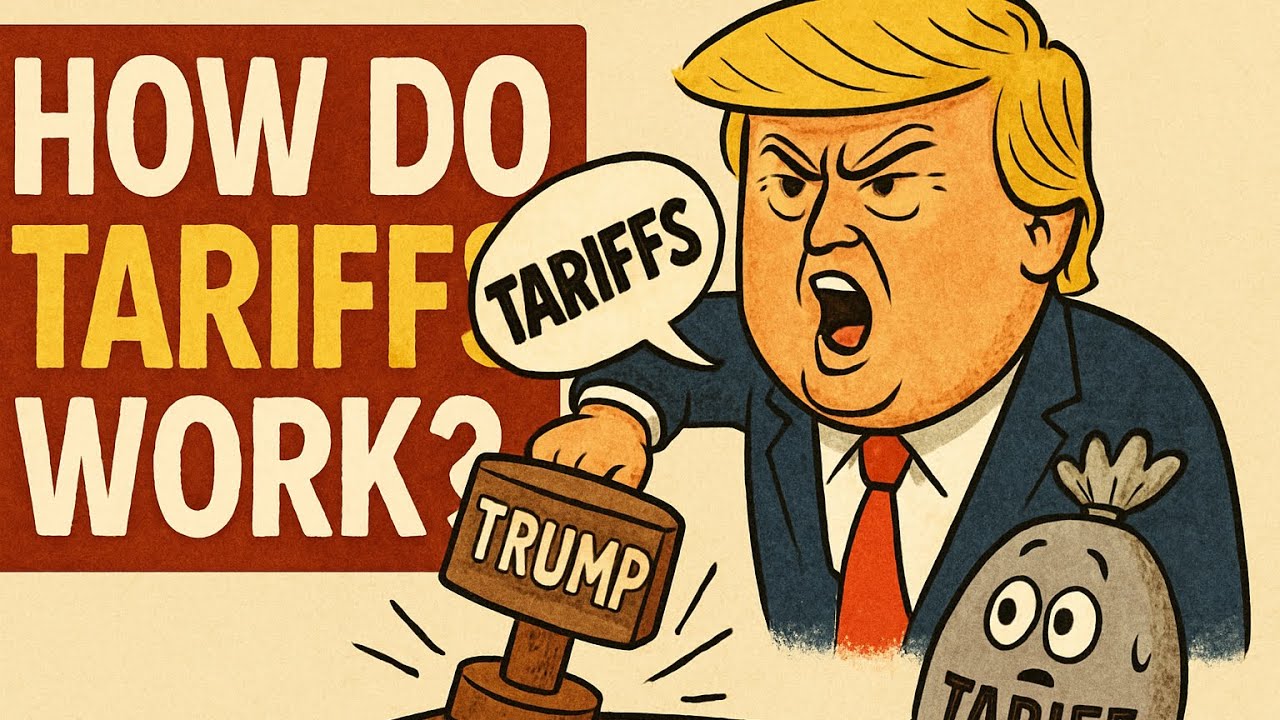
How Does Tariffs Work | Trump Tariffs plan
Автор: Cash Compass
Загружено: 2025-08-07
Просмотров: 8
📦 What Are Tariffs?
Tariffs are taxes imposed by a government on goods and services imported from other countries. The purpose of tariffs is to make imported goods more expensive, thereby encouraging consumers to buy domestic (locally produced) products instead.
⸻
💰 How Do Tariffs Work?
1. Imposition of a Tariff
When a country decides to impose a tariff, it sets a specific tax rate on certain imported goods. This could be:
• A percentage of the product’s value (called ad valorem tariff), e.g., 10% on imported steel.
• A fixed amount per unit (called specific tariff), e.g., ₹100 per smartphone imported.
2. Importers Pay the Tariff
The importing company (not the foreign exporter) pays the tariff to the government when the goods enter the country. This added cost is usually passed on to consumers in the form of higher prices.
Example: If a U.S. company imports T-shirts from China, and the U.S. has a 25% tariff on those T-shirts, the importer pays 25% extra in taxes. This makes Chinese T-shirts more expensive in U.S. stores.
3. Resulting Effects
Here’s what usually happens after tariffs are imposed:
🔺 Higher Prices for Imported Goods
Imported goods become more expensive due to the added tax. Consumers often pay more.
🏭 Boost for Domestic Producers
Since imported items are costlier, consumers may switch to buying local alternatives. This gives domestic companies an edge and can lead to more jobs and production locally.
🌐 Retaliation by Other Countries
Other countries might respond by imposing tariffs on goods from the first country. This can lead to a trade war (e.g., the U.S.-China trade war during Trump’s presidency).
📉 Reduced Trade Volumes
Tariffs make trade more expensive, which can reduce the overall amount of goods being imported and exported. This may slow down global economic growth.
⸻
🧭 Why Are Tariffs Used?
Governments may impose tariffs for various reasons:
✅ To Protect Domestic Industries
Especially in developing economies or during crises, tariffs can protect growing industries from foreign competition.
✅ To Encourage Local Jobs
Higher demand for local products can result in more jobs in domestic factories.
✅ As a Political Tool
Tariffs can be used to pressure other countries to change trade policies, human rights practices, or environmental standards.
✅ To Generate Revenue
In some countries, tariffs are a significant source of government income.
⸻
🚧 Downsides of Tariffs
• ❌ Higher prices for consumers
• ❌ Less variety in products
• ❌ Possible retaliation from other nations
• ❌ Disrupted supply chains
• ❌ Inefficient local industries may survive without improving
⸻
📌 In Summary
Tariffs are like a tool in the government’s toolbox—sometimes helpful, sometimes harmful. They can protect jobs and industries, but often at the cost of higher prices and potential trade tensions. Understanding tariffs is key to understanding global economics and political decisions, especially when major economies like the U.S. or China use them as weapons in trade battles.
#howtariffswork
#whataretariffs
#tariffsexplained
#trumptariffs
#tradewarexplained
#economicsforbeginners
#importtax
#uschinatradewar
#tariffsandtrade
#globaleconomics
#funnyeconomics
#simpleeconomics
#trumpcartoon
#economicpolicy
#internationaltrade
#howtradeworks
#tariffmeaning
#youtubeeducation
#learneconomics
#tariffs
Доступные форматы для скачивания:
Скачать видео mp4
-
Информация по загрузке: