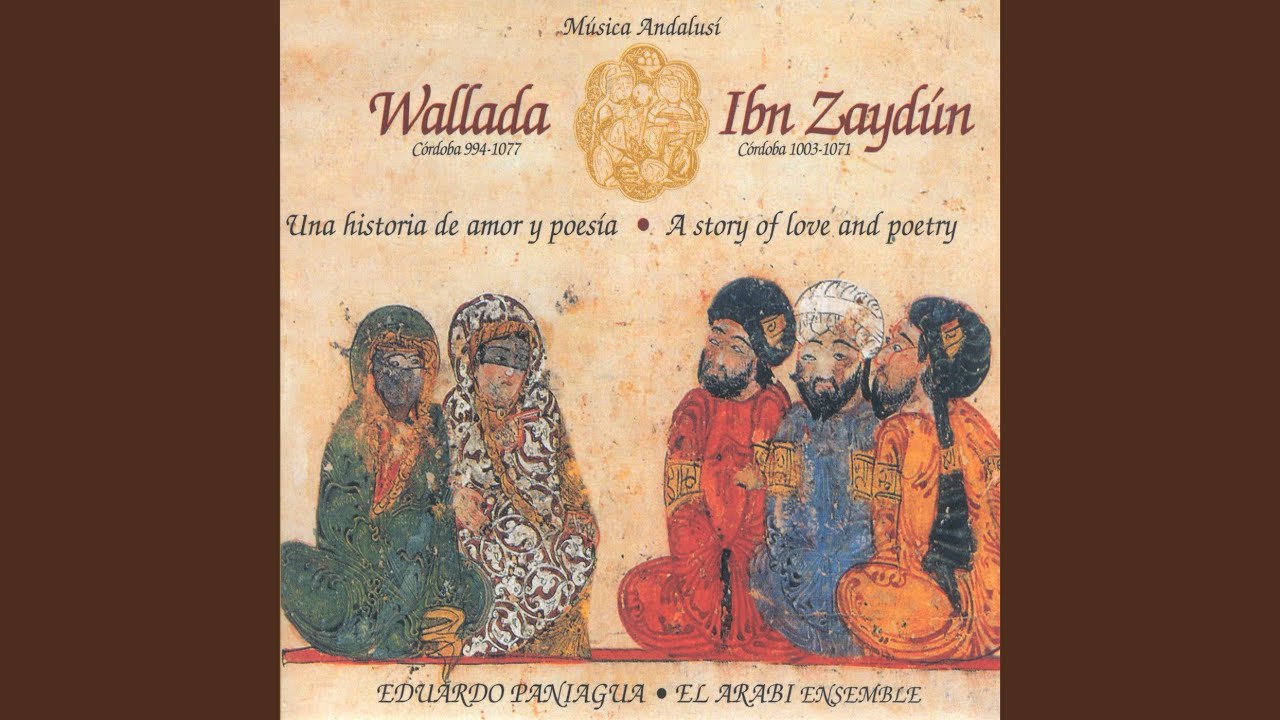
Adir lana'akwab (Hispano-Arabic muwashshahah, 12th century)
Автор: sh4m69
Загружено: 2010-08-27
Просмотров: 276296
atribuída: Al-A'ma (muerto en 1126) o Ibn Baqi (muerto entre 1145 o 1150)
Abu l-Abbas Ahmad ibn Abd Allah ibn Hurayra al-Absi al-A'ma al-Tut, conocido como Al-A'ma' y Al-Tutili (Al-A'ma' quiere decir "el ciego" y "Tutili" significa "de Tudela".) nació en Tudela, pero creció en Sevilla y también vivió en Murcia.
Murió siendo joven y fue uno de los poetas y escritor de canciones (moaxaja y zéjel) más celebres y conocidos del período almorávide. Compitió con Avempace con composiciones ingeniosas en la corte de Ibn Tifilwit, el gobernador almorávide de Zaragoza. Escribió panegíricos dedicados tanto a los almorávides como a los Banu Qasi de Alpuente alcanzando la fama con sus poemas de temática amorosa.
Ibn Baqi o Abu Bakr Yahya Ibn Muhammad Ibn Abd al-Rahman Ibn Baqi (muerto en 1145 o 1150) fue un poeta andalusí de Córdoba o Toledo.
Ibn Baqi es uno de los poetas estróficos y compositor del periodo almorávide. Vivió entre Marruecos y al-Ándalus y escribió varios poemas panegíricos sobre los miembros de una notable familia norteafricana. Es especialmente famoso por sus moaxajas.
La moaxaja y el zéjel se desarrollaron como géneros poéticos y musicales en al-Andalus en los siglos X y XI, tambien fueron luego adoptados por poetas hebreos, y aún hoy se cantan en el Magreb.
El texto de la moaxaja árabe medieval viene siempre en lengua clásica, mientras la segunda parte del último estribillo, o xarja (jarcha), está en árabe coloquial, o en un dialecto hispanorromance; se supone derivada de fuentes populares.
Formaban la moaxaja y el zéjel parte del repertorio de ciertas cantantes esclavas preciadas. A estas mujeres se les enseñaba desde la infancia a aprender de memoria y cantar estos géneros lirícos, y aumentaba el valor cultural y económico de la cantante según mejoraba su técnica. Cuando una de estas esclavas era vendida, el precio se negociaba tras examinar un tomo que contenía su repertorio. A las cantantes más apreciadas las acompañaba su conjunto particular de músicos.
Muwashshahat and the zajal developed as poetic and musical idioms in Arabic Spain during the tenth and eleventh centuries, also were subsequently borrowed by Hebrew poets, and are still performed today in the Maghrib and Orient (Syria principally).
The text of the medieval Arabic muwashshah is typically in the classical language, while the second part of the last stanza, or jarcha, is in either colloquial Arabic or a Hispanic romance dialect, and is believed to be borrowed from popular sources.
Muwashshahat and zajals made up the bulk of the repertoire of young female singers who were basically highly-prized slaves. These women were trained from childhood in the memorization and performance of the sung poetic forms, and their cultural and economic value increased according to their skil. When a young woman was sold, her price was negotiated through examination of a large volume that detailed the scope and nature of ther repertoire. The most highly-prized singers also brought to their employers and ensemble of musicians, trained in the accompaniment of these pieces.
Adir lana'akwab
Hispano-arabic muwashshahah, 12th century
attributed: Al-A'ma (d.1126) or Ibn Baqi (d. 1145 or 1150)
Al-A'ma al-Tutili (Abu l-Abbas Ahmad ibn Abd Allah ibn Hurayra al-Absi al-A'ma al-Tut) was a Muladi Muslim poet born in Tudela (Al-Andalus,today Navarra). Al-A'ma means 'the blind one" and 'Tutili' means from Tudela. He was raised in Seville there he gained talent in poetry, he later lived in Murcia. He died young (in 1126).
He was one of the best-known strophic poets and songwriters (Muwashshahat and Zajal) of the Almoravid period in Al-Andalus and competed with Ibn Bajjah in witty compositions at the court of Ibn Tifilwith, the Almoravid governor in Saragossa. He wrote panegyrics to both the Almoravids in al-Andalus and the Banu Qasim in Alpuente (Al-Sahla) and was famous for his love poems.
Ibn Baqi or Abu Bakr Yahya Ibn Muhammad Ibn Abd al-Rahman Ibn Baqi (died 1145 or 1150) was a poet from Córdoba or Toledo in al-Andalus. Baqi is one of the best-known strophic poets and songwriters of the Almoravid period (1091-1145) in Al-Andalus. He moved between Morocco and Al-Andalus and wrote several poems honoring members of a North African family. He is especially famous for his muwashshahat. In the anthology of Al-Maqqari we find a considerable number of his poems.
Adir lana'akwab:
Pass to us the cups
with which sorrow is forgotten,
and summon (our) companions
since love is at an end.
Obey the law of love
as long as you live, my friend,
and turn your ear
from the words of the reviler.
You ar ordered to hasten;
here is your wine.
Fingertips (stained red) with jujube
and your red sweetmear (mouth),
are enveloped in myrtle(-dark) tresses
which the cheek coils.
Pass to us the cups
with which sorrow is forgotten
Performers: Altramar Ensemble
Доступные форматы для скачивания:
Скачать видео mp4
-
Информация по загрузке:










![Agni Parthene (Romanian/Arabic/Greek) - Ribale Wehbé , Arch. Mihail Buca and Tronos Choir [Live]](https://imager.clipsaver.ru/hZKlXJBQIWU/max.jpg)