1. "Understanding Electronic Configuration | A Complete Guide"2. "Electronic Configuration Made
Автор: Epic worldz
Загружено: 2024-11-25
Просмотров: 24
Introduction to Electronic Configuration
Electronic configuration describes how electrons are distributed among various atomic orbitals in an atom or ion. This fundamental concept in chemistry helps us understand the structure of the atom, its reactivity, and properties. By arranging electrons systematically, we can predict the behavior of elements and their placement on the periodic table.
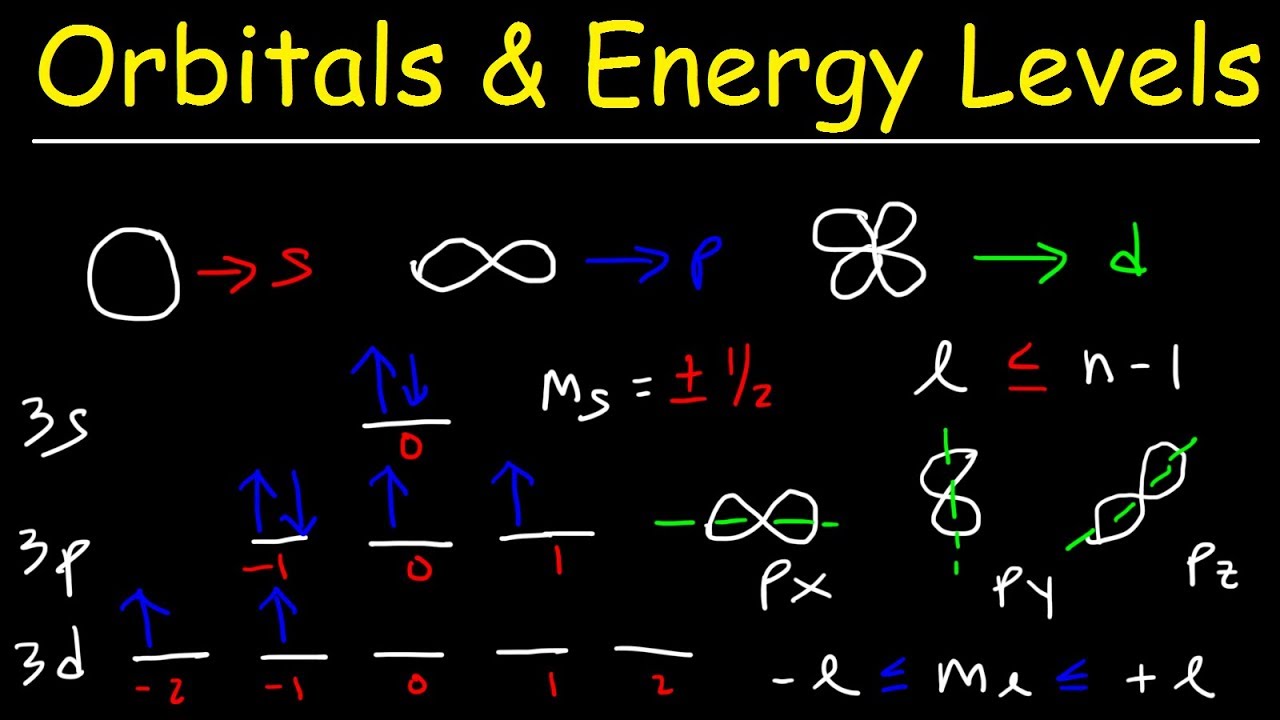
Electrons are placed in energy levels (or shells) that increase in energy as they move farther from the nucleus. These energy levels are divided into sublevels (s, p, d, and f orbitals) that have unique shapes and properties.
---
Principles Governing Electronic Configuration
Electronic configuration is determined by several fundamental principles:
1. Aufbau Principle
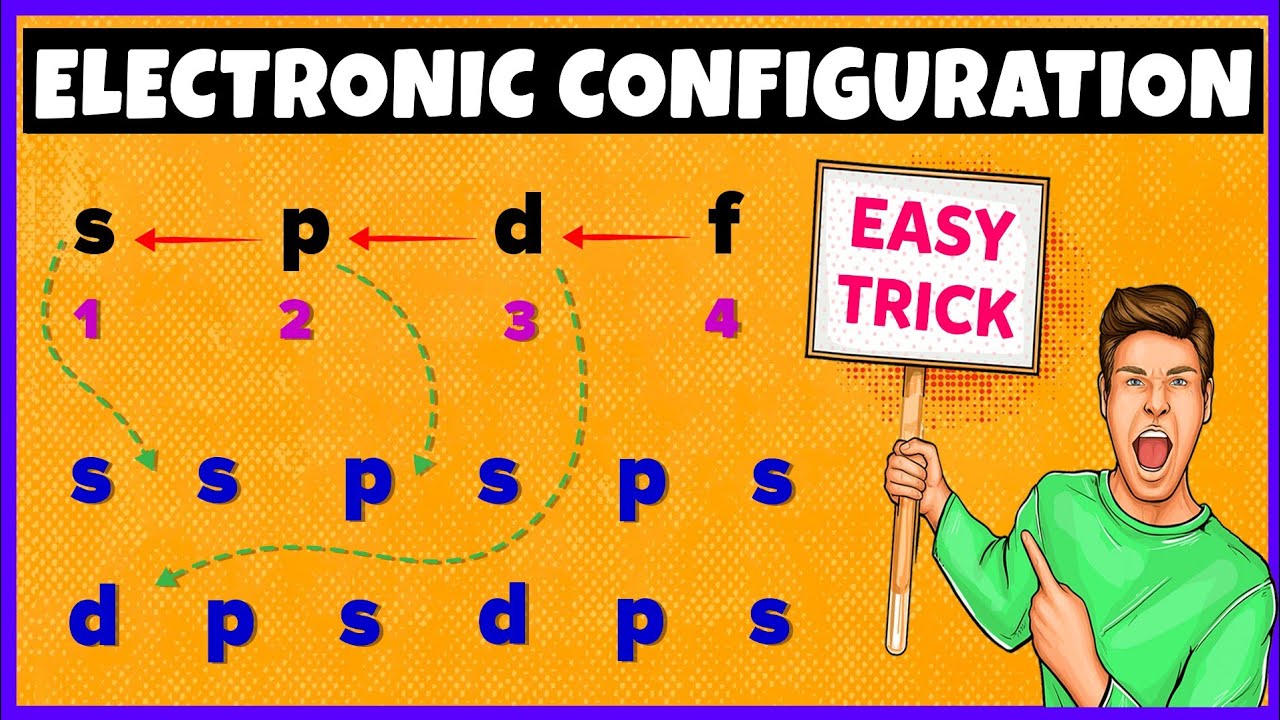
The Aufbau principle states that electrons occupy the lowest energy orbital available before moving to higher energy orbitals. The filling order is determined by the increasing energy levels of the orbitals.
Order of filling:
1s → 2s → 2p → 3s → 3p → 4s → 3d → 4p → 5s → 4d → 5p → 6s → 4f → 5d → 6p → 7s
2. Pauli Exclusion Principle
This principle states that no two electrons in an atom can have the same set of four quantum numbers. In simpler terms, each orbital can hold a maximum of two electrons with opposite spins.
3. Hund's Rule
Hund’s rule specifies that when electrons occupy orbitals of the same sublevel (degenerate orbitals), one electron is placed in each orbital before pairing begins. This minimizes electron repulsion and stabilizes the atom.
---
Quantum Numbers and Orbitals
Electronic configuration is closely tied to quantum numbers, which describe the properties of electrons and their orbitals:
1. Principal Quantum Number (n): Represents the energy level of an electron.
2. Azimuthal Quantum Number (l): Describes the sublevel (s, p, d, f).
3. Magnetic Quantum Number (m): Specifies the orientation of the orbital.
4. Spin Quantum Number (s): Denotes the spin of the electron (+1/2 or -1/2).
These quantum numbers guide the placement of electrons in specific orbitals.
---
Notation of Electronic Configuration
Electronic configuration is typically written using a shorthand notation. For example, the configuration of oxygen is:
Here, the numbers indicate the energy levels, letters denote the sublevels, and superscripts show the number of electrons in each sublevel.
For larger elements, noble gas notation is used to simplify the representation. For example:
---
Periodic Table and Electronic Configuration
The periodic table is structured based on the electronic configuration of elements. The table is divided into blocks (s-block, p-block, d-block, and f-block) corresponding to the type of orbital being filled:
1. s-block: Groups 1 and 2, including hydrogen and helium.
2. p-block: Groups 13-18, containing nonmetals, metalloids, and some metals.
3. d-block: Transition metals, Groups 3-12.
4. f-block: Lanthanides and actinides, the inner transition metals.
The periodic trends, such as atomic radius, ionization energy, and electronegativity, are influenced by electronic configurations.
---
Applications of Electronic Configuration
Understanding electronic configurations is critical for many aspects of chemistry:
1. Chemical Bonding: Predicts how atoms form bonds, such as ionic or covalent bonds.
2. Reactivity: Determines the tendency of an atom to gain, lose, or share electrons.
3. Spectroscopy: Explains atomic and molecular spectra based on electron transitions.
4. Material Science: Assists in designing semiconductors and superconductors.
5. Magnetism: Identifies paramagnetic and diamagnetic materials.
---
Exceptional Configurations
Certain elements exhibit deviations from expected configurations to achieve greater stability. For instance:
Chromium: (not )
Copper: (not )
These exceptions arise due to the stability associated with half-filled and fully-filled d-orbitals.
---
Importance in Modern Chemistry
Electronic configuration has applications in quantum chemistry, molecular modeling, and nanotechnology. By understanding electron distributions, scientists develop materials with desirable properties, such as catalysts or pharmaceuticals.
---
Conclusion
Electronic configuration is a cornerstone of chemistry, bridging atomic theory and practical applications. Its principles help explain everything from atomic interactions to the macroscopic properties of matter.
---
Hashtags
#ElectronicConfiguration #AtomicStructure #PeriodicTable #QuantumChemistry #LearnChemistry #ScienceEducation #ChemistryBasics #ElectronOrbitals #AufbauPrinciple #PauliExclusion #HundsRule #ChemicalBonding #PeriodicTrends #MaterialScience

Доступные форматы для скачивания:
Скачать видео mp4
-
Информация по загрузке: