Johann Theodor Römhild (1684-1756) - Cantata 'Ach dass die Hülffe aus Zion über Israel käme'
Автор: Pau NG
Загружено: 2019-10-26
Просмотров: 4078
★ Follow music ► / reciclassicat
Composer: Johann Theodor Römhild (1684-1756)
Work: Cantata 'Ach dass die Hülffe aus Zion über Israel käme'
Performers: KаroIina Brаchman (soprano); Sebаstian Kаniuk (alto); Wojciеch Winnicki (tenor); Szymаn KobyIinski (bass);
GoIdbеrg Baroque Ensemble; Andrzej MikoIаj Szаdejko (conductor & organ)
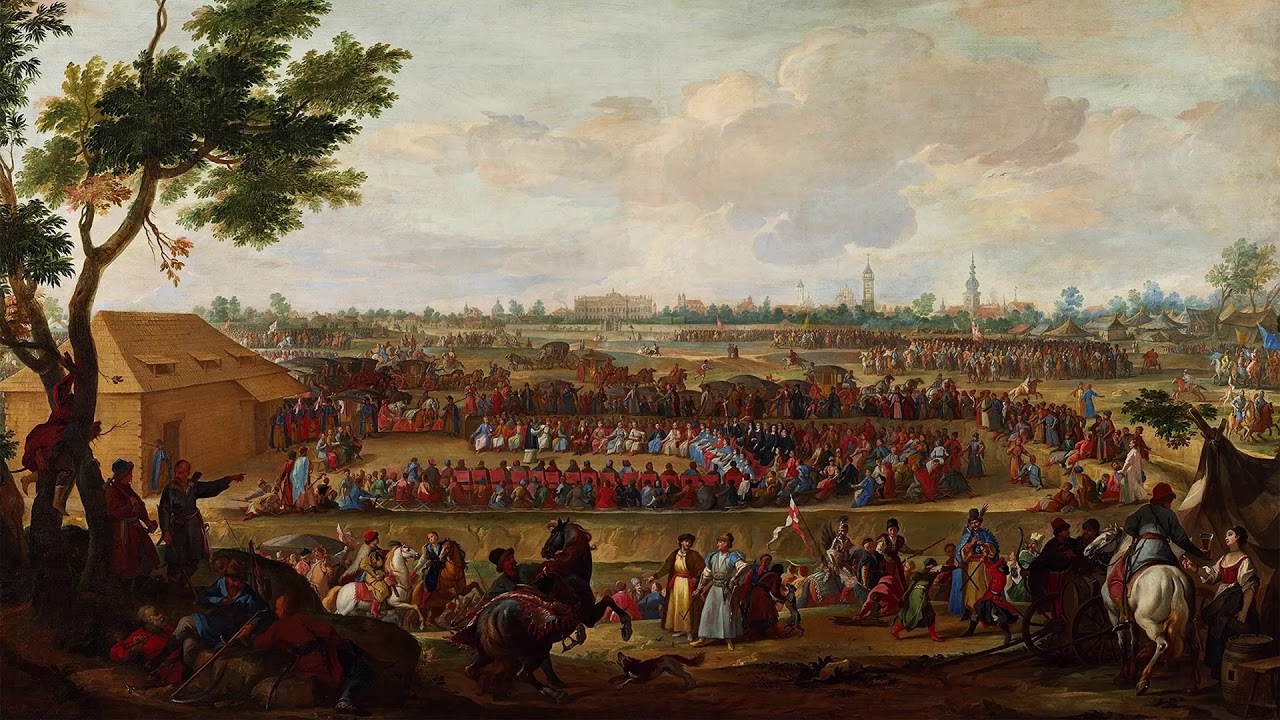
Painting: Martino Altomonte (1657-1745) - Election Diet in 1697 (Election of Augustus II) (1697)
Further info: https://www.ceneo.pl/14833814
Listen free: No available
---
Johann Theodor Römhild [Roemhildt, Römhildt, Milord, Mielorth]
(Salzungen, 23 September 1684 - Merseburg, 26 October 1756)
German organist and composer. His earliest musical education was probably received from his father, Johann Elias Römhild, a substitute minister who moved his family to nearby Steinbach three years after his son’s birth. According to Ernst Ludwig Gerber, he also studied with Johann Jacob Bach in the neighbouring town of Ruhla when the latter arrived there in 1694. In 1697 he became a student at the Leipzig Thomasschule, where his distinguished teachers were Johann Schelle and Johann Kuhnau, and his fellow students included Christoph Graupner, Johann Friedrich Fasch and David Heinichen. He became a university student in Leipzig in 1705, remaining six terms before accepting in 1708 his first musical position as Kantor of the school in Spremberg. In 1714 he was also named rector and Kapelldirector. In 1715 he went to Freystadt as music director and Kantor of the newly constructed parish church, but he returned to Spremberg in 1726 as court Kapellmeister to Duke Heinrich. When the latter became Duke of Saxe-Merseburg he took Römhild to Merseburg as his court Kapellmeister. In 1735 he became organist of Merseburg Cathedral and began a period of great compositional activity, writing more than 200 sacred cantatas and a St Matthew Passion. He was a major composer of sacred music in the north German Baroque, but the survival of many of his manuscripts, found before World War II in libraries and church archives in north-east Europe, is uncertain. As Paulke showed in his description of a portion of Römhild’s manuscripts discovered in the early 20th century, the church cantatas, numbering over 250 and including some 50 solo cantatas, were written in a variety of forms and instrumental combinations characteristic of the late Baroque and illustrating almost every formal and stylistic type.
Доступные форматы для скачивания:
Скачать видео mp4
-
Информация по загрузке:





![The Shadow of Calvary: Vivaldi Filiae maestae Jerusalem, RV 638 | [MuseLAB]](https://image.4k-video.ru/id-video/0sj824OYRoI)


