KDW - Khan's Digital World Sae Schatz Modernizing Learning: Building the Future Learning Ecosystem
Автор: Badrul Khan
Загружено: 2022-04-27
Просмотров: 194
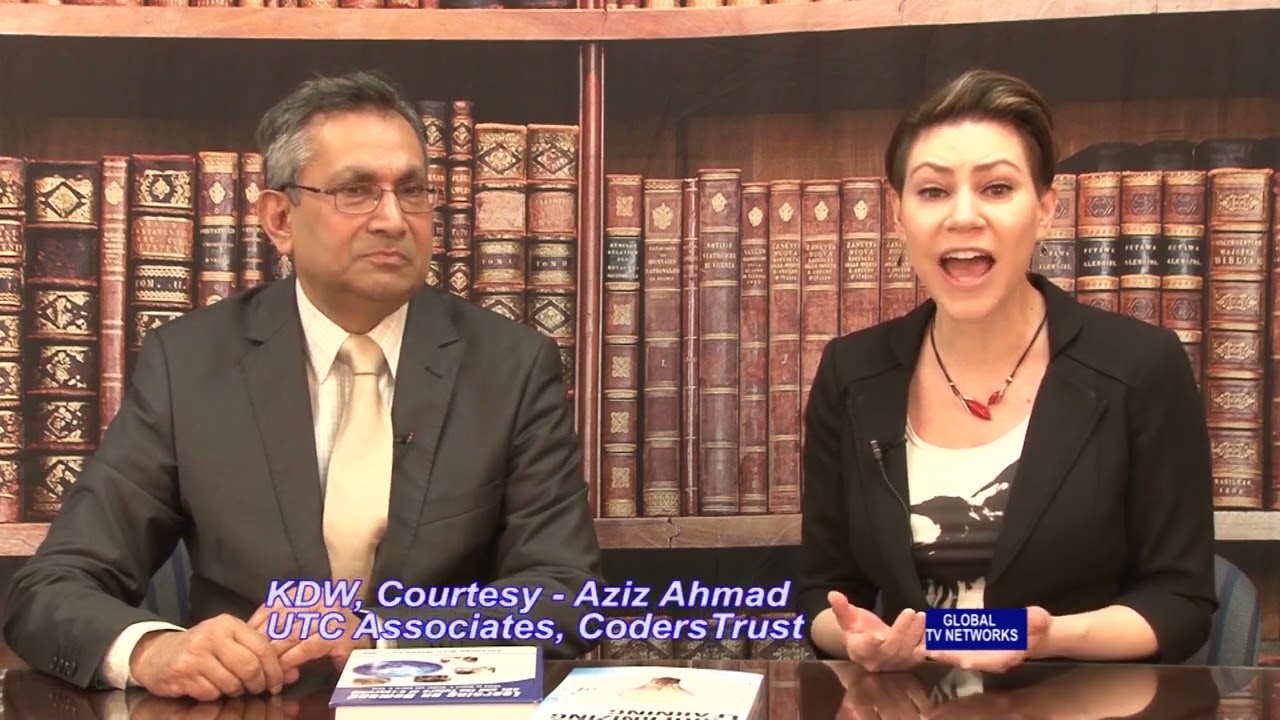
Now in 2022, we have Dr. Sae Schatz (“Sae Shots”), the current ADL director, who is along with her team making a difference in the field of distributed learning. Sae’s research focuses on learning science, technology, and systems. Previously she worked as a professor and has had experience i
Well, like Dr. Wisher before me, the team at ADL has published a new book called “Modernizing Learning: Building the Future Learning Ecosystem.” A digital version is available at no cost from the ADL website. The book talks about what training, education, and even just-in-time learning might look like in the future.
(https://adlnet.gov/publications/2019/...)
The ADL program has always focused on how to help people learn more effectively, anytime, anywhere, and at scale. Back when the program was first established, in the 1990s, that meant using computers and the internet for e-learning.
Many of us—or our children—have experienced e-learning over the last two years. And there have been some good things and bad things about that. On the one hand, it’s amazing that we have this capability. We can find so much information at the tips of our fingers; we can talk to experts from around the world and can help people access education despite disruptions like the pandemic. On the other hand, the technology doesn’t always work as intended, or at least, doesn’t work for everyone in a given situation. There are also issues with assessment, even beyond e-learning; there are important debates about how to evaluate someone’s knowledge and skills accurately and ethically—and how to best help people close gaps in them, if that’s what they want to do.
So, this book outlines a future vision for learning that takes those ideas into account—and a lot more. We challenged ourselves to think about how the world around us is changing, how new technologies might be useful, and what works best for learning and development.
The big idea is that we need a “learning ecosystem.” In other words, we need to have a lifelong connected continuum of learning. It should be enabled by technology, like e-learning and mobile learning on smartphones, although not 100% technology focused. And it should be driven by data, so we can do a better job of accurately understanding someone’s abilities in realistic situations and over-time. You may have seen something like this if you’ve watched movies or TV shows like Star Trek or Ender’s Game—but this isn’t SciFi. This an emerging capability in the real world.
Badrul
What do you mean by a continuum of learning?
Badrul
So, what might that look like for someone? Can you give me an example?
Sae
Sure, imagine someone (let’s call her Emma) is working as a retail manager—but she wants to switch jobs and get into technology. So, at night, she’s studying computers in some community college classes. She also takes a couple weeklong coding bootcamps and learns some concepts from Massive Open Online Courses (or MOOCs). Maybe she’s also downloaded an app that quizzes her on concepts, like a flashcard app about cloud computing terms.
Today, it’s up to that individual (Emma in this story) to connect all of these different learning experiences together in her mind. In other words, her community college instructors don’t really know what she’s learned—or struggled with—from those online MOOCs or from her app. And it’s not like her bootcamp coach can say “I see you did a great job on that community college exam, but you missed this one bit about cybersecurity, let me help you with that.”
And that’s not even accounting for Emma’s other capabilities. Maybe she has some awesome project management skills from her retail job or has other abilities she’s picked up in life.
It’s possible to capture that kind of competency information in a personal digital “wallet,” like a learner-employment record that she keeps and can use across different learning experiences and also as resume with future employers.
Key to all of this is interoperability, meaning all of our different training and education systems—whether e-learning systems or digital gradebooks for face-to-face classes—can talk to one another in terms of data. That’s a lot of what we’ve been working on at the ADL program over the last several years: How do we get the “plugs,” so to speak, between different systems to work together. Another way to think about is like LEGO bricks: How do we make all of the different training and education technologies have the little circles in the right places, so they can fit together as one big system of systems?
Badrul
How close is that technology to being realized?
Sae
Some of it is already starting to be used. For example, it’s feasible to track learning performance across different platforms, like e-learning, smartphones, and digital gradebooks, and then use those data to connect the experiences together. In the near future, other capabilities will be ready for use, too. They’re being matured and tested today.
Доступные форматы для скачивания:
Скачать видео mp4
-
Информация по загрузке: