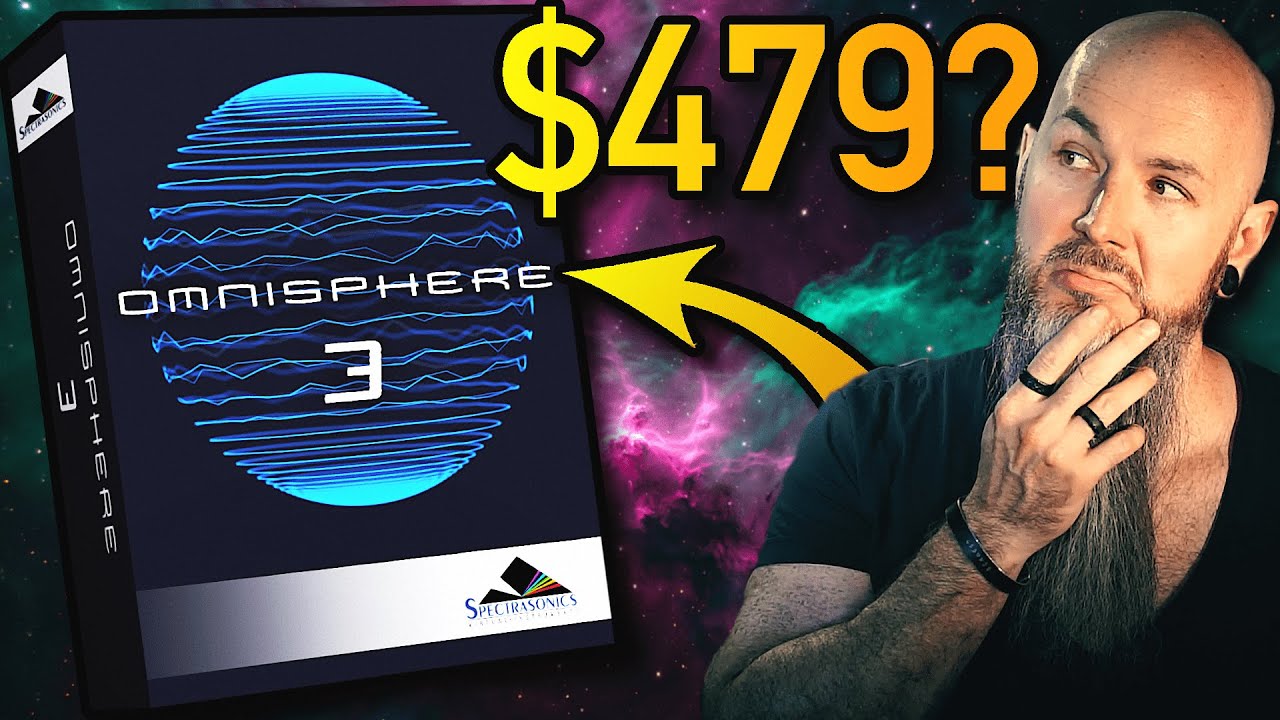
Omnisphere 3 Review: Is It Worth $479?
Автор: Vulture Culture
Загружено: 2025-10-21
Просмотров: 64265
Omnisphere 3 is finally here—and it sounds massive, emotive, and dangerously inspiring. In this deep-dive Spectrasonics Omnisphere 3 review, I push this flagship soft synth to the edge to find out if the $479 price tag makes sense for film scoring, electronic music, and serious sound design.
I open with a cinematic intro track built entirely inside Omnisphere 3—drums, bass, pads, leads, and textures—no external plugins. From there we dive into what’s actually new and why it matters in real productions: a faster Global Page for hands-on control, expanded hardware integration that maps beautifully to popular MIDI controllers and hardware synths, updated filters and analog drift for that vintage analog vibe, and a seriously upgraded FX section (think character reverbs/delays, modeled Juno-style chorus, reverse/time FX, and tasteful saturation) that makes patches feel mix-ready without reaching for third-party chains.
You’ll hear a broad sound showcase across ambient pads, synthwave textures, EDM leads and plucks, hybrid organic tones, nostalgic keys, evolving granular/sampled instruments, cinematic braams, and warm analog-style basses—pulled from the 18 new libraries and the enormous 40k+ preset universe. I keep demos honest with dry-first, FX-after A/Bs so you can judge core tone before the sugar.
We’ll explore workflow and speed: how quickly you can go from an init sound to a layered, macro-driven performance patch without leaving the main page; how the preset browser and smart tagging get you writing in seconds; how macro controls, MIDI mapping, and hardware integration make Omnisphere feel like a dedicated instrument in Logic Pro, Ableton Live, Cubase, or FL Studio (VST/AU). I also cover practical stuff pros actually care about—stability, CPU/RAM, load times, automation behavior—so you know how it behaves in a real session.
Because everyone asks “why not X?”, I include real-world comparison clips with Arturia Pigments 5, UVI Falcon, and Serum 2. You’ll hear where each shines, and where Omnisphere’s curated library, hands-on hardware control, and integrated FX chains give it an edge in time-to-sound and finished results. If you’re a preset power-user, trailer composer, or a mod-matrix nerd hunting for a hybrid sample synth that also nails analog emulation, this will help you decide whether Omnisphere 3 is the best soft synth of 2025 for your workflow.
What you’ll get from this video:
A musical tour of Omnisphere 3’s new sound libraries (lush pads, glassy plucks, dark ambient textures, retro keys, hybrid acoustic/synth instruments).
A hands-on look at granular/sampling tricks, the new frequency shifter, tasteful filter drive, and macro-to-many-destinations modulation.
How the onboard FX can replace common third-party chains for quick, professional polish.
Honest talk about value: whether one flagship plugin can replace a pile of smaller purchases over time.
If this helps, drop your thoughts below—does Omnisphere 3 earn a spot as your main instrument, or do Pigments, Falcon, or Serum 2 cover your bases?
#omnisphere3 #spectrasonics #softsynth #sounddesign #filmscoring #synthreview #plugins #vst #serum2 #pigments5 #falcon #ableton #logicpro #flstudio
Доступные форматы для скачивания:
Скачать видео mp4
-
Информация по загрузке: