BACHMANN CLASS 20 3 ON WEEDKILLER TRAIN SOUND
Автор: letzterinstanz
Загружено: 2022-01-12
Просмотров: 1548
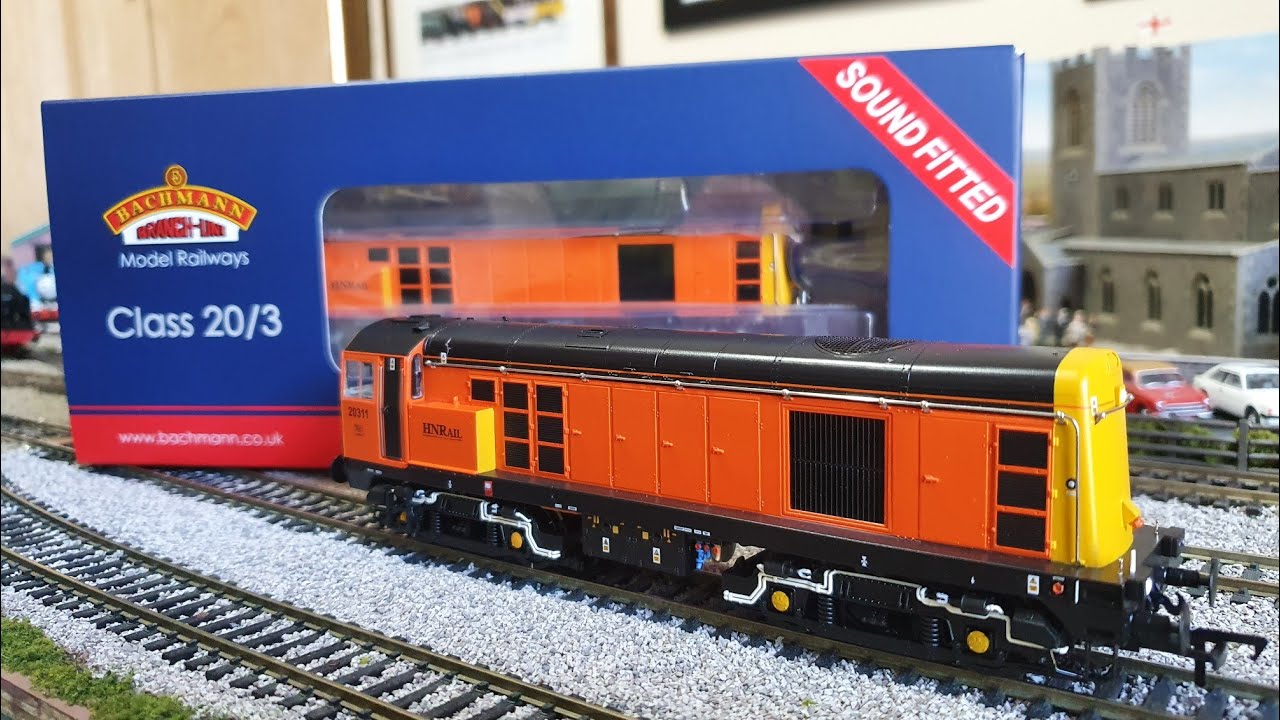
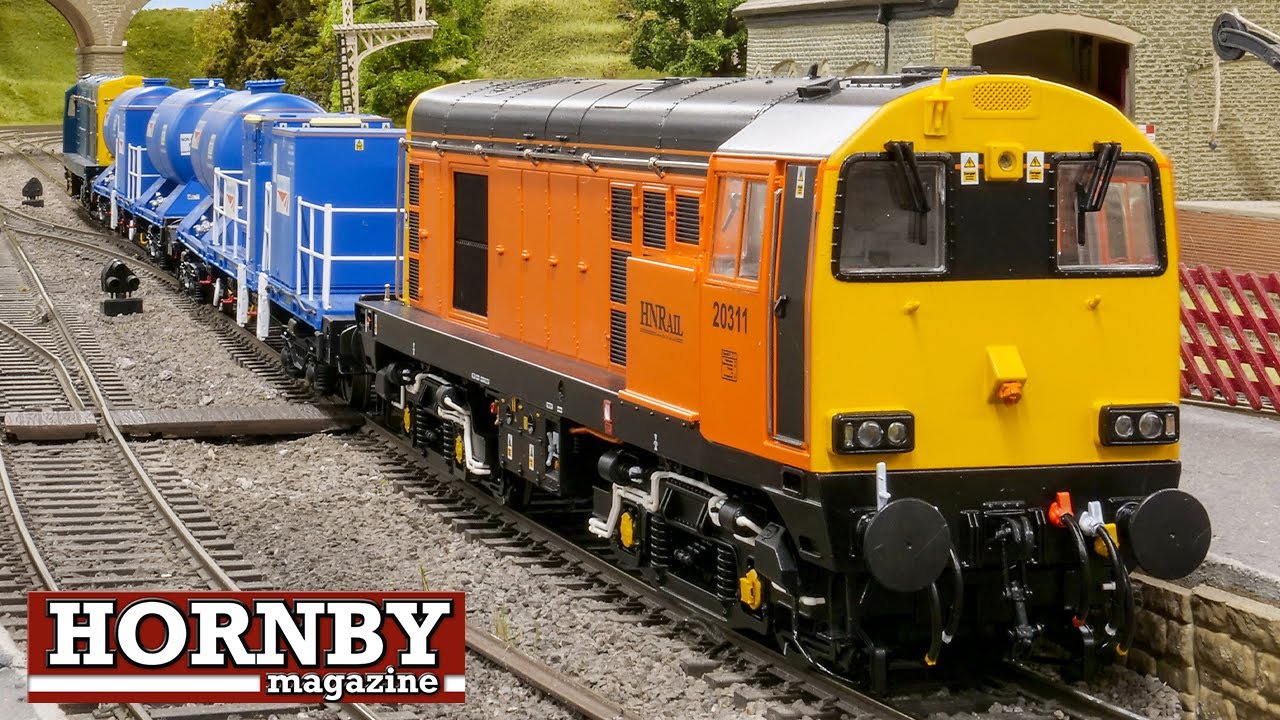
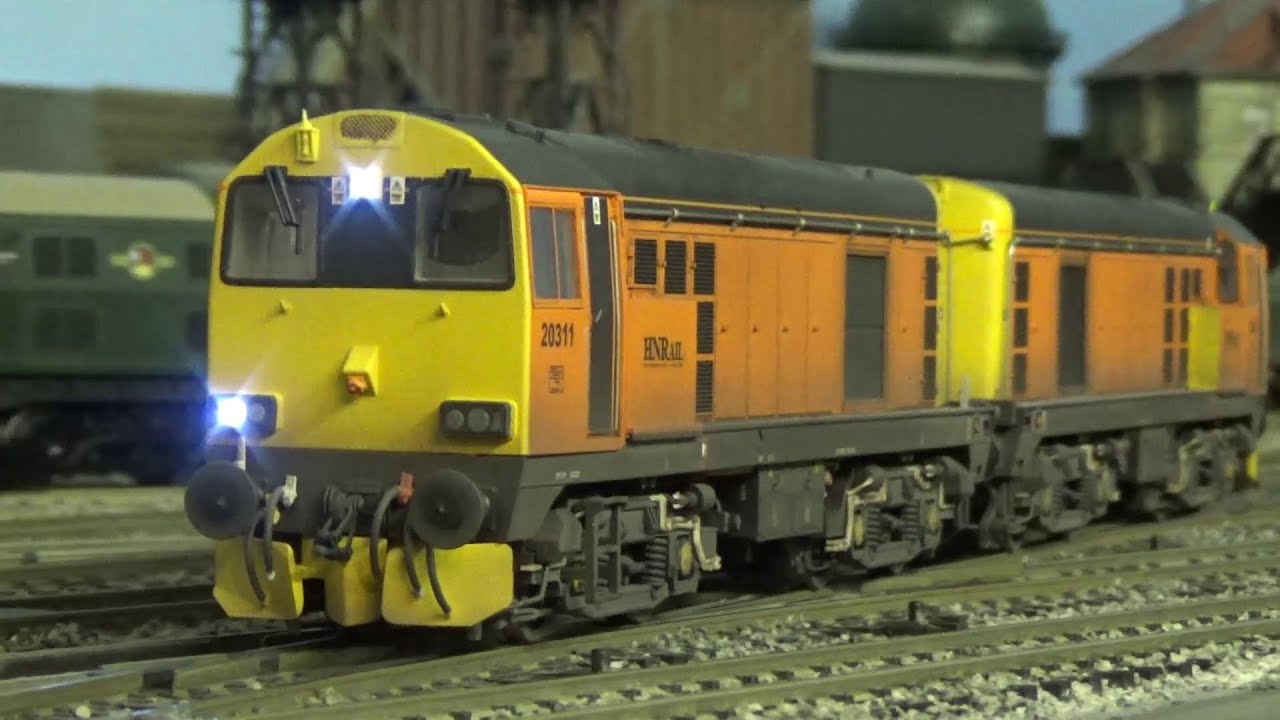
Here we have 2 examples of Bachmann's latest incarnation of the BR class 20 diesel-electric locomotives, numbers 20311 and 20314.. As you may know, class 20 locomotives often work in pairs coupled nose to nose or 'topping and tailing' a train as depicted in this video. In model form, using DCC, locomotives can be double-headed, or 'consisted', so that they can be operated together in unison on a single DCC address. For the purposes of this narrative, we will use the term 'consist' to include 'double-heading'. The video demonstrates (hopefully) how easy is to include/exclude a locomotive from a consist after the initial set up has been completed with Zimo decoders.
A. Initial setup:
1. It goes without saying that the locomotives concerned should have the same ballistics, so the acceleration, deceleration and speed curve should be the same throughout the full speed range. In the case of our example, the 2 class 20s have the same sound project loaded so they behave identically - well, close enough as makes no difference. 20311 has address 2011 and 20314 has address 2014. Note also, on these locomotives, 'forwards' is when the nose is leading and 'backwards' is when the cab is leading.
2. Decide what you want your consist address to be. We have chosen address 20 for this video. The consist address must be 1 to 127 inclusive. If one a loco that needs to run in reverse (as in the case of 2 class 20s coupled nose-to-nose), add 128 to the consist address of that locomotive. Place the consist address in CV19. In the case of the 2 class 20s in this video, 2011 has CV19=148 whilst 2014 has CV19=20.
23. Decide which function key to assign as the 'consist' key. It is recommended that a low numbered function is chosen so that it is more likely to be constantly 'refreshed' by your DCC system. This is desirable to avoid a locomotive unintentionally 'dropping out' of a consist as a result of momentarily losing track power. Also, ensure that the chosen number is not included in the list of functions controlled by the consist address. This is to avoid accidentally removing an active locomotive from the consist. In our case we chose F3 as the 'consist' key.
4. Decide which functions you wish to operate when running under the consist address. It is vitally important that those functions that affect the ballistics are included. So, if your locomotives have a working brake or a 'light engine' function, then these must be included. For this reason, you must NOT build a consist using the 'double-heading' feature of your DCC system because, generally speaking, function buttons only affect the 'lead' locomotive, thus applying the brake will only affect that loco, the other one won't brake!! The CVs to use are CV21 and CV22 In the case of the 2 class 20s in this video, CV21=218 (F2, F4, F5, F7 and F8 included) and CV22=4 (F9 included). Respectively, this is horn, brake, light engine, weed spraying, flange squeal, cab lights,
5. As a precautionary measure, we decided that it would be beneficial to try and ensure that, when 'topping and tailing', the train couplings were kept taut to prevent buffer locking. To achieve this, the 'trailing' loco should run ever so slightly slower than the leading loco. You can use the 'forward trim' (CV66) and 'reverse trim' CV95) to implement this. Therefore, in our demonstration, both locomotives have CV66=126. This equates to running at speed step 126 when the throttle is at 128, and proportionally up to that speed.
5. As a precautionary measure, it is highly recommended that any locomotive that you intend to use in a consist has an effective 'stayalive' fitted. This is to mitigate against the possibility of a locomotive 'dropping out' of a consist following a momentary power loss when using a 'lazy' DCC system,
7. Test your setup with your locomotives operating under the consist address a short distance apart on the track. That is not yet physically coupled. Try different speeds and check that the use of the brake and 'light engine' affects both locomotives.
Note that, even when operating in the consist, you can turn functions on and off that are NOT included in either CV21 or CV22. In our example, the running lights and the start-up and shutdown, amongst other functions, are NOT included within consist control. Therefore, we need to turn on the lights and start the engine using the locomotive's 'normal' address. This gives the flexibility to have only one loco 'powered up' and, in the case of ‘double-heading', it is possible to only have lights on the leading locomotive as per prototype. The lights will, however, change direction with a change in direction of the consist.
After the initial setup, it is then a simple action to include/exclude a locomotive by calling up the locomotive's 'normal' address and then turning the consist function on (to include in the consist, or turning the 'consist' function off to exclude from the consist.
Доступные форматы для скачивания:
Скачать видео mp4
-
Информация по загрузке: