Tolulope Onabolu - The Guinea Project Digital Heritage, Narrative and Discourse
Автор: UWE Bristol Architecture
Загружено: 2021-03-15
Просмотров: 199
The study of heritage in architecture is often considered from within the History of Architecture, Architectural Conservation, and the Historic Environment. In many ways, it contributes to an understanding of past cultures and serves as a mechanism for education through tourism. The advancement of digital practices in heritage studies reinforces the general historiography but has seen its most significant developments in archaeology and in computer science. The advantage of these developments is that heritage studies, or more specifically, digital heritage studies can now assume a canonical scientific method.
The problem with the scientific canon in this respect is that it does very little in the service of what may be generally termed minor discourse. I’m borrowing the term ‘minor’ in its Deleuzian sense, i.e, subjective fields which do not serve the general interest of the institutions and instruments of Western epistemology. Consequently, while archaeology and anthropology have supported the Western epistemic positions of the Enlightenment with reference to the West and its commonwealth, it has drowned out voices from within this commonwealth and been complicit in the establishment of a crisis of identity.
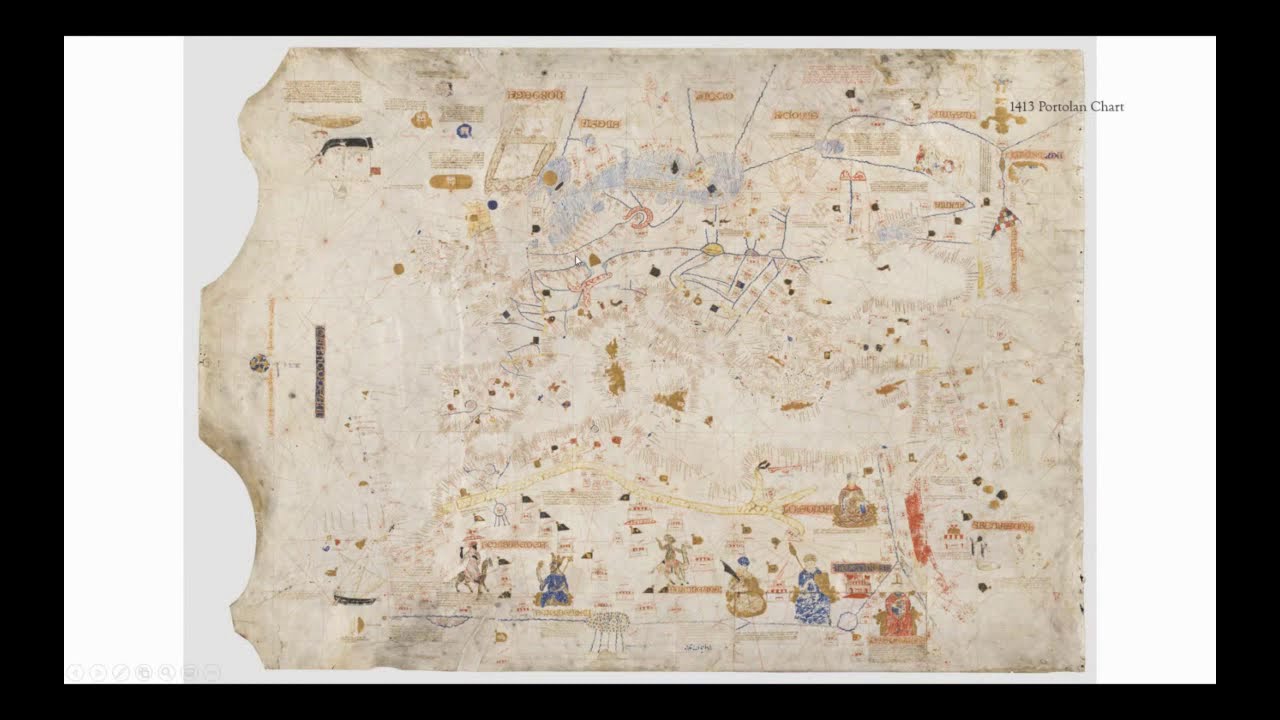
Significant historical studies of the Coast of Guinea (modern day West Africa) from the fifteenth century are attributed to the Portuguese chronicler Gomes Eanes de Zurara (Azurara) and reinforced by the Catalan Atlas of century earlier. What is conspicuously missing from these studies in English are the records of the medieval Islamic scholars of the Songhai, Mali and Ghana Empires of that era regarding the forms of art in the built environment. The importance of this is that the Timbuktu Manuscripts which reportedly date from the thirteenth century contain a diverse body of text ranging from astronomy to sexual health are well known.
My research over the past few years has focused on the developments of narrative and computation in architecture and how they negotiate its epistemic space. In 2019, I had the opportunity to partially investigate a nineteenth century Lusso-Baroque mosque in Lagos. The study forced me to rethink the generally accepted term Afro-Brazilian architecture and to awaken my interest in the broader historical narrative of the region. The main objectives of this research are to give voice to this grossly overlooked and marginalised cultural landscape, to contribute to the general understanding of digital heritage studies, and to critically contribute to a decolonised curriculum in architecture. In this research, I am looking to present aspects of West African Architecture and Urbanism through film and animation by recreating buildings and sites using 3D and Procedural Modelling
Tolulope Onabolu is a Teaching Fellow in Architecture. He explores the use of architectural visualization in the speculation of urban scenarios and in the reconceptualization of lost architectural heritage. He is interested in the role of architecture in the conditioning of human subjectivity, the sanctioning of the architect by sovereign prerogative, and the dangers of aesthetic agenda as political device.
In his research and lived experience, reinforced by the work of Alain Badiou, Giorgio Agamben, Michel Foucault, and Georges Bataille, he has queried the logics of belonging, inclusion, exclusion, and consumption as spatio-political practices.
Through his studio teaching, he finds direct correlation in horror fiction and speculative realism on the issues of foreignness and alterity and uses their narrative forms to lay bare the explicitly political structure of spatial practices in architecture and the built environment. In addition, he interrogates the consumption of architecture and its representation through computational practice.
He has taught across various design and theory courses at the Edinburgh School of Architecture and Landscape Architecture ESALA and has delivered projects across the UK and Nigeria. His work has been profiled at the Venice Biennale and the London Festival of Architecture.
Доступные форматы для скачивания:
Скачать видео mp4
-
Информация по загрузке: