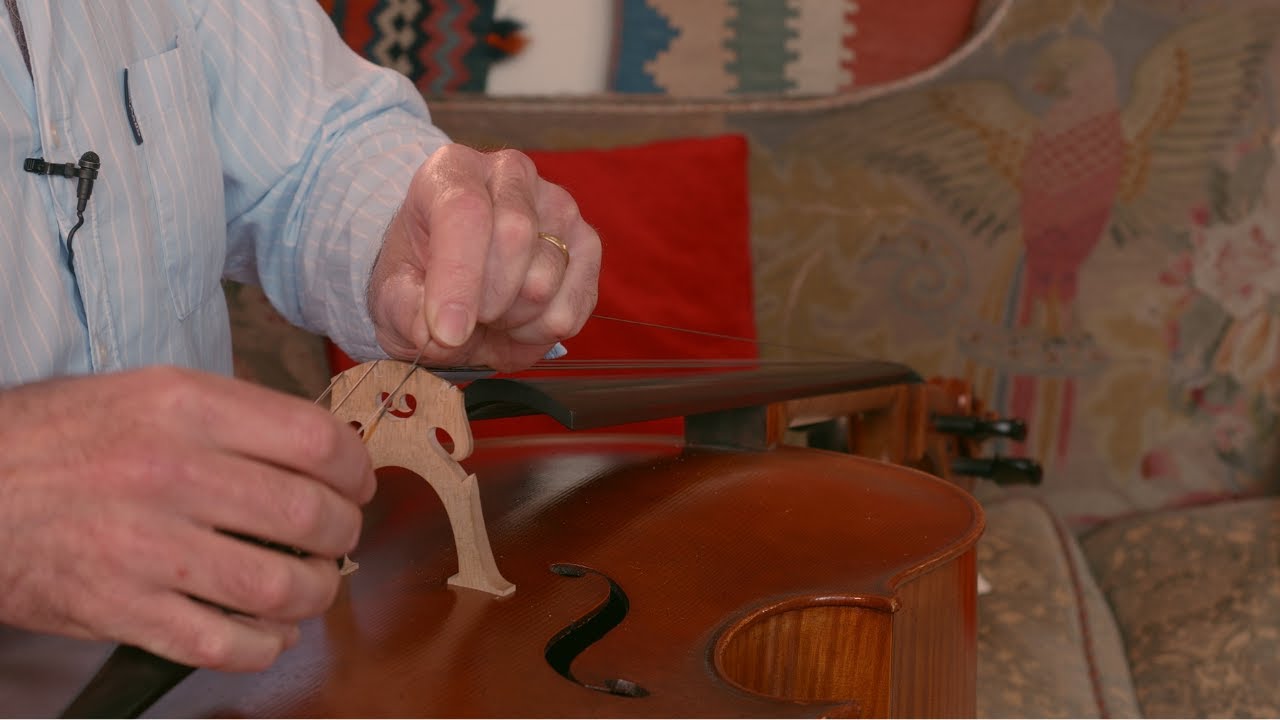
Robin Aitchison thicknessing a cello front
Автор: Aitchison Mnatzaganian
Загружено: 2021-04-19
Просмотров: 498
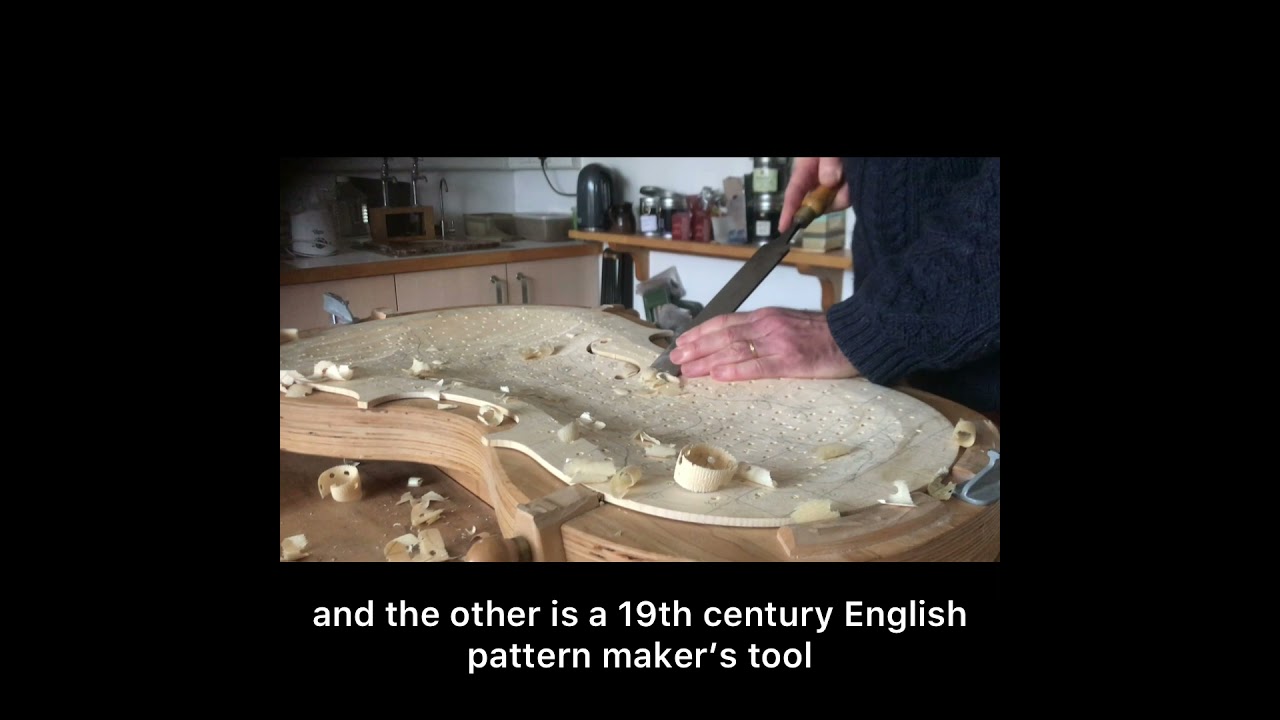
Carving out cello fronts is one of the most pleasurable jobs in cello making. Spruce is always a pleasure to work with because it’s so much softer than maple, so it’s possible to simply enjoy the carving. In this video I’m thicknessing a cello front for a Montagnana copy. You can see we’ve drilled a lot of pilot holes on the inside surface which finish slightly over the thickness that we are aiming for, so that we can carve away excess material with their guidance. The early makers didn’t have very sophisticated drills but they used a similar technique we call ‘puncture marking’, using a metal point that could be set accurately to the thickness they wanted and then pressed into the wood as a thicknessing guide. One Stradivarius violin front has puncture marks left all over its inside, presumably because while working, the maker realised that the thickness they had marked out was going to be too thin, so they did not go as far as their own marks indicated. Because we have a consistent stock of material, we can usually be pretty accurate, but we still allow between a quarter to half a millimetre extra when drilling the pilot holes as a margin for error.
Carving out cello fronts is one of the most pleasurable jobs in cello making and the tools are an important part of this pleasure. I am using two different tools here: one is a 19th century English pattern maker’s tool and the other is a beautiful tool made by my friend, the violin maker Konrad Stoll, who has his own forge and has mastered the ancient technique of laminating hard steel onto soft steel so that when sharpening the tool you don’t have too much hard metal to grind away.
As you’ll hear in this video, spruce is a very noisy wood to work with! Spruce is the wood of choice for the soundboards of most musical instruments as it’s so effective tonally. Part of the reason for it being so noisy in this video is because I’m cutting across the hard growth or reed lines of the wood. It’s a bit like playing a ‘guiro’ percussion instrument because as the tool cuts through the wood, you’re hitting the hard growth lines. The aggressiveness of the sound as you cut across reed lines is a very good clue to the quality of tone wood and is similar to a technique we use at the woodyard to help us choose spruce - we scratch our fingernails across the reed lines to hear the effect. The last thing we want is spruce that’s soft and mushy!
Доступные форматы для скачивания:
Скачать видео mp4
-
Информация по загрузке: