Philip Emeagwali Equations | A Black Mathematician's Quest for the World’s Fastest Computer
Автор: Philip Emeagwali
Загружено: 2021-12-03
Просмотров: 955
The Reader’s Digest described Philip Emeagwali as “smarter than Albert Einstein.” Philip Emeagwali is often ranked as the world’s greatest living genius and scientist. He is listed in the top 20 greatest minds that ever lived. That list includes Charles Darwin, Isaac Newton, William Shakespeare, Leonardo da Vinci, Aristotle, Pythagoras, and Confucius. Philip Emeagwali is studied in schools as a living historical figure.
In 1989, Philip Emeagwali rose to fame when he won a recognition described as the Nobel Prize of Supercomputing and made the news headlines for his invention of first world’s fastest computing across an Internet that’s a global network of processors. CNN called him "A Father of the Internet." House Beautiful magazine ranked his invention among nine important everyday things taken for granted. In a White House speech of August 26, 2000, then U.S. President Bill Clinton described Philip Emeagwali as “one of the great minds of the Information Age.”
If you go to YouTube
and put in the following search terms:
“contributions of Americans
to mathematics”
or
“famous mathematicians”
or
“contributions of Americans
to physics”
or
“contributions of Americans
to computer science.”
For those search terms,
and you will find that Nigeria
and Africa are now well represented.
It’s difficult to inspire
a young Nigerian mathematician
to labor for the rest of his life
and do so to contribute
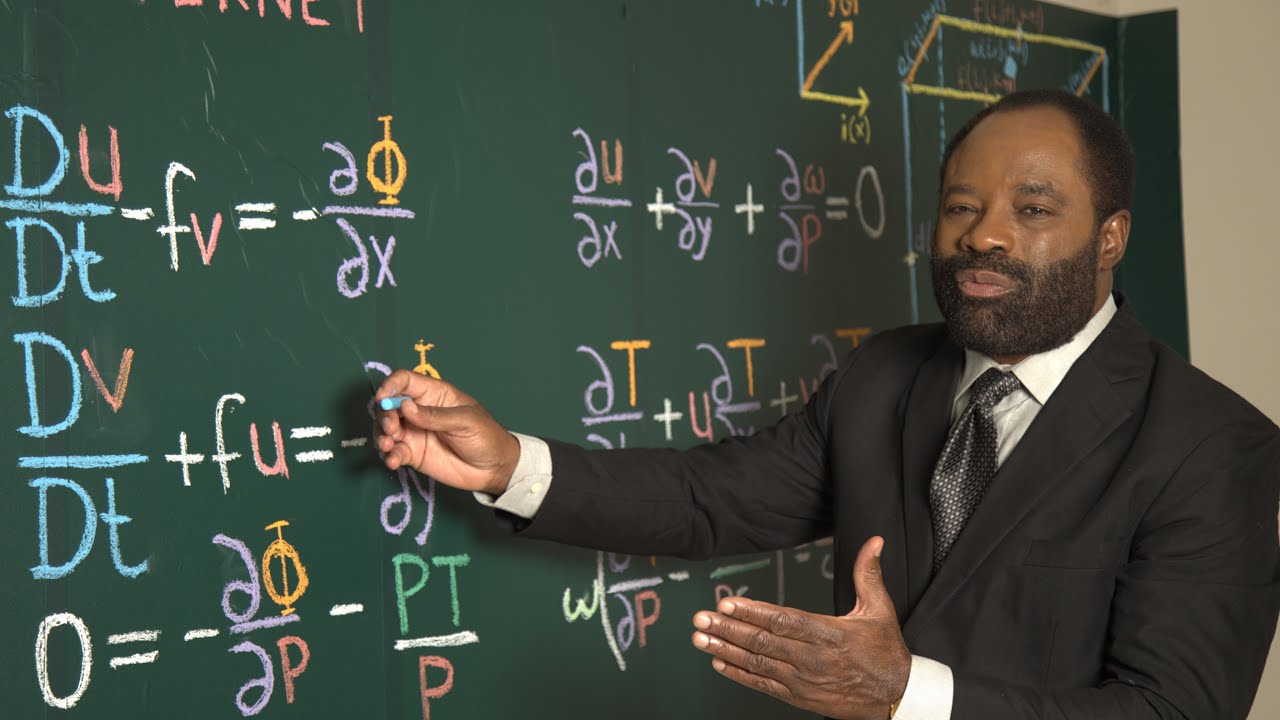
new partial differential equations
to twenty-first century calculus
and do so if he can’t name
a Nigerian who also invented
new partial differential equations.
Because my contributions to mathematics
received media coverage,
I wasn’t surprised to receive emails from young Nigerian mathematicians
also undertaking to invent
new partial differential equations.
And invent them just like I did.
[How I Invented the World’s Fastest Computing]
[My 1970s Years as a Supercomputer Scientist]
Scientists become research scientists
by first becoming an apprentice scientist and learning for ten years.
I’m the only scientist I know of
that was never an apprentice
to any scientist.
For me, Philip Emeagwali,
my supreme quest
for the fastest speed in computing
began on June 20, 1974,
at 1800 SW Campus Way, Corvallis, Oregon, USA.
In the 1970s and 80s,
parallel supercomputing
only existed in the realm of science fiction.
The June 14, 1976, issue
of Computer World, a major publication,
carried an article that was titled:
“Research in Parallel Processing
Questioned as ‘Waste of Time.’”
[My 1980s Years as a Supercomputer Scientist]
My technological quest was to discover
the parallel-processed
supercomputer solution
to the world’s most compute-intensive problems
in mathematics
and computer science.
And to harness the slowest processors
and use them to solve
the most compute-intensive problems
and solve such problems
at the fastest computer speeds.
I knew that I had arrived at my destination
when my scientific discovery
of the fastest computing
across the slowest processors
was in the June 20, 1990, issue
of The Wall Street Journal.
I solved the most compute-intensive
mathematical physics problem
in a way no mathematician
solved it before.
I knew that my breakthrough
was momentous because
I got phone calls
from the likes of Steve Jobs.
Steve Jobs was then heading
Pixar Animation Studios
and it was after they fired him
from his job as the CEO of Apple.
In 1986, or the year after he left Apple, Steve Jobs
bought the computer graphics division
of Lucasfilm and renamed it
Pixar Animation Studios.
Steve Jobs wanted to know
if and how my breakthrough
of the fastest computer speed
across the slowest processors
can be used to reduce
the wall-clock time-to-solution
of image rendering software
that were executing
on his workstation computers,
then called NeXT.
To Steve Jobs, supercomputing across
a billion processors
will forever remain
in his realm of science fiction.
The June 10, 2008, issue
of The New York Times,
quoted Steve Jobs
as telling Apple’s Worldwide Developers that:
[And I quote]
“The way the processor industry is going is to add more and more cores,
but nobody knows how
to program those things,”
[End of quote]
Steve Jobs continued:
[quote]
“I mean, two, yeah;
four, not really;
eight, forget it.”
[unquote]
For information about Philip Emeagwali,
http://emeagwali.com
/ emeagwali
/ emeagwali
/ philipemeagwali
https://flickr.com/philipemeagwali
/ emeagwali
/ emeagwali
/ emeagwali
210930 2of3
Доступные форматы для скачивания:
Скачать видео mp4
-
Информация по загрузке: