US veteran returns Japan flag to soldier's family
Автор: AP Archive
Загружено: 2017-08-20
Просмотров: 5108
(15 Aug 2017) The former US Marine knew the calligraphy-covered flag he took from a fallen Japanese soldier 73 years ago was more than a keepsake of World War II.
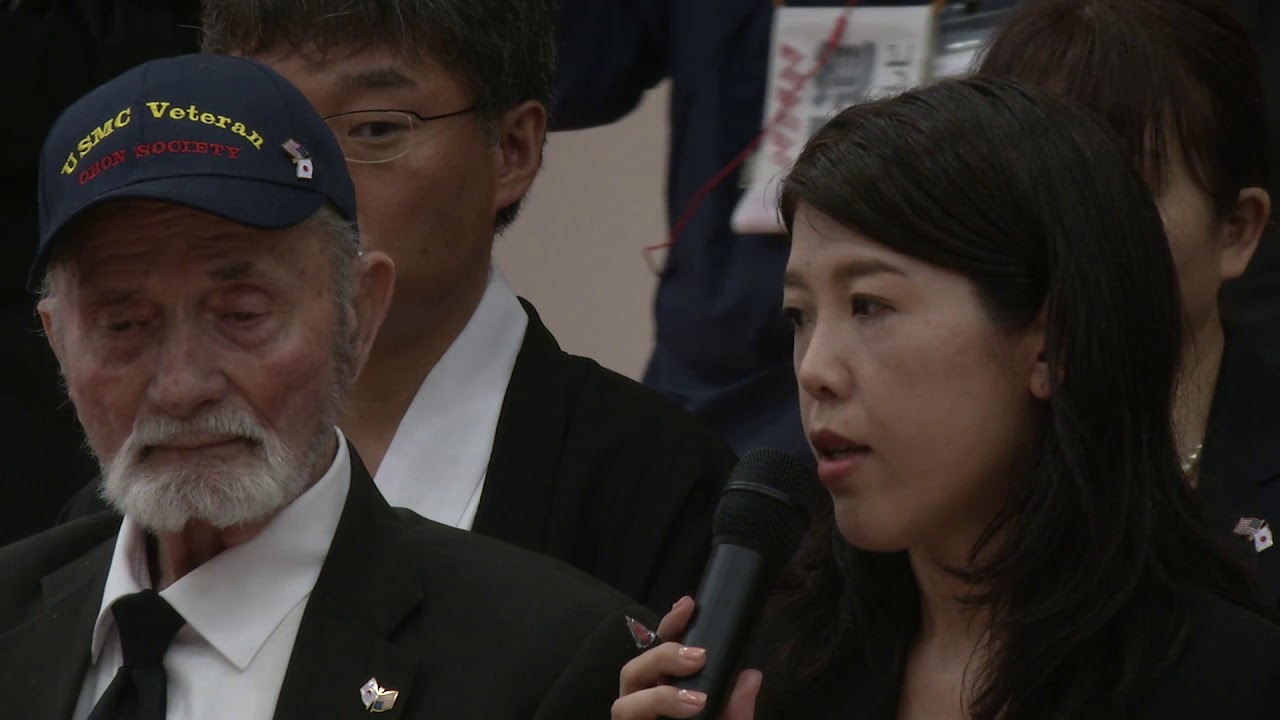
When Marvin Strombo finally handed the flag back to Sadao Yasue's younger brother and sisters on Tuesday, he understood what it really meant to them.
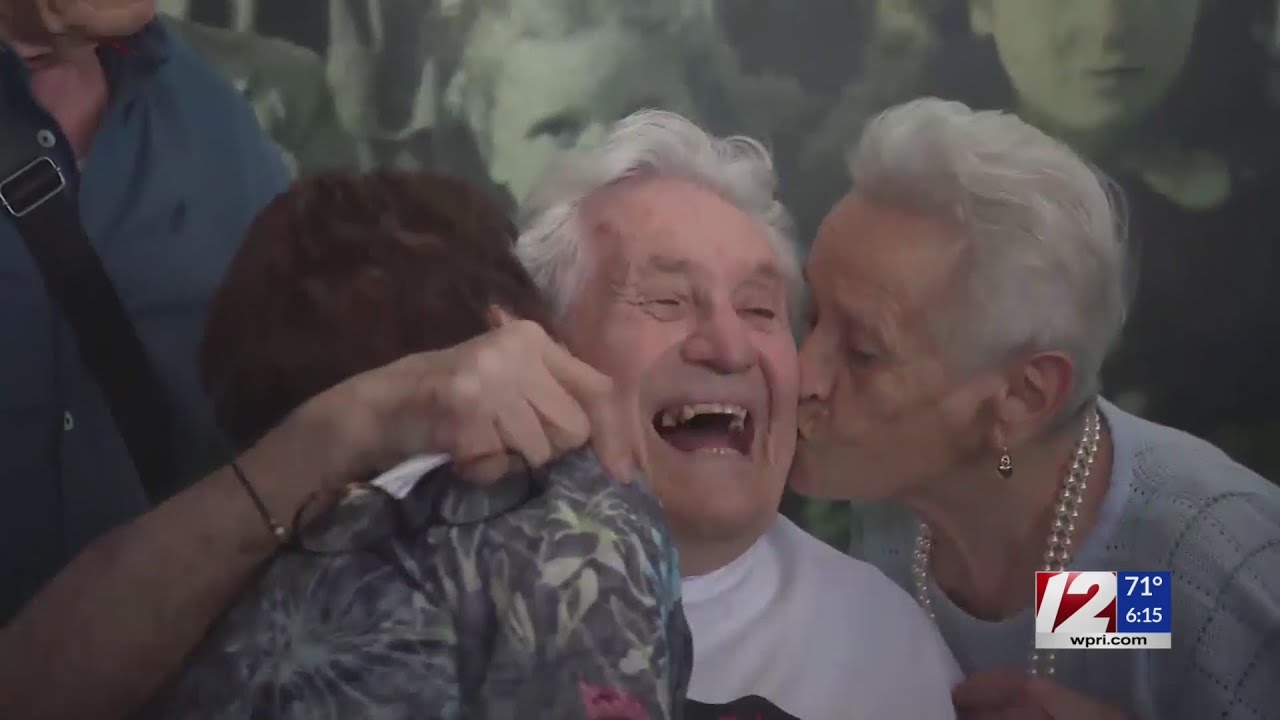
Tatsuya Yasue buried his face into the flag and smelled it, then he held Strombo's hands and kissed them.
His elder sister Sayoko Furuta, 93, sitting in her wheelchair, covered her face with both hands and wept silently as Tatsuya placed the flag on her lap.
Strombo said their reaction struck him.
He reached out to Yasue's elder sister and gently rubbed her shoulder.
The flag is a treasure that will fill a deep void for Yasue's family.
It is the first trace of their brother.
The Japanese authorities only gave them a wooden box containing a few rocks, a substitution for the remains that have never been found.
The flag's white background is filled with signatures of 180 friends and neighbours in this tea-growing mountain village of Higashishirakawa, wishing Yasue's safe return.
"Good luck forever at the battlefield," a message on it reads.
Looking at the names and their handwriting, Tatsuya Yasue clearly recalls their faces and friendship with his brother.
The smell of the flag immediately brought back childhood memories to the soldier's younger brother.
The return of the flag brings closure, the 89-year-old farmer and a younger brother of the fallen soldier, told The Associated Press at his 400-year-old house on Monday.
Yasue last saw his older brother alive the day before he left for the South Pacific in 1943.
Tatsuya and two siblings had a small send-off picnic for the oldest brother outside his military unit over sushi and Japanese sweet mochi, which became their last meal together.
At the end of the meeting, his brother whispered to Tatsuya, asking him to take good care of their parents, as he would be sent to the Pacific islands, harsh battlegrounds where chances of survival were low.
A year later, the wooden box containing the stones arrived.
Months after the war ended, the authorities told Yasue that his brother died somewhere in the Marianas presumably on July 18, 1944, the day Saipan fell, at age 25.
Yasue and his relatives wondered if Sadao might have died at sea off Saipan.
About 20 years ago, Yasue visited Saipan with his younger brother, imagining what their older brother might have gone through.
The only person who can provide some of those answers, Strombo said he found Yasue's body on the outskirts of Garapan when he got lost and ended up near the Japanese frontline.
He told Yasue's siblings their brother likely died of a concussion from a mortar round.
He told them that Sadao was lying on the ground, his leftside down, looking peacefully as if he was sleeping and without severe wounds.
At least the flag and his story suggest Yasue died on the ground, which also raises hopes of retrieving his remains.
The remains of nearly half of 2.4 million Japanese war-dead overseas have yet to be found 72 years after the World War II ended.
It's a pressing issue as the bereaved families reach old age and memories fade.
Allied troops frequently took the flags from the bodies of their enemies as souvenirs, as Japanese flags were quite popular and fetched good price when auctioned, Strombo said.
But to the Japanese bereaved families, they have a much deeper meaning, especially those, like Yasue, who never learned how their loved ones died and never received remains.
Find out more about AP Archive: http://www.aparchive.com/HowWeWork
Twitter: / ap_archive
Facebook: / aparchives
Instagram: / apnews
You can license this story through AP Archive: http://www.aparchive.com/metadata/you...

Доступные форматы для скачивания:
Скачать видео mp4
-
Информация по загрузке: