Linux Command Line (25) setuid
Автор: MichaelsTechTutorials
Загружено: 2020-10-03
Просмотров: 9021
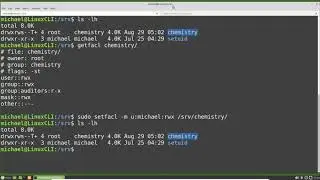
The setuid permission bit flag is for set userID. When the setuid flag is enabled, it allows users to run an execute file with the permissions of the file owner.
The most common example used when explaining the setuid permission bit flag is the passwd command. Every user on the system can update their password by executing passwd. The passwords are stored in the /etc/shadow - A file that is owned by root and can only be updated by privileged users. When a user on the system executes passwd, they run it as the root user which allows passwd to update the /etc/shadow file.
When the setuid is enabled, the file owner executable permission bit will show as an s instead of an x.
The rest of the video shows how create our own executable file and enable the setuid bit. We find that the executable file must be a compiled program and the file owner must be root.
See the complete LCL playlist at: • Linux Command Line (01) What Is The Linux...
Website link:
https://thefrugalcomputerguy.com/linu...

Доступные форматы для скачивания:
Скачать видео mp4
-
Информация по загрузке: