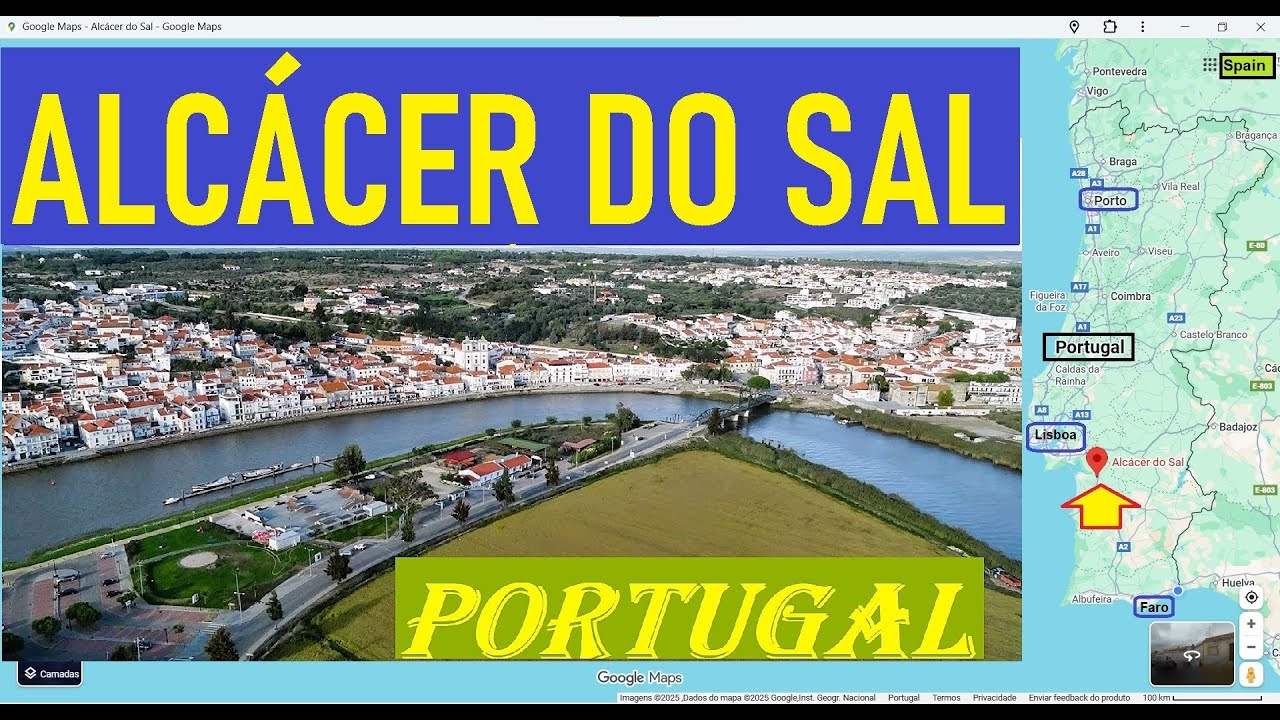
ALCÁCER DO SAL »»» SETÚBAL, Distrito; »»» ALCÁCER DO SAL, Concelho
Автор: PORTUGAL (YouTube Portugal)
Загружено: 2026-01-17
Просмотров: 14
GPS 38.370467, -8.515042
City of Alcácer do Sal
It had 5,868 inhabitants (in 2021) and is the seat of the Municipality of Alcácer do Sal.
It is one of the oldest cities in Europe, founded before 1000 BC by the Phoenicians. Like its neighbouring Phoenician cities of Lisbon and Setúbal, it supplied salt, salted fish, horses for export, and food for the ships that traded tin with Cornwall.
Municipality of Alcácer do Sal
Alcácer do Sal is the second-largest municipality in the country, with approximately 1,500 km² and about 13,000 inhabitants, and belongs to the district of Setúbal. This municipality is divided into four parishes.
Alcácer do Sal was founded by the Phoenicians. Due to its location on the banks of the Sado River, it allowed access for boats transporting goods, thus playing a significant role in the export of various products, notably horses, salt, and salted fish.
Later, after the Arab rule, Alcácer do Sal was conquered by Afonso Henriques on June 24, 1158, receiving its first charter in 1170. However, it was only during the reign of Afonso II, in 1218, that it was definitively conquered and received the title of head of the Order of Santiago. In 1516, King Manuel I granted Alcácer do Sal a new charter. During the 16th century, Alcácer do Sal once again became an important port for the salt trade.
In the 18th and 19th centuries, the Sado River continued to be a major waterway into the Alentejo region. Its unique characteristics led to the development of a variety of vessels specifically designed for the permanent transport of goods, namely laitéus (large fishing boats), canoes, galleons (first for seine fishing and later for transporting salt), and yachts. With the introduction of the railway, allowing for faster and longer connections, the use of the Sado was gradually abandoned, although it was maintained until the first half of the 20th century.
The territory of Alcácer do Sal boasts a vast architectural heritage, most notably the Castle of Alcácer do Sal, considered by some to be the largest example of Muslim architecture.
The municipality has a low level of industrialisation, and the existing industries are small and linked to the processing of primary sector products, such as pine nuts, rice, wood, or tomatoes. Currently, Alcácer do Sal is a leading municipality in the production of pine nuts.
(PT)
GPS 38.370467, -8.515042
Cidade de Alcácer do Sal
Tinha 5 868 habitantes (em 2021) e é sede do Município de Alcácer do Sal.
É uma das mais antigas cidades da Europa, fundada antes de 1000 a.C. pelos fenícios. Tal como as vizinhas e também Fenícias cidades de Lisboa e Setúbal, fornecia sal, peixe salgado, cavalos para exportação e alimentos para os barcos que comerciavam estanho com a Cornualha.
Município de Alcácer do Sal
Alcácer do Sal é o segundo maior concelho do país, com aproximadamente 1500 km² e cerca de 13 mil habitantes, e pertence ao distrito de Setúbal. Este Concelho divide-se em quatro freguesias: União de freguesias de Alcácer do Sal (Santa Maria do Castelo, Santiago e Santa Susana), Freguesia de Torrão, Freguesia de S. Martinho e Freguesia de Comporta.
Alcácer do Sal foi fundado pelos fenícios. Devido à sua localização nas margens do rio Sado, permitiu o acesso dos barcos de transporte de mercadorias, tendo, deste modo, um papel relevante na exportação de vários produtos, nomeadamente cavalos, sal e peixe salgado.
Mais tarde, após o domínio árabe, Alcácer do Sal foi conquistada por D. Afonso Henriques a 24 de junho de 1158, recebendo o 1º foral em 1170. No entanto, só no reinado de D. Afonso II, em 1218, foi conquistada definitivamente e recebido o título de cabeça da Ordem de Santiago. Em 1516, pela mão de D. Manuel I é atribuído novo foral a Alcácer do Sal. Já durante o século XVI, Alcácer do Sal volta a ser um importante porto de comercialização de sal.
Nos séculos XVIII e XIX o rio Sado continuou a ter grande relevância enquanto grande via de penetração no Alentejo. As suas especiais características proporcionaram o surgimento de um conjunto de embarcações específicas para o uso no transporte permanente de mercadorias, nomeadamente os laitéus, as canoas, os galeões (primeiro de pesca de cerco e depois de transporte de sal) e os iates. Com a entrada em funcionamento da via ferroviária, permitindo ligações mais rápidas e longas, o recurso ao Sado foi progressivamente abandonado, ainda que se tenha conservado até à primeira metade do séc. XX.
O território de Alcácer do Sal reúne um vasto Património Arquitetónico edificado do qual se destaca o Castelo de Alcácer do Sal, considerado, por alguns, a maior fortificação da arquitetura muçulmana.
O grau de industrialização do Concelho é baixo e as indústrias existentes são de pequena dimensão e estão ligadas à transformação de produtos do setor primário, como o pinhão, o arroz, a madeira ou o tomate. Atualmente, Alcácer do sal é um Concelho líder na produção de pinhão.
Доступные форматы для скачивания:
Скачать видео mp4
-
Информация по загрузке: