Germany's Hidden Slavs: The DNA History No One Talks About
Автор: Genetic Journeys
Загружено: 2026-01-19
Просмотров: 1677
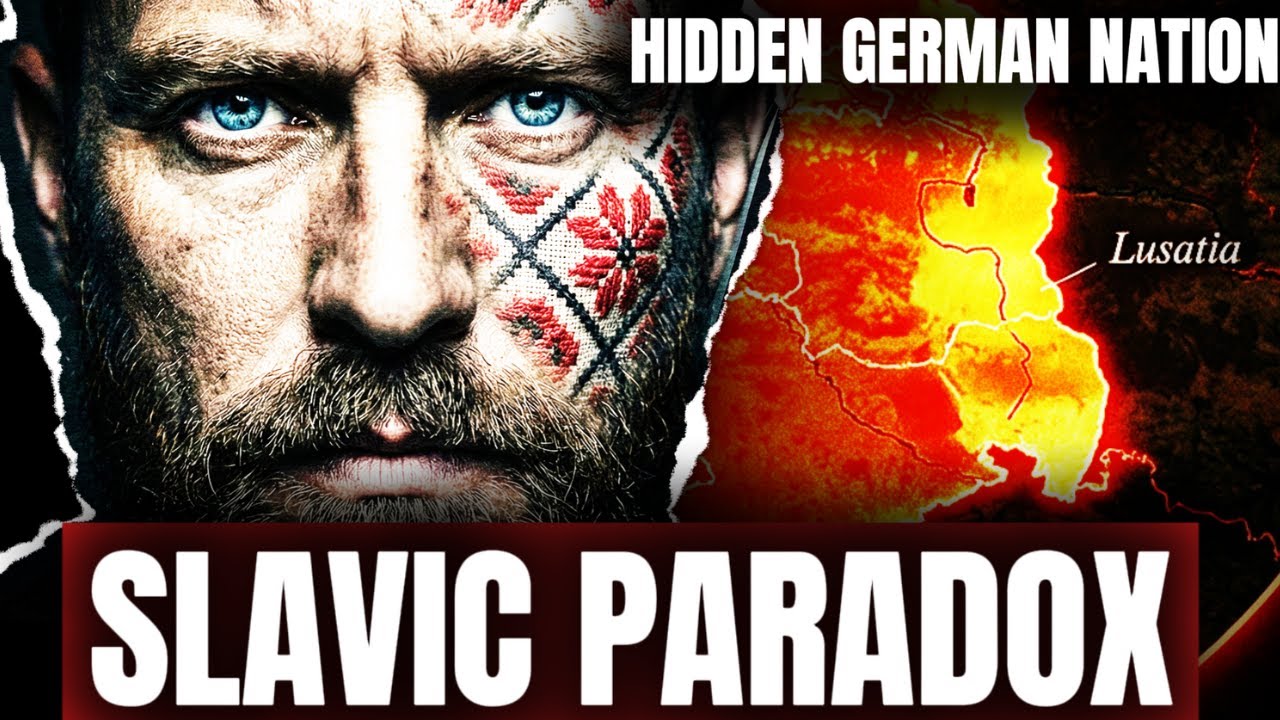
Germany is the heart of the Germanic world, yet its eastern states hide a 1,400-year-old secret. The Sorbs are not recent arrivals; they are an indigenous Slavic people who predated German expansion and survived centuries of assimilation to remain a distinct "genetic time capsule" in the heart of Europe.
In this video, we uncover why cities like Berlin and Dresden sit on Slavic foundations, the "White Serbia" link to the Balkans, and what genome-wide analysis reveals about their unique ancestry. We explore why Sorbian DNA sits closer to Poland than to Berlin, how the R1a-M458 marker disproves the myth of "Slavicized Germans," and the cultural tenacity that kept their identity alive against all odds.
What You’ll Learn:
The Slavic Roots of German Cities: Why Berlin, Leipzig, and Dresden have Slavic names.
White Serbia: The ancient 7th-century connection between the Elbe and the Balkans.
The Genetic Time Capsule: Why Sorbs cluster with Poles and Czechs rather than Germans.
R1a-M458: The paternal marker that proves their West Slavic origins.
Medical Genetics: How centuries of endogamy created a unique "founder effect."
Survival against Erasure: The role of women and the Church in preserving the language.
The Coal Paradox: How the GDR protected Sorbian rights while destroying their villages.
Timestamps:
00:00 – The Hidden Slavs of Germany
01:12 – Before Germany Existed
03:30 – The DNA Doesn't Lie
08:51 – How They Survived
11:20 – Protected Yet Destroyed
13:55 – What They Prove
Have you discovered Slavic ancestry in unexpected places? Do you think identity comes from DNA, culture, or both?
Share your thoughts in the comments.
If you enjoyed this story:
Like the video
Subscribe for more deep dives into ancient DNA and forgotten histories
Share it with anyone fascinated by European history and linguistics
Sources & Further Reading:
Veeramah et al., 2011 – Genetic variation during the 1st millennium AD in Central Europe.
Underhill et al., 2014 – The phylogenetic and geographic structure of Y-chromosome haplogroup R1a.
Varon et al., 2000 – Nijmegen Breakage Syndrome: The Sorbian Founder Mutation (Nature Genetics).
Stone, G. – The Smallest Slavonic Nation: The Sorbs of Lusatia.
UNESCO – Atlas of the World's Languages in Danger (Lower Sorbian status).
Max Planck Institute – Population structure and admixture in Central Europe.
Доступные форматы для скачивания:
Скачать видео mp4
-
Информация по загрузке: