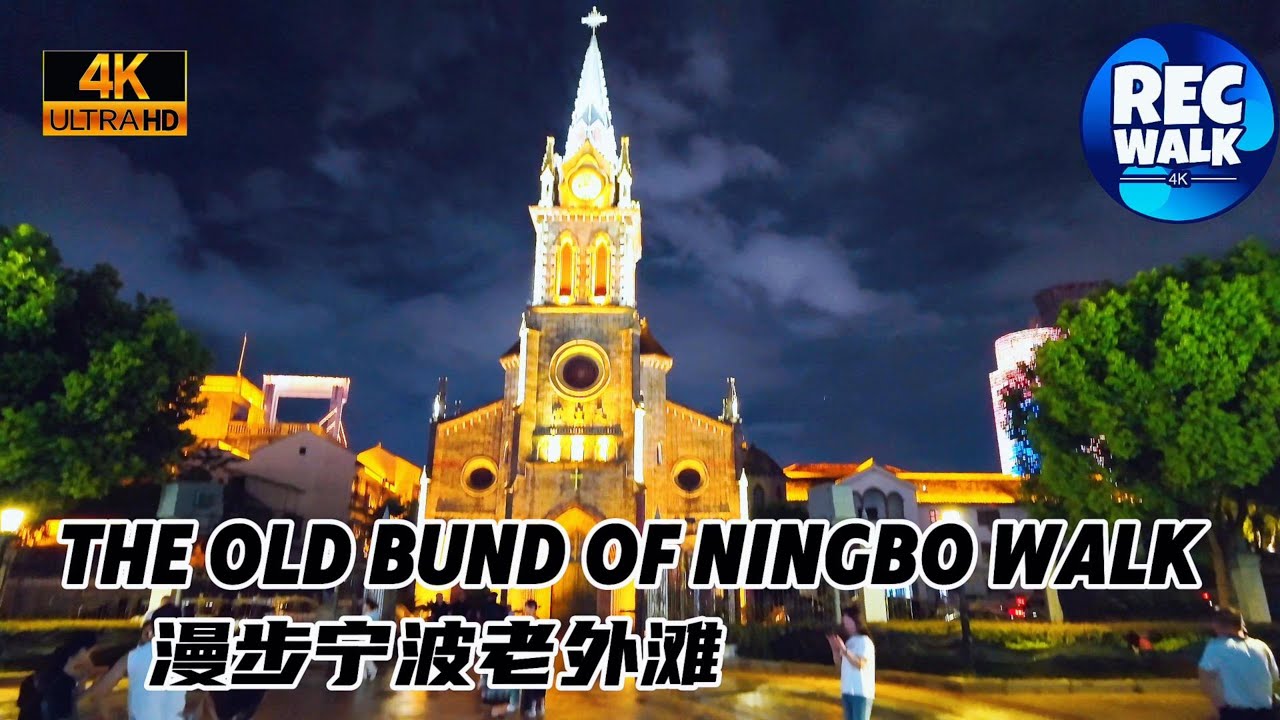
【4K CHINA】The Old Bund of Ningbo Walk|漫步宁波老外滩|Ningbo|宁波|RECWALK4K
Автор: REC WALK 4K
Загружено: 2024-08-23
Просмотров: 144
📖Brief Introduction
The Old Bund of Ningbo
The Old Bund of Ningbo is located at the intersection of Jiangxia Street and Yongjiang Bridge in Jiangbei District, Ningbo City, Zhejiang Province. It is one of the oldest bunds in China. The following is a detailed introduction to the Old Bund of Ningbo:
• Historical Evolution:
• Formation and Development: The history of the Old Bund of Ningbo can be traced back to the Tang and Song dynasties. At that time, Ningbo Port (Mingzhou Port) was listed as one of the three major ports for foreign trade opening along with Yangzhou and Guangzhou in China. In the Yuan Dynasty, the Ningbo Port further developed and was listed as one of the major trading ports in China along with Guangzhou and Quanzhou. The Old Bund of Ningbo was the location of the historical Ningbo Port. It was the main dock for ships to berth in Ningbo and the gateway to the ancient city of Ningbo. In modern times, after China's defeat in the Opium War in 1842, Ningbo was listed as one of the "Five Treaty Ports". It officially opened on January 1, 1844. Subsequently, 12 countries such as Britain, France, and the United States established consulates on the north bank of the river. The Bund became increasingly prosperous, docks were continuously built, and Western culture kept pouring in.
• Prosperous Period: By the beginning of the 20th century, the Old Bund of Ningbo had turned into a cosmopolitan place with the British Consulate, Catholic Church, police station, etc., as well as foreign firms, shops, nightclubs, brothels, restaurants, theaters, and billiard rooms. It became a transportation hub in Jiangsu and Zhejiang provinces. After the outbreak of the Anti-Japanese War, Shanghai and Hangzhou fell one after another. Relying on sea transportation and connection with the Shanghai concession, Ningbo became more prosperous, and the Bund presented a distorted prosperous scene.
• Decline and Rebirth: In the early days of liberation, due to the blocking of shipping caused by the war and the loss of merchant ships, the Bund gradually lost its strength. After the reform and opening up, due to the insufficient awareness of the protection of historical and cultural blocks by the local government, incomplete policies and regulations, and its superior geographical location, the construction in the Old Bund block and its surrounding areas was frequent, resulting in many buildings being in disrepair and the entire block becoming dilapidated. In 2001, the comprehensive renovation of the Old Bund of Ningbo was fully launched. It opened for trial operation on New Year's Day in 2005 and has now become a national-level night-time cultural and tourism consumption cluster area, a national-level tourism and leisure block, and the third batch of demonstration pedestrian streets in China.
📖简介
宁波老外滩
宁波老外滩位于浙江省宁波市江北区江夏街与甬江大桥交汇口,是目前中国最古老的外滩之一。以下是关于宁波老外滩的详细介绍:
• 历史沿革:
• 形成与发展:宁波老外滩的历史可追溯到唐宋时期,当时宁波港(明州港)与扬州、广州一起并列为中国对外开埠的三大港口。元代,宁波港口进一步发展,与广州、泉州并列为中国主要贸易港,宁波外滩正是历史上宁波港所在地,是当年宁波停靠船只的主要码头,更是进出宁波古城的门户。到了近代,1842年鸦片战争中国战败,宁波被列为“五口通商口岸”之一,1844年1月1日正式开埠,随后英、法、美等12国在江北岸设立领事馆,外滩日趋繁荣,码头陆续兴建,西洋文化不断涌入。
• 繁荣时期:至20世纪初,宁波老外滩已变成了五方杂处的洋场,拥有大英领事馆、天主教堂、巡捕房等,还有洋行、商铺、夜总会、妓院、饭庄、戏院和弹子房等,成为江浙一带的交通要冲。抗战爆发后,上海、杭州相继沦陷,宁波依靠海运与上海租界相连,愈发兴旺,外滩呈现畸形繁荣景象。
• 没落与重生:解放初期,因战事航运阻断、商轮流失,外滩逐渐失势。改革开放后,由于地方政府对历史文化街区保护意识不足,政策法规不健全,加上其优越的地理位置,老外滩街区及周围地区建设频繁,导致许多建筑年久失修,整个街区变得残破不堪。2001年宁波老外滩改造全面启动,2005年元旦对外试营业,如今已成为国家级夜间文化和旅游消费集聚区、国家级旅游休闲街区、中国第三批示范步行街。
🗺️ Map 地图 https://maps.app.goo.gl/8Fnsr634mpoCV...
🌟 Liking shows your affection.
🚀 Sharing doubles the joy.
🎉 Subscribing initiates a wonderful journey.
Thank you for your company. Hope it brings you a wonderful viewing experience!
🌟 点赞表示您的喜爱
🚀 分享让快乐加倍
🎉 订阅开启精彩之旅
感谢您的陪伴,希望能给您带来美好的观看体验!
#4k #china #walk #citywalk#walking #4kvideo#漫步 #宁波老外滩
Доступные форматы для скачивания:
Скачать видео mp4
-
Информация по загрузке: