California BART’s $2B Next Expansion Isn’t Where You Think
Автор: GREAT TRAINSPEED
Загружено: 2026-01-17
Просмотров: 836
California BART’s $2B Next Expansion Isn’t Where You Think
===
#greattrainspeed #train #speedtrain
===
00:00 Intro
00:54 Overview
02:25 Details
05:42 2026 Update
07:00 Benefits
==
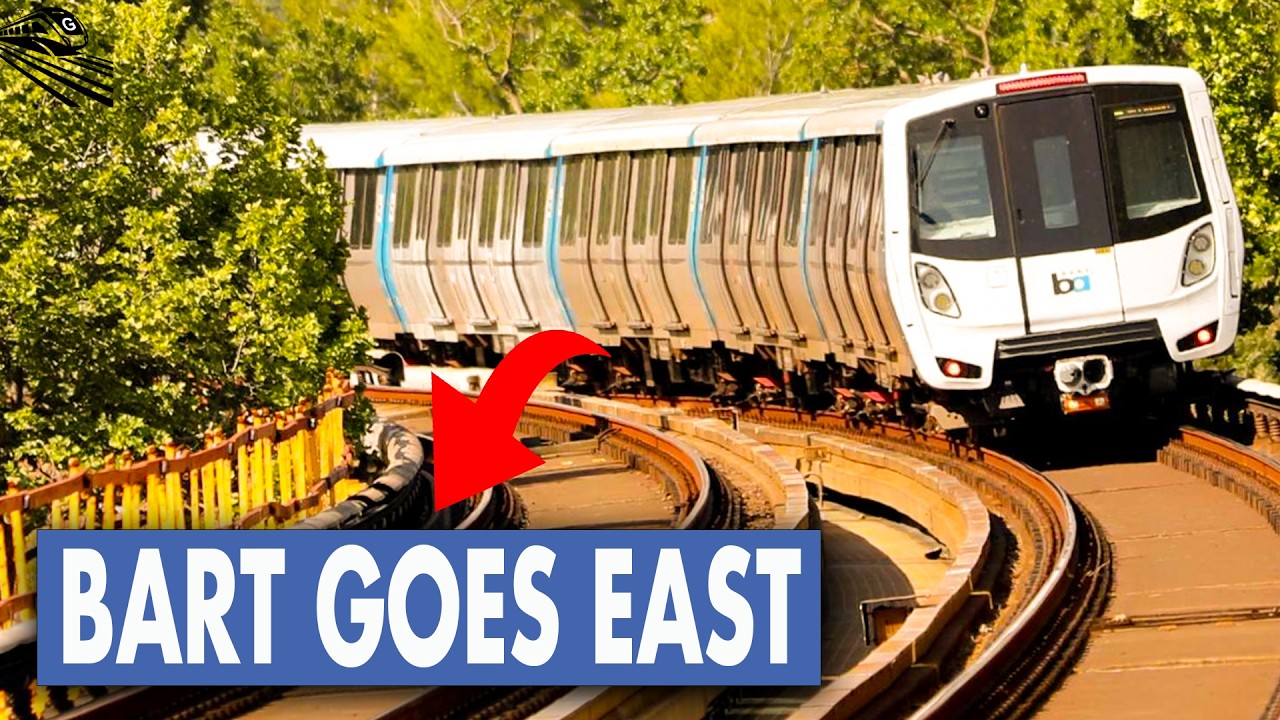
BART’s $2B Next Expansion Isn’t Where You Think
When people talk about BART expansion, they usually mean San Jose. Maybe Santa Clara.
Maybe one more stop at the edge of the Bay. But BART’s next expansion might not even be in the Bay Area. In a place like Tracy, California — a town that went from fifteen thousand people to nearly one hundred thousand in just a few decades — commuters are spending hours every day crossing Altamont Pass just to reach jobs, doctors, and schools that still live in the Bay Area economy. And now, a new rail project called Valley Link is trying to solve that problem — not by extending BART tracks, but by extending BART’s reach.
This isn’t just another rail proposal.
It’s what happens when housing pushes people east… and BART gets pulled with them.
BART’s $2B Next Expansion Isn’t Where You Think
For decades, Bay Area Rapid Transit expansion followed a familiar playbook: extend a line, add a station, and stay within the Bay Area’s traditional boundaries. Projects into Silicon Valley, incremental infill stations, and recent coordination efforts like the Big Sync all reflect that approach—improving access and reliability where the system already exists. But as housing growth pushes workers farther east and commutes stretch well beyond BART’s physical footprint, the limits of that model are becoming harder to ignore. Expansion is no longer just about where tracks end, but about how the region stays connected when daily travel crosses county and system boundaries.
BART’s $2B Next Expansion Isn’t Where You Think
That change is driving projects like Valley Link Rail, which is planned in phases to connect the Northern San Joaquin Valley directly into the Bay Area rail network. Future phases would edeepen those connections, not by laying more BART track, but by linking compatible rail systems at key transfer points.
So what is this project that aims to bridge that gap? Let’s find out in the next part.
And before we move on, a quick note, only 22.7 percent of viewers are currently subscribed. If you’re finding this discussion useful, hitting the subscribe button really helps support the channel and lets us keep bringing you in-depth coverage like this.
Доступные форматы для скачивания:
Скачать видео mp4
-
Информация по загрузке: