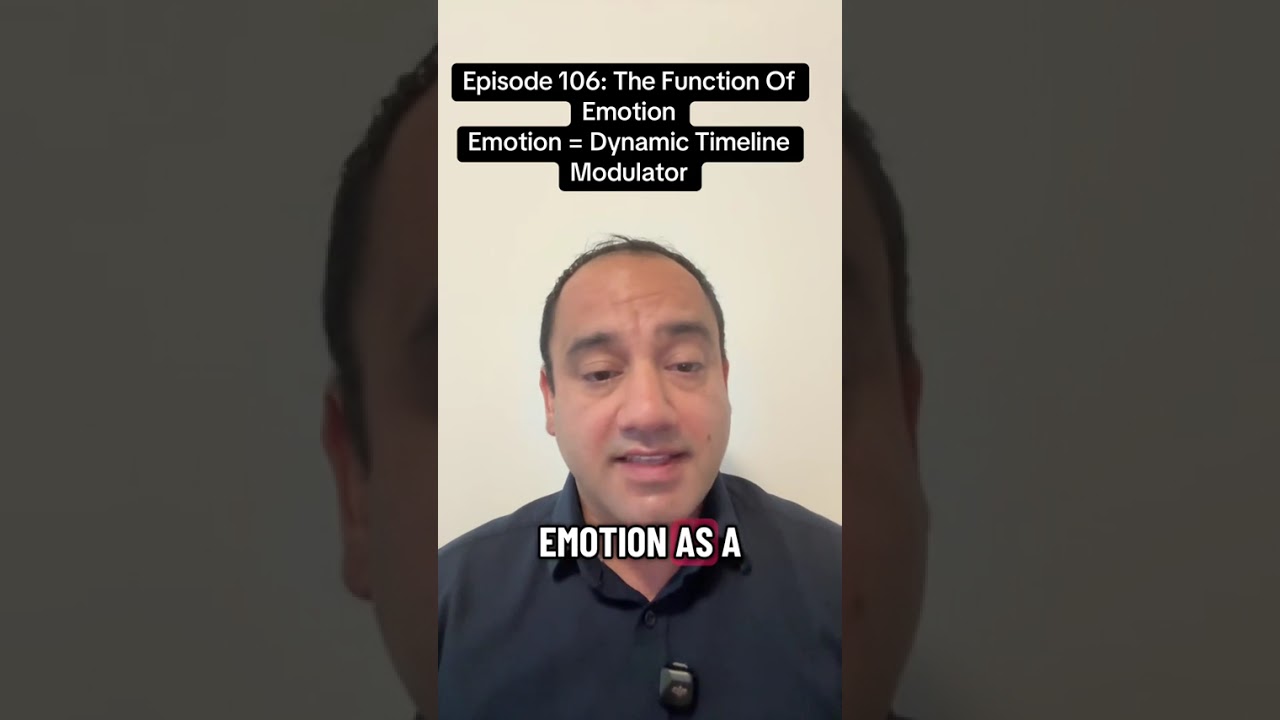
Episode 106: The Function Of Emotion. Why Emotion = A Dynamic Timeline Modulator.
Автор: Fusion Creative Lab - The Architecture of Reality
Загружено: 2025-12-23
Просмотров: 13
Episode 106: The Function Of Emotion. Why Emotion = A Dynamic Timeline Modulator.
Emotion is often misunderstood as reaction, weakness, or something to control.
From a Field Mechanics perspective, emotion is functional.
Emotion is a dynamic timeline modulator.
Emotion adjusts how fast, how smoothly, and in which direction
a timeline unfolds.
It does not create reality on its own.
It modulates the rendering process.
Emotion influences:
• signal intensity
• response speed
• attention focus
• decision timing
• momentum or resistance
When emotion is regulated:
• timelines flow smoothly
• decisions align naturally
• timing improves
• integration completes
• coherence increases
When emotion is dysregulated:
• timelines fragment
• loops repeat
• urgency appears
• reactivity dominates
• progress stalls
This is why emotion must be integrated, not suppressed.
Emotion carries information about:
• readiness
• safety
• alignment
• boundaries
• overload
Ignoring emotion removes the modulation system.
Over-identifying with emotion destabilizes it.
Balanced emotion provides fine control.
It allows the system to:
• slow down when integration is needed
• accelerate when alignment is present
• pause under overload
• advance when safe
Emotion is not the enemy of logic.
It is the timing intelligence of consciousness.
When emotion is understood and integrated,
timelines become responsive instead of reactive.
That is the function of emotion.This is Field Mechanics
Доступные форматы для скачивания:
Скачать видео mp4
-
Информация по загрузке: