Piranesi's People: The Outlet of Lake Albano
Автор: State Library Victoria
Загружено: 2014-04-22
Просмотров: 2924
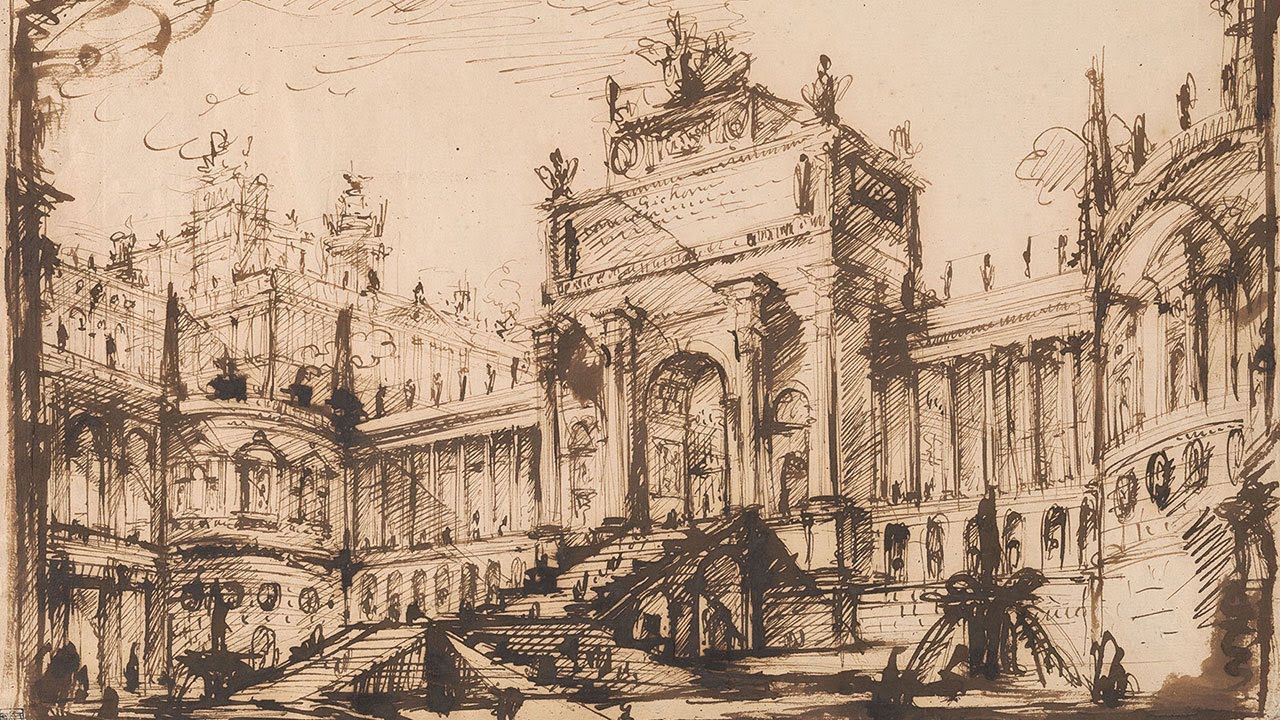
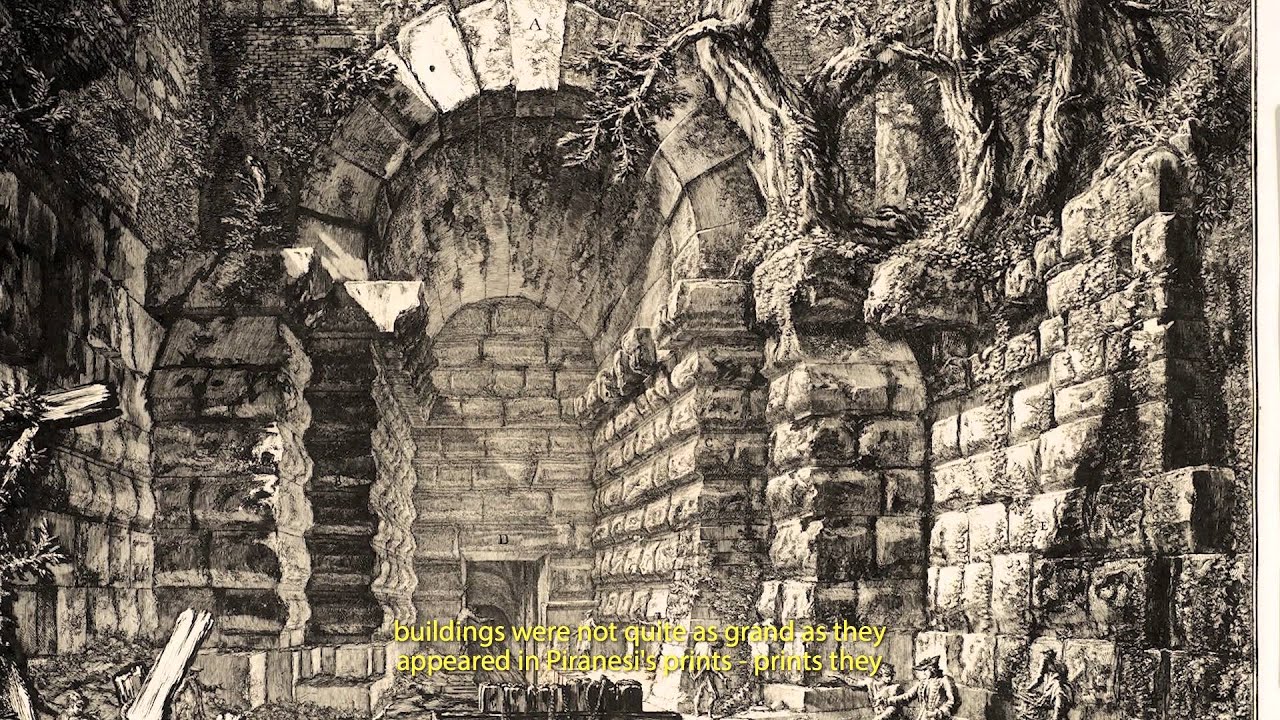
Dimostrazioni dell'Emissario di lago Albano (The Outlet of Lake Albano)
Dr Colin Holden, Exhibition curator of Rome: Piranesi's vision, explains how Piranesi's use of exaggerated scale in this print celebrates the great engineering work of the ancient Romans.
'Piranesi's People' is a series of 10 short videos that bring to life the detail in unforgettable images of classical and baroque Rome by 18th-century master-printmaker Giovanni Battista Piranesi.
Rome: Piranesi's vision (http://www.slv.vic.gov.au/event/rome-...) is a free exhibition on display at the State Library of Victoria from 22 February to 22 June 2014, presented in partnership with the University Library, University of Melbourne.
TRANSCRIPT
'Dimostrazioni dell'Emissario di lago Albano' (The Outlet of Lake Albano)
Giovanni Battista Piranesi, from Opere di Giovanni Battista Piranesi, vol. 11 (Paris, Francesco and Pietro Piranesi), 1800--07, Special Collections, Baillieu Library, The University of Melbourne
This is one of many works by Piranesi in which he included human figures, in order to make a point. At one level they are realistic, but they are not meant to give us an equivalent of a photographic record of a scene; rather, to convey a deeper meaning. Here, we see one of the great engineering works of the ancient Romans. In about 398 BC, engineers supervised tunnelling through a hillside to divert water from a lake near Castel' Gandolfo, perhaps for irrigation or to reduce a malarial swamp. We are standing in front of an archway, built into a hillside; an arch that frames the entrance to the tunnel. In the foreground on the right, a local fisherman and a Grand Tourist both gesture -- in admiration, or perhaps sheer wonder -- at the massive Roman work. The scholarly tourist has come with a friend, but the other figures are local fishermen, who seem to be sheltering from the lakeside winds.
As Piranesi exaggerates the scale in opposite directions -- magnifying the Roman construction, and diminishing the human figures -- we see the remains of a world created by a race of giants, in which pygmies now play. Some 18th-century visitors to Rome were disappointed to find that, in real life, some of its ancient buildings were not quite as grand as they appeared in Piranesi's prints -- prints they had already seen in their home countries. The dimensions of a structure such as this tunnel, bored for just under 1400 metres (1500 yards) through hillside within a year, makes it easy to understand Piranesi's urge to underline the grandeur of the classical Roman heritage -- even if this meant some artistic licence. Piranesi also had a well-informed interest in hydraulics: before he came to Rome, he studied with a maternal uncle, Matteo Lucchesi, in Venice. His uncle was an engineer, one of several involved in creating the first walls to protect Venice from flooding from the sea.
Доступные форматы для скачивания:
Скачать видео mp4
-
Информация по загрузке: