Pancreas: Structure, Functions & Hormones Part-12
Автор: Fakirsir
Загружено: 2025-12-23
Просмотров: 70
Introduction
The pancreas is an important glandular organ of the digestive and endocrine systems. It plays a dual role by producing digestive enzymes (exocrine function) and hormones that regulate blood glucose levels (endocrine function). Proper functioning of the pancreas is essential for digestion, metabolism, and maintaining glucose homeostasis.
Location
The pancreas is located in the upper abdominal cavity, behind the stomach.
It lies horizontally across the posterior abdominal wall.
Extends from the duodenum (right side) to the spleen (left side).
It is retroperitoneal in position.
Size and Shape
Length: approximately 12–15 cm
Weight: about 70–100 grams
Soft, elongated, and leaf-shaped organ
Parts of the Pancreas
The pancreas is divided into four main parts:
Head
Broadest part
Lies in the C-shaped curve of the duodenum
Contains the uncinate process
Neck
Short portion between head and body
Lies anterior to major blood vessels
Body
Long, central portion
Extends leftwards across the abdomen
Tail
Narrow, tapering end
Lies near the hilum of the spleen
Rich in endocrine tissue
Structure of the Pancreas
The pancreas is composed of exocrine and endocrine components.
Exocrine Pancreas
Makes up about 98% of the pancreatic tissue
Consists of acinar cells
Produces digestive enzymes:
Amylase – digests carbohydrates
Lipase – digests fats
Proteases (trypsin, chymotrypsin) – digest proteins
Enzymes are secreted into the pancreatic duct
Pancreatic duct joins the common bile duct and opens into the duodenum
Endocrine Pancreas (Islets of Langerhans)
Scattered clusters of hormone-producing cells
Directly release hormones into the bloodstream
Types of Cells and Hormones
Cell Type Hormone Function
Alpha (α) cells Glucagon Raises blood glucose
Beta (β) cells Insulin Lowers blood glucose
Delta (δ) cells Somatostatin Inhibits insulin & glucagon
PP cells Pancreatic polypeptide Regulates digestive activity
Blood Supply
Supplied by branches of the celiac trunk and superior mesenteric artery
Venous drainage into the portal vein
Functions of the Pancreas
1. Digestive Function
Secretes pancreatic juice containing enzymes
Aids digestion of carbohydrates, proteins, and fats
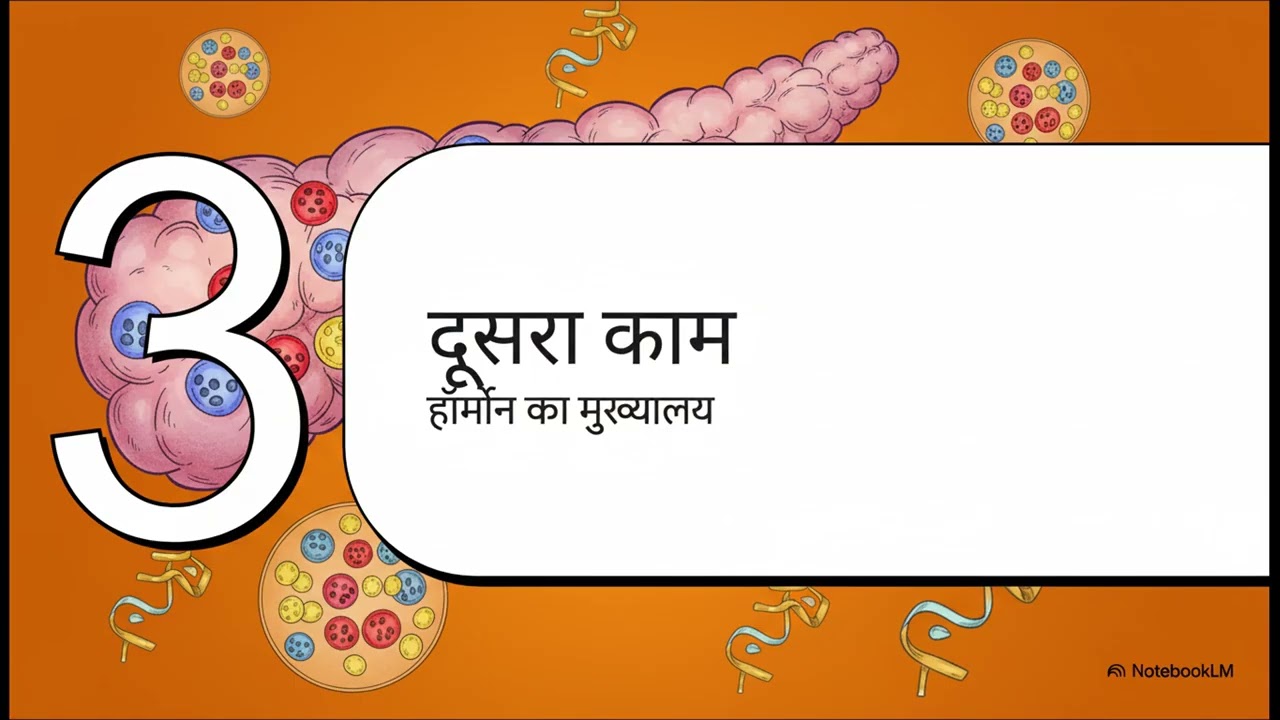
2. Hormonal Function
Regulates blood sugar levels
Maintains glucose balance (homeostasis)
Regulation of Pancreatic Secretion
Secretin stimulates bicarbonate secretion
Cholecystokinin (CCK) stimulates enzyme secretion
Nervous control via vagus nerve
Common Disorders of the Pancreas
Pancreatitis (acute and chronic)
Diabetes mellitus
Pancreatic cancer
Cystic fibrosis
Insulinoma
Clinical Importance
Damage to pancreas affects digestion and blood glucose control
Removal or dysfunction leads to malabsorption and diabetes
Pancreatic enzyme supplements may be required
Доступные форматы для скачивания:
Скачать видео mp4
-
Информация по загрузке:


