A Trip Through New York City in 1700
Автор: Creator club
Загружено: 2026-01-02
Просмотров: 150
A Trip Through New York City in 1700
In the year 1700, New York City was not yet the towering metropolis we know today. It was a compact colonial town clustered at the southern tip of Manhattan, surrounded by water, farmland, forests, and open sky. The city was still deeply shaped by its Dutch roots, even though it had been under British control for more than three decades. Life moved slowly, guided by daylight, weather, and the rhythm of trade rather than by clocks or schedules.
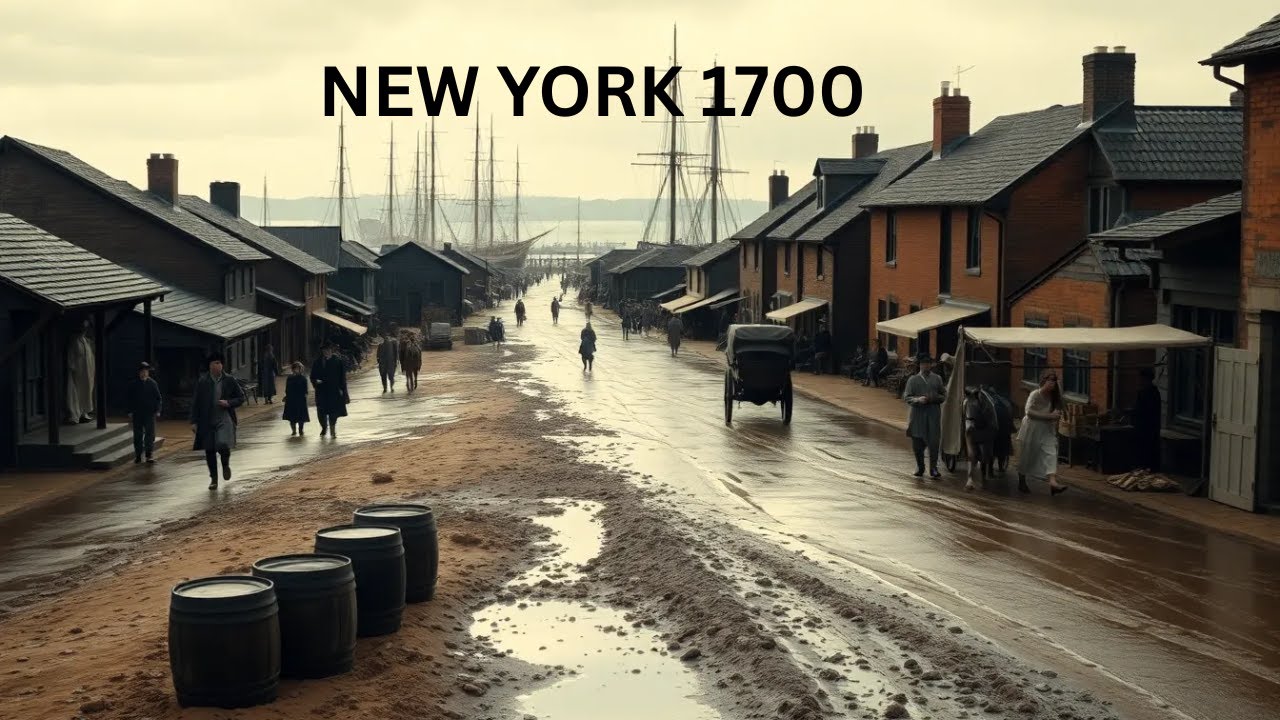
At the heart of the city, near the shoreline, narrow dirt and cobblestone streets wound between low wooden and brick buildings. Most structures stood only one or two stories tall, with steep roofs and small windows. Shops, taverns, and homes blended together, often sharing the same space. The smell of saltwater, smoke from fireplaces, and livestock drifting in from nearby farms filled the air. There were no paved roads beyond the town center, and after rain, the streets turned muddy and uneven.
The waterfront was the busiest part of New York in 1700. Small docks stretched into the harbor, where merchant ships arrived carrying goods from England, the Caribbean, and other colonies. Barrels of sugar, rum, flour, and tobacco were rolled along the shore by hand. Sailors, traders, and dockworkers crowded the wharves, while ferries carried people and supplies across the rivers to Brooklyn and New Jersey. Control of the harbor meant survival, and the city’s economy depended on the steady movement of ships and trade.
Beyond the docks, daily life felt quieter and more personal. Residents walked everywhere, often greeting neighbors by name. Horses and carts were common, but traffic was light. Men wore breeches, waistcoats, and tricorn hats, while women dressed in long skirts and shawls. Children worked alongside their families, learning trades or helping with chores. Church bells marked important moments of the day, and Sundays brought the town to a near standstill.
Just north of the settled area, the city quickly gave way to farmland. Fields, orchards, and grazing land covered much of Manhattan, supplying food to the growing town. Small farmhouses dotted the landscape, and Native American trails still crossed the island, connecting hunting grounds and seasonal camps. Forests were thick and largely untouched, and wildlife was common even close to the town’s edge.
New York in 1700 was also a place of uncertainty and tension. Enslaved Africans made up a significant portion of the population, forced to labor in homes, docks, and farms. Political power rested in the hands of a small colonial elite, while ordinary residents faced harsh winters, disease, and limited resources. Fire was a constant threat, and wooden buildings stood close together, making the town vulnerable to disaster.
Despite its modest size, New York already showed signs of future importance. Its deep harbor, strategic location, and growing role in colonial trade hinted at the transformation to come. Yet in 1700, the city still felt intimate and fragile — a settlement balanced between old-world traditions and an uncertain future.
A trip through New York City in 1700 reveals a place defined by water, land, and human effort. It was not yet a city of ambition and speed, but one of survival and connection. This early New York reminds us that even the world’s greatest cities begin as small, ordinary places shaped by everyday lives.
#NewYork1700
#ColonialNewYork
#EarlyAmerica
#HistoricNewYork
#NewYorkHistory
#ColonialAmerica
#ManhattanHistory
#BeforeTheSkyscrapers
#OldNewYork
#AmericanHistory
#18thCenturyLife
#ColonialCities
#HistoryDocumentary
#LostNewYork
#UrbanHistory
Доступные форматы для скачивания:
Скачать видео mp4
-
Информация по загрузке:


