Rook Hanging? Fischer Pounces! Petrosian’s Devastating Blunder Shocks the Chess World | Bled 1961
Автор: Checkmate Mastery
Загружено: 2025-08-11
Просмотров: 2767
Rook Hanging? Fischer Pounces! Petrosian’s Devastating Blunder Shocks the Chess World | Bled 1961
---
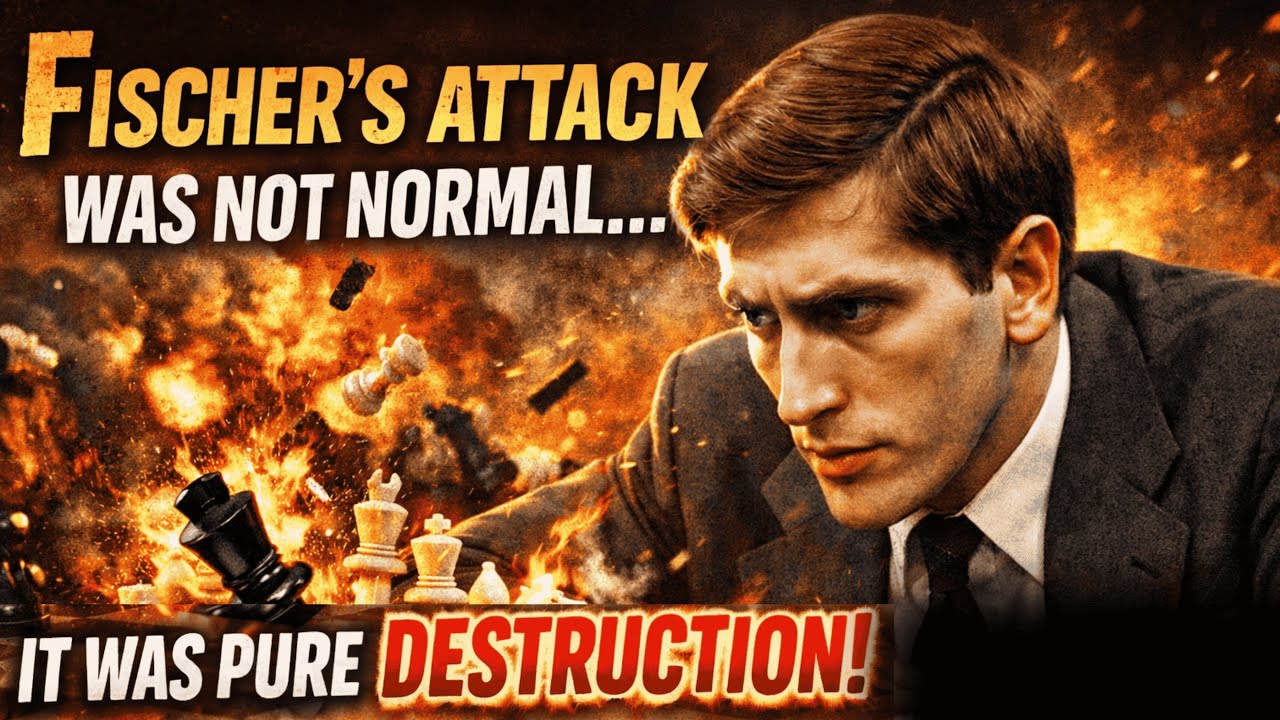
The 1961 Bled-Zagreb-Belgrade Candidates Tournament was a pivotal event in chess history, showcasing the rise of a young American prodigy, Bobby Fischer, against the Soviet elite. In round 18 on September 30, 1961
---
Opening: Solid Caro-Kann Setup (Moves 1-10)
Fischer opened with 1. e4, met by Petrosian's 1... c6, the Caro-Kann Defense, a favorite of Petrosian's for its sturdy pawn structure and counterattacking potential. Fischer opted for the Exchange Variation with 3. Nc3 dxe4 4. Nxe4, followed by developing his pieces aggressively. By move 6, after 6. Nxf6+ Nxf6, the knights were traded, simplifying the position. Fischer developed his bishop to c4 and queen to e2, pressuring Black's kingside. Petrosian countered with 7... Bf5 and 9... Bg4, pinning the knight on f3.
Middlegame: Tension Builds and Pawn Breaks (Moves 11-26)
After castling queenside (10. O-O-O), Fischer pinned Black's knight with 13. Bxe7 Qxe7, forcing a queen trade setup. Petrosian centralized his knight on d5 but soon retreated it to f6 under pressure. Key pawn advances followed: Black pushed ...b5 and ...a5 to challenge White's c-pawn, while Fischer countered with c3 and c4, gaining space on the queenside. By move 20. Qe5, Fischer infiltrated with his queen, forcing 20... c5 and a subsequent queen exchange on c5 (22. Qxc5 Qxc5 23. dxc5). This left White with a passed pawn on c5 and another advancing to c6.
Petrosian captured the c6 pawn with 25... Rxc6 but sacrificed structure for activity. Fischer's 26. Re5 attacked the a5 pawn indirectly, prompting 26... Ra8 to defend it. At this stage, the position was balanced, with White's rooks active and Black's king on e7 somewhat exposed. Strategic theme: Queenside pawn majority for White versus Black's potential counterplay on the files. Fischer's precise play maintained pressure, setting up the critical endgame.
---
Critical Turning Point: The Draw Offer and Blunder (Moves 27-28)
After 27. Be4, centralizing his bishop and eyeing Black's rooks, Petrosian offered a draw—out of turn, according to some accounts, which may have been a psychological ploy referencing Fischer's past etiquette issues. Fischer, sensing an edge and motivated by tournament standings (a draw would aid Mikhail Tal's lead), declined. Petrosian, instead of playing the safe 27... Nxe4 (which would capture the bishop and lead to a dead draw, as Fischer later noted in his book My 60 Memorable Games), opted for 27... Rd6, aiming to reposition his rook.
This was the fatal mistake. With the board open, Fischer struck with 28. Bxa8!, capturing Black's undefended rook on a8. The bishop on e4 attacked diagonally through d5-c6-b7-a8, a path cleared by earlier exchanges (c6 and d5 were empty). Petrosian, renowned for his prophylactic style, overlooked this tactic—possibly due to time pressure, miscalculation, or the psychological impact of the declined draw. This blunder handed White a decisive material advantage: a rook for free, though Black got some compensation by capturing the d1 rook next (28... Rxd1+).
---
Endgame: Fischer's Technical Conversion (Moves 29-36)
Now up material but with an exposed king, Fischer navigated carefully. After 29. Kc2 Rf1 30. Rxa5 Rxf2+, he recaptured pawns and advanced his passed c-pawn. Petrosian's rook harassed with checks (31... Rh2), but Fischer's 32. c5 created a dangerous passer. By 33. Rb5, White's rook dominated, and the final sequence—34. Rb8+ Kc7 35. Rb7+ Kc6 36. Kc4—forces Black into zugzwang. Petrosian resigned, as White's king infiltrates, and the c-pawn promotes while Black's pieces are tied down.
Strategic theme: Fischer's endgame prowess shone in the rook and bishop vs. rook and knight imbalance. He exploited open files, advanced passers, and king activity, turning material superiority into a win. Reasons for victory: Petrosian's uncharacteristic oversight, Fischer's refusal to draw, and superior calculation in complications. This game exemplified Fischer's ability to "psych out" opponents, as he claimed, and boosted his confidence en route to future triumphs. Overall, it was a blend of strategic patience and tactical opportunism, cementing its place in chess lore.
----
bobby fischer petrosian bled 1961, fischer vs petrosian analysis, caro kann defense chess, famous chess blunders, chess endgame mastery, bobby fischer memorable games, petrosian draw offer, chess history 1961 candidates, bobby fischer first win over petrosian, bled 1961 chess tournament analysis, caro kann exchange variation tactics, petrosian blunder bxa8, fischer psychological warfare chess, rook bishop endgame strategy
---
#BobbyFischer #TigranPetrosian #Bled1961 #ChessBlunder #CaroKann #ChessEndgame #ChessLegends #FischerVsPetrosian #ChessHistory #My60MemorableGames
Доступные форматы для скачивания:
Скачать видео mp4
-
Информация по загрузке: