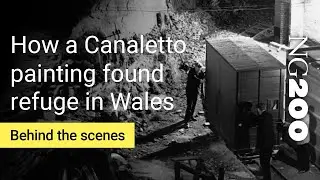
Manod WWII Art Repository in Wales Cwt-y-Bugail
Автор: paulC
Загружено: 2016-03-23
Просмотров: 5011
More here https://sites.google.com/site/thekwan...
On 23 August, 1939, the National Gallery was open as usual - but, as soon as the doors closed behind the last visitors, a well-orchestrated evacuation plan swung into operation. War was now imminent and the possibility that London might suffer saturation bombing meant that a new, safer home was needed for the paintings.
Over the next few days, the doors remained shut to the public while the paintings were removed from the walls and painstakingly loaded onto vehicles in conditions of strict secrecy. Vans bearing oddly shaped loads drove through the streets of London towards goods stations, where the crates were transferred to trains for their journey from London. About 1,800 works earmarked for evacuation had left London by 2 September, the day before war was declared.
In June 1940, France fell, and in Paris German troops marched down the Champs Elysées. Hitler now turned his attention towards England. With invasion threatening, further measures needed to be taken.
None the less, plans were made in May 1940 to send the paintings out of the country. At the behest of the trustees and others, Clark raised the matter with Churchill, who firmly rejected the idea. In a letter to a colleague, Clark wrote, 'It is a load off my mind. The Prime Minister's actual words were, "Hide them in caves and cellars, but not one picture shall leave this island." Will you please inform Davies. The rest of the dispersal scheme can continue.'
In the summer of 1940, the greater intensity of the bombings across Britain meant that the National Gallery Collection had to find a more secure home. The structures at Bangor, Aberystwyth, Caernarvon and Penrhyn were major landmarks, not far from the flight path of the increasing number of German bombers on their way to attack the Liverpool docks. In addition, some of these buildings were about to be requisitioned for military use, so they could no longer accommodate the paintings. The time had come to bury them 'in caves and cellars'.
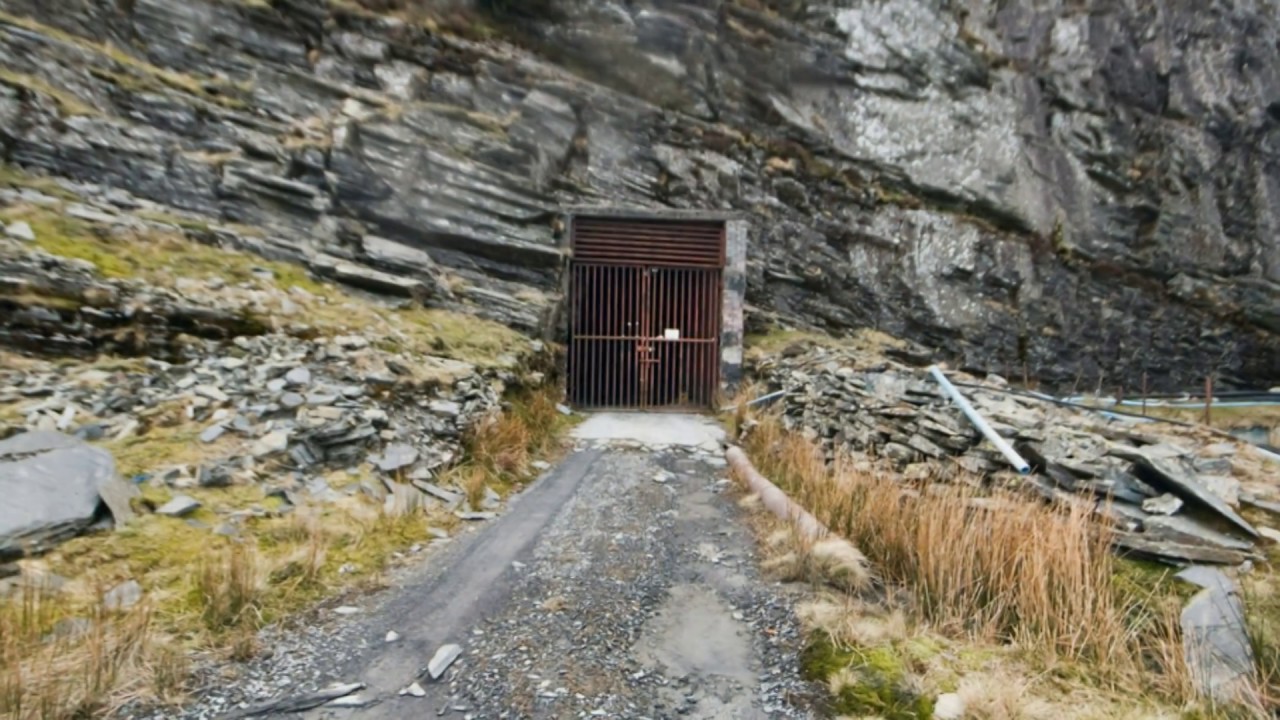
Martin Davies and Ian Rawlins, the Gallery's scientific adviser, set about finding a safer home for the collection. In view of the widespread bombing raids, an underground location was considered the best option. Wales had an abundance of slate quarries and mines from which to choose. After much searching, the ideal location was found at Manod quarry, not far from Blaenau Ffestiniog.
It was relatively close to the railway - a great advantage for the transport of the paintings - but also remote, at 1,700ft above sea level, and the final stretch was accessible only via four miles of winding, mountainous road. And it was huge, with large underground chambers where the paintings were to be stored (one was named 'the Cathedral', so vast were its proportions).
The quarry was found in mid-September 1940, and the considerable work needed to make it suitable for the collection began almost immediately. About 5,000 tons of rock had to be removed by blasting in order to make the entrance tunnel large enough for the biggest paintings.
To create controlled conditions and protect the collection from the slate dust, freestanding brick buildings were erected in the underground chambers of the quarry. Narrow-gauge railway tracks were laid to facilitate the transport of works from one location to another within the quarry, and special wagons, to protect the works from variations of temperature and humidity during their transport, were built to the gallery's designs by the London, Midland and Scottish Railway Company in Derby.
In the summer of 1941, the paintings were again loaded onto trains and vans from their various locations in Wales, to converge on the quarry. The complex operation went relatively smoothly, thanks to the highly organised mind of Ian Rawlins, a railway expert who could advise on every aspect of the transportation, as he had during the speedy evacuation from London at the outbreak of war. There were problems, however: high winds on parts of the route meant the bigger crates were vulnerable, and the great Van Dyck Equestrian Portrait of Charles I, one of the largest works in the collection, had to be manoeuvred under a low railway bridge near Blaenau Ffestiniog.
The road was hollowed out to allow the huge triangular crate (known as the 'Elephant Case') through, and there were several rehearsals with it empty before the painting was transported. On the day itself, the masterpiece made it through the arch only after a tense half-hour of manoeuvring: some accounts claim that the tyres of the truck had to be deflated.
As the war progressed on other fronts, the threat from bombs lessened and selected paintings were taken to London periodically to feature in small exhibitions. Kenneth Clark later observed that he always felt guilty about taking pictures back to London since they seemed so happy in Wales.
Доступные форматы для скачивания:
Скачать видео mp4
-
Информация по загрузке: