Living in a Steampunk Dreamscape
Автор: Stories Woven in Gold
Загружено: 2025-02-12
Просмотров: 17884
Please like, comment and subscribe to help my small channel to grow. Thanks!
✅SUBSCRIBE to My YouTube Channel HERE!
👉 /@storieswoveningold
Please check out my other videos.
All Videos Playlist
👉 • All Videos
Steampunk Playlist
👉 • Steampunk AI
Music created in Suno
Create your own music and get 250 free Suno Credits by using this link.
👉 https://suno.com/invite/@adrenalinefu...
The Origin of Steampunk
Steampunk originated as a literary subgenre in the late 20th century, inspired by the aesthetics and technology of the 19th-century Industrial Revolution—particularly the steam-powered machinery of the Victorian era (1837–1901). It combines historical settings with futuristic or anachronistic technology, often imagining an alternate world where steam remains the dominant power source.
1. Literary Origins (1980s–1990s)
The term "steampunk" was coined in 1987 by science fiction author K.W. Jeter, who used it to describe the Victorian-inspired sci-fi stories of himself and fellow authors Tim Powers and James P. Blaylock. Jeter first mentioned the term in a letter to Locus magazine, jokingly suggesting it as a name for their works, which were inspired by 19th-century settings and technology but featured speculative elements.
Influential Early Steampunk Novels:
"The Difference Engine" (1990) – William Gibson & Bruce Sterling
Imagines a world where Charles Babbage’s mechanical computers led to an early information age.
"Infernal Devices" (1987) – K.W. Jeter
Features mechanical automatons and Victorian-era intrigue.
"Homunculus" (1986) – James P. Blaylock
Blends airships, alchemy, and Victorian adventure.
"Anubis Gates" (1983) – Tim Powers
A time-traveling adventure through 19th-century London.
These works built upon earlier science fiction that featured steam-era technology but gave it a retro-futuristic twist, mixing alternate history with advanced steam-powered machines, airships, and mechanical marvels.
2. 19th-Century Influences (Proto-Steampunk)
Before "steampunk" became a term, many 19th-century writers pioneered similar ideas:
Jules Verne (20,000 Leagues Under the Sea, Journey to the Center of the Earth)
H.G. Wells (The Time Machine, The War of the Worlds)
Mary Shelley (Frankenstein, a precursor to science fiction)
These authors imagined advanced technology within a 19th-century framework, setting the foundation for steampunk’s themes of innovation, exploration, and Victorian aesthetics.
3. Steampunk as a Cultural Movement (1990s–2000s)
Beyond literature, steampunk evolved into an aesthetic and subculture, influencing:
Movies & TV Shows (e.g., Wild Wild West (1999), The League of Extraordinary Gentlemen (2003), Sherlock Holmes (2009))
Video Games (e.g., Bioshock Infinite, Dishonored, Final Fantasy VI)
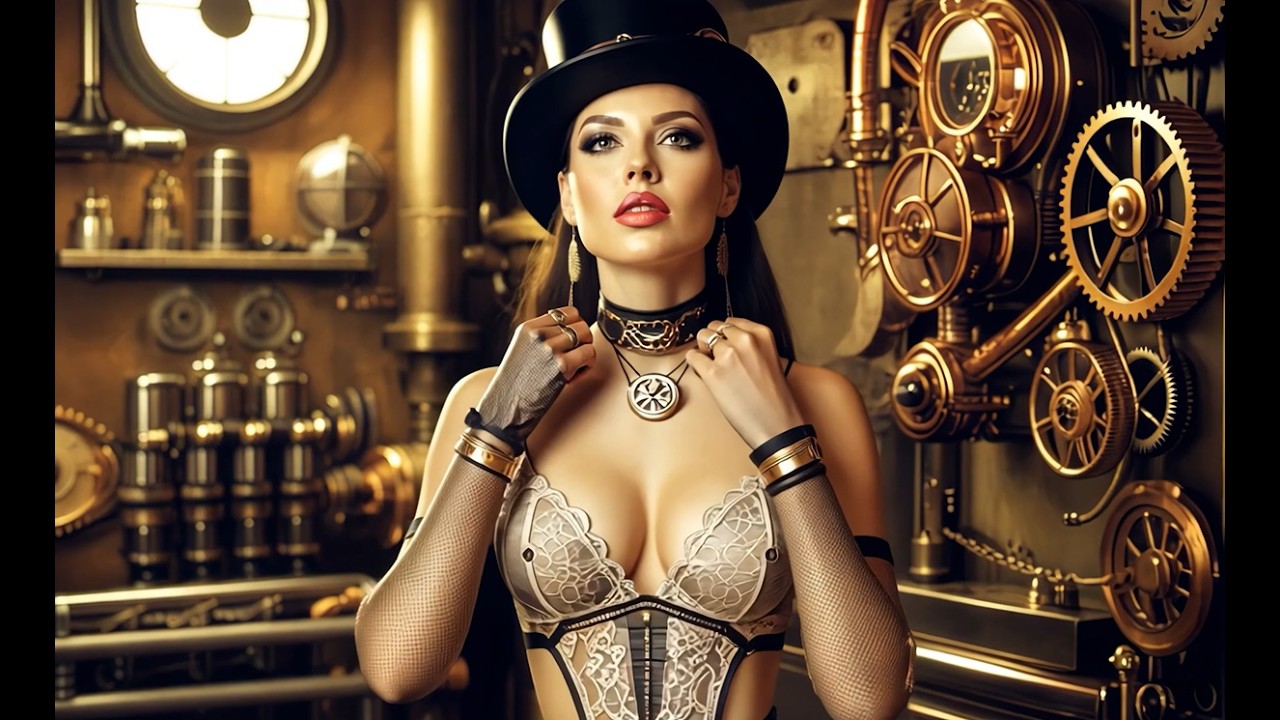
Fashion & Art (goggles, corsets, mechanical accessories, clockwork designs)
DIY Maker Culture (handmade steam-powered gadgets, retro-futuristic mods)
Steampunk’s appeal lies in its blend of history and imagination, offering an alternative future where steam, gears, and brass reign supreme.
4. Modern Steampunk Influence
Today, steampunk has become a widely recognized genre in books, movies, cosplay, and even design. It continues to evolve, sometimes mixing with cyberpunk (steampunk + digital tech) or dieselpunk (steampunk + early 20th-century aesthetics).
🚂⚙️✨
#Steampunk #Fantasy #AI #ArtificialIntelligence
#SteampunkFantasy #Dieselpunk #Cyberpunk #RetroFuture
#SteamPower #VictorianSciFi #Automaton #ClockworkMachines
#GearsAndGoggles #SciFiShortFilm #FuturisticTechnology #Airships
#GothicFantasy #AIRevolution #MagicAndMachines #TechNoir
#retrofuturism #steampunk #aishortfilm
#steampunk #futuristic #aishorts #aishortfilm
Доступные форматы для скачивания:
Скачать видео mp4
-
Информация по загрузке: