Isopod Unboxing - Care for Isopods - Powder Orange, Powder Blue, Zebra, Dairy Cow - Beginner Isopods
Автор: KC Exotics
Загружено: 2021-09-24
Просмотров: 1671
Facebook group
/ 1093800368068624
Ebay Store
https://www.ebay.com/usr/casecase89
Instagram
https://www.instagram.com/thegizards?...
TikTok
https://vm.tiktok.com/ZTRewcn15/
Email
Thegizards@gmail.com
Hey guys! For a while now I have been looking at Isopods and considering getting into raising them. I have always loved pillbugs, ever since I was a child, and always thought they were neat little critters. Until I got my first reptile, I didn't know it was a thing to keep and breed them, or that there are as many cool different kinds as there are. They come in all sorts of colors and patterns and there are a variety species, of various sizes, all over the world. Since I have had these guys such a short time, I'm only going to really be talking about which ones I have and how I keep them. I made sure to get ones with similar housing conditions as to make my first step into isopod world a simple one, by simply replicating the enclosure multiple times. I'm not 100% positive all isopods require similar conditions, but I know the variety I got all require similar care. I picked these isopods up from 123insects.com. They have quite a large variety of isopods in their catalog, provide quick shipping, and can be found at either their website, or ebay page. Without further adue. Let's get into what we got.
Next we have Porcellionides pruinosus, or the Powder Blue as it is more commonly known. These guys can be quite beautiful, which I will show you shortly, but come in a range of blues and greys and multiple quickly.
My personal favorite, Armadillidium maculatum, or Zebra isopods. These guys are big compared to the other 2. They are absolutely stunning. I love their strips. These, by far, are the ones I was most excited for.
Last, we have Porcellio Laevis. or The Dairy Cow. They get their name from their spotted appearance having a resemblance to cows, may have more spots than others. Some may have more spots than others.
And a bonus, we have spring tails! An isopod video wouldn't be complete without some of these guys to help the isopods out keeping their enclosures clean. I do not have the greatest footage of these tiny organisms.
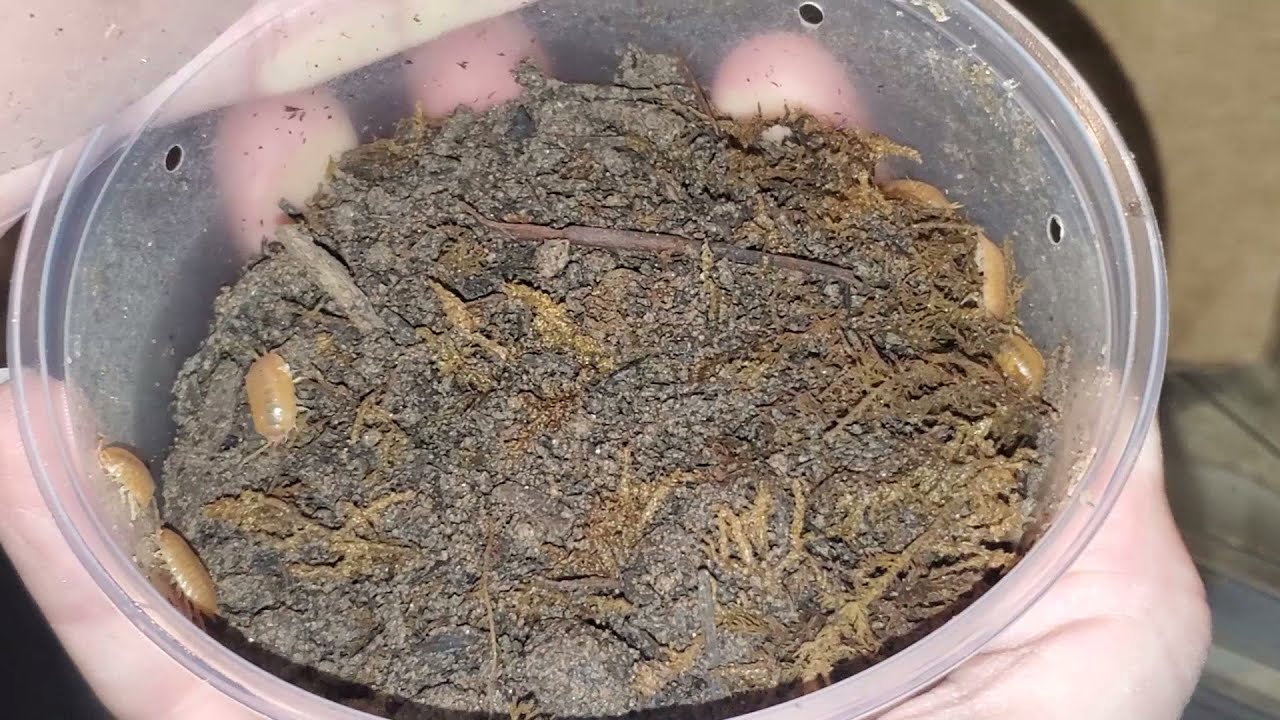
The Powder oranges are up first. They are native to South West Asia. These guys are fast. Very fast if you spook them. They seem to be quite active, since I have gotten these guys I have yet to have to look for them within their enclosure. They are always moving around and some are always exploring the enclosure and can be easily seen through the my enclosures wall. These guys are extremely common in the isopod hobby and are relatively cheap. From what I understand they breed relatively quickly as well, I'm hoping to have a budding stable colony in the coming months.
Lets talk for a moment about the Powder Blues. These guys hail from Europe. When they are blue. My god. They are blue. They are so stunning. I was not impressed with them at first, however, their color seems to be directional in light. Only some angles will the blue really show. They can be quite quick on the move, tend to be on the smaller side, but breed quickly. I bought around 15 of these guys. I did not count them, but I am going to see how they compare against the other 3 species in terms of reproduction, whose numbers were all relatively similar.
Now we have the dairy cow! Their origin is a little more conflicting, as some sources say Europe but Wikipedia suggests they originated in africa. These are certainly among the cooler species that you can get. They are quite active and grow big. They are not as fast as the power orange or blues, but they are easy to spot due to their lighter coloring. They are so darn cute. I love the spots on these guys. Even the ones without that are almost solid white are stunning. I lovely addition to the channel!
And now to my favorite! The Zebra isopod! They are native to France. Their pattern makes them pop in nearly any enviornment you put them in. These guys are also huge in comparison to the other 3. Their size reminds me of Armadillidium vulgare, a common pillbug found in my state, but bigger. They are not as fast as the prior three isopod species we got today, but these guys are simply beautiful and I am absolutely estatic to have them in my collection. I cannot wait to have a bustling colony of these guys.
Доступные форматы для скачивания:
Скачать видео mp4
-
Информация по загрузке:


