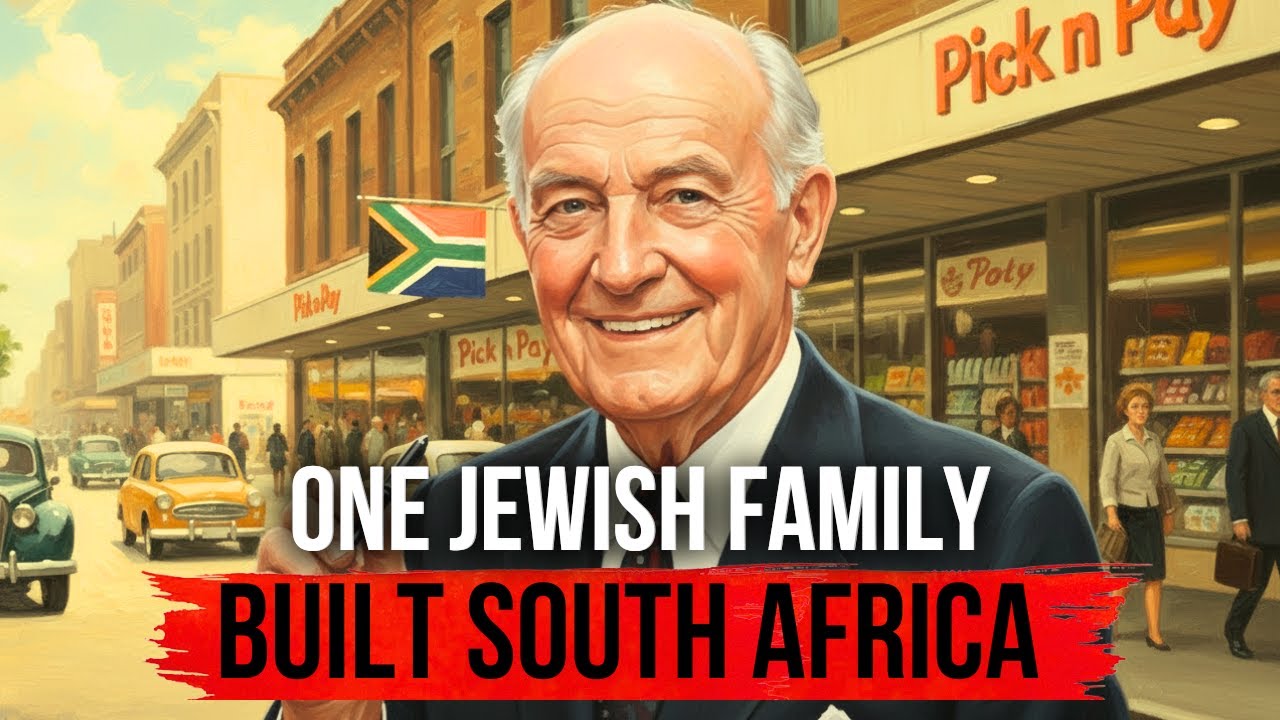
The Hidden Jewish Family That Built South Africa's Largest Retail Empire (MEMORY)
Автор: BizMavericks
Загружено: 2026-01-15
Просмотров: 36
Thanks for watching — if you learned something new about how wealth really works in today’s world, hit that subscribe button. Stay curious, stay bold, and let’s keep decoding the engines of modern money together.
One Immigrant Family Controlled How an Entire Continent Shops. Then They Lost Everything.
In 1916, a Lithuanian Jewish immigrant named Gus Ackerman opened a single clothing store in Cape Town with a radical idea: selling quality products to people the wealthy establishment considered worthless. His son Raymond got fired at 35 for being too successful, bought four failing stores called Pick n Pay, and built a R70 billion retail empire that transformed how millions of Africans shop. The family fought price cartels, defied apartheid laws, waged war against their own government, and created the franchise model that brought formal retail to townships. For 107 years, three generations controlled South African retail. Then in 2024, they surrendered control of the company their family built from nothing. This is the story of the Ackerman dynasty and the empire that slipped through their fingers.
🔬 THE BUSINESS HISTORY:
The Ackerman story illuminates how immigrant communities build commercial empires through trust networks and value pricing strategies. Jewish merchants in South Africa followed patterns documented across multiple continents: identifying underserved customer segments, operating on thin margins with high volume, and creating community financing structures independent of established banks. Raymond Ackerman's Four Legs of the Table philosophy, emphasizing Administration, Merchandise, Social Responsibility, and People with the customer on top, became a foundational framework in South African business education. The family's navigation of apartheid economics reveals how businesses simultaneously benefit from and resist unjust systems. Their post-1994 franchise expansion into townships represents one of the largest formal retail integrations of previously excluded communities in African history.
📚 SOURCES AND FURTHER READING:
Ackerman, Raymond. "Hearing Grasshoppers Jump: The Story of Raymond Ackerman as Told to Denise Prichard." David Philip Publishers, 2004.
Ackerman, Raymond. "The Four Legs of the Table: Raymond Ackerman's Simple, Straight-Forward Formula for Success." David Philip Publishers, 2005.
Memory and Identity: Jewish South African Business Dynasties. South African Jewish Museum Archives, Jewish Digital Archive Project.
Pick n Pay Group Annual Reports and Investor Relations Materials, 1968-2024. Johannesburg Stock Exchange Filings.
Gillomee, Hermann and Mbenga, Bernard. "New History of South Africa." Tafelberg Publishers, 2007. Chapter on Post-Apartheid Economic Transformation.
Sobel, Russell S. and Dean, Andrea M. "Has Wal-Mart Buried Mom and Pop? The Impact of Wal-Mart on Self-Employment and Small Establishments in the United States." Economic Inquiry, 2008. Comparative retail dynasty analysis.
Ward, John L. "Keeping the Family Business Healthy: How to Plan for Continuing Growth, Profitability, and Family Leadership." Palgrave Macmillan, 2011. Family business succession statistics.
Lewis, Jori. "Slaves for Peanuts: A Story of Conquest, Liberation, and a Crop That Changed History." The New Press, 2022. Colonial economic patterns in Africa.
Sobania, Neal. "Culture and Customs of Kenya." Greenwood Press, 2003. Jewish merchant communities in African commerce.
South African Jewish Board of Deputies Historical Archives. Documentation of Jewish Business Contributions to South African Economy.
📖 EDUCATIONAL CONTENT STATEMENT:
This video is produced for educational and informative purposes, aiming to widen viewers' understanding of business history, family enterprise dynamics, and the complex intersection of commerce and social change. Our goal is delivering valuable, well-researched content about how immigrant families build commercial empires and how those empires navigate politically impossible circumstances. Each script is human written following extensive primary source research. Visuals and storyboard are brainstormed internally with our team to ensure accurate historical representation. We present multiple perspectives on morally complex situations, allowing viewers to draw their own conclusions about legacy and responsibility.
Доступные форматы для скачивания:
Скачать видео mp4
-
Информация по загрузке: