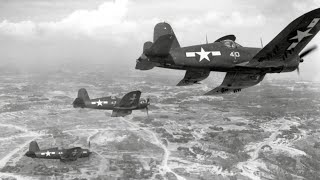
Japan Never Knew Proximity Fuzes Let 5-Inch Shells Explode Near Planes — Not Hit Them
Автор: Shared Bread
Загружено: 2025-11-02
Просмотров: 325
May twenty-seventh, nineteen forty-four. Sixteen thousand feet above the Marshall Islands, Lieutenant Hiroshi Nakamura banks his Mitsubishi A6M Zero fighter through broken cloud, watching tracers arc up from the American destroyer below. He's survived forty-one combat missions by understanding one simple truth: anti-aircraft shells must hit you to kill you. Stay between the bursts, change altitude constantly, never fly predictable patterns. The mathematics of survival are straightforward. A five-inch shell creates a lethal radius of perhaps twenty feet if it scores a direct hit. The odds of that happening? Astronomical. Naval gunners fire thousands of rounds for every aircraft they destroy.
Nakamura learned this over Guadalcanal, over Rabaul, in the skies above the Solomons. He'd watched green pilots panic at the sight of black bursts, diving away from barrages that were never going to touch them. The veterans knew better. You respected the flak, gave it room, but you didn't fear it. Not really. The Americans had guns, yes. Hundreds of guns. But their ammunition operated on the same principle as everyone else's: clockwork fuses timed to explode at predetermined altitudes. Miss the altitude calculation by three seconds and the shell bursts in empty air.
What Nakamura doesn't know, what no Japanese pilot knows as they approach American task forces in the spring of nineteen forty-four, is that the rules of anti-aircraft warfare have been rewritten. The shells rising toward him no longer need to hit anything. They carry their own eyes, their own decision-making apparatus, their own trigger. They are hunting him with radio waves, measuring the shrinking distance with electromagnetic precision, waiting for the perfect moment to detonate. Not on impact. Near impact. The difference is about to become the difference between calculated risk and mechanized slaughter.
The destroyer below is the USS Prichett. Her five-inch thirty-eight caliber guns have just been loaded with ammunition marked only with the cryptic designation: VT. Variable Time. The gunners don't fully understand what they're firing. They've been told the fuses are experimental, classified, to be used only over water where duds can't be recovered by the enemy. They've been shown the results in training exercises: drone aircraft obliterated with four, sometimes three shells. A kill rate that seems impossible.
Chief Petty Officer James Morrison watches his gun crew load the VT rounds into Mount Fifty-One. He's been firing five-inch guns since nineteen forty-two, spent hundreds of hours calculating time fuses, estimating range, altitude, target speed, trying to place explosive shells in the exact cubic meter of sky where an enemy aircraft might be fifteen seconds from now. It's an art built on mathematics and prayer. The odds are terrible. You learn not to expect hits. You fire to frighten, to disrupt attack runs, to force pilots to jink and weave and drop their bombs inaccurate.

Доступные форматы для скачивания:
Скачать видео mp4
-
Информация по загрузке: