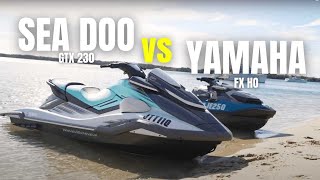
2017 Yamaha VX Deluxe vs 2011 Seadoo GTX 155
Автор: trythistv
Загружено: 2021-09-05
Просмотров: 2834
Testing two vastly different PWCs that are alarmingly similar in a mountain of ways.
We tested these in December, so it was terrible cold outside.
➡My life vest: https://amzn.to/3BFVDjO
➡Tiffanys life vest: https://amzn.to/3taImwA
Tiff is on a 2011 Seadoo GTX 155. As I said, I'm riding a 2017 Yamaha VX Deluxe
These 2 machines although several years apart are alarmingly similar, which makes either a great option for a first time PWC buyer or seasoned boater alike.
Both are 3 seater, 3 cylinder naturally aspirated machines.
There are some key differences that could sway you one way or the other depending on what you are looking for with your PWC purchase.
The Yamaha has a much larger storage compartment, at 3.8 cubic feet versus the Seadoo that only has 1.8 cubic feet, however the seadoo compartment has a waterproof insert that lets you keep your items dry even on the choppiest days.
But let's talk about what you're really interested in. Performance.
The Seadoo has a larger displacement engine at nearly 1.5 Liters of displacement, producing 155hp thus the models name.
While the Yamahas TR-1 powerplant has just over 1 liter of displacement, that produces 125hp.
That sounds like a big jump to lose 30hp, and it is a significant number, however yamaha made up for the reduced displacement and power by also reducing the weight with their advanced NanoXcel hull material, which means the VX deluxe weighs almost 200 pounds less than the GTX.
So that seeming lack of power is more than made up by the weight reduction, and both machines are easily capable of mid 50 mile per hour speeds as you can see as we drag race the machines, and they are basically neck and neck.
One other important topic is maintenance. The Yamaha uses what is known as an open loop cooling system, so failing to flush properly after riding in salt water will corrode and clog up the cooling passages inside of the engine.
While the Seadoo uses a closed loop system for the engine, so failure to flush won't affect the engine, but just the exhaust system that is cooled by the water you are riding in.
Oil filters and spark plugs are easily accessible on both machines, Yamaha using a spin on filter while seadoo uses a cartridge style element.
The seadoo filter tends to be a little easier to change without spilling oil, but if you follow my video on changing oil on a TR1, the yamaha can be done easily and problem free as well.
As far as weak points, neither has any glaring flaws, The seadoo will need a wear ring now and then, as they use a plastic ring in the jet pump that can wear in the event you suck up rocks or sticks it saves some wear and tear on the jet pump.
I've seen TR1 pumps come apart at around 400hrs, which is quite a lot of riding, and if you maintain the pump and aren't abusing it sucking stuff up I suspect they would last much longer.
Both engines are susceptible to water ingestion problems if the ski is flipped over, neither has a drain on the intake manifold so getting the water out to avoid a hydrolock and bent or broken connecting rods is a similar adventure.
Really, either one of these machines will serve you well for many years to come, and both are stable enough to be enjoyed by first time riders while still having enough performance for veteran riders to still have a good time.
Hopefully this video helps you out making a decision on possible personal watercraft purchase
A Storage cover will protect your investment, here are some links where you can find one to fit your ski:
➡Yamaha VX Deluxe like seen in the video: https://amzn.to/3N031Q5
➡Seadoo GTX like seen in this video: https://amzn.to/3N8CYWS
➡Covers for other machines from a brand I have used and been happy with: https://amzn.to/3H4D12a

Доступные форматы для скачивания:
Скачать видео mp4
-
Информация по загрузке: