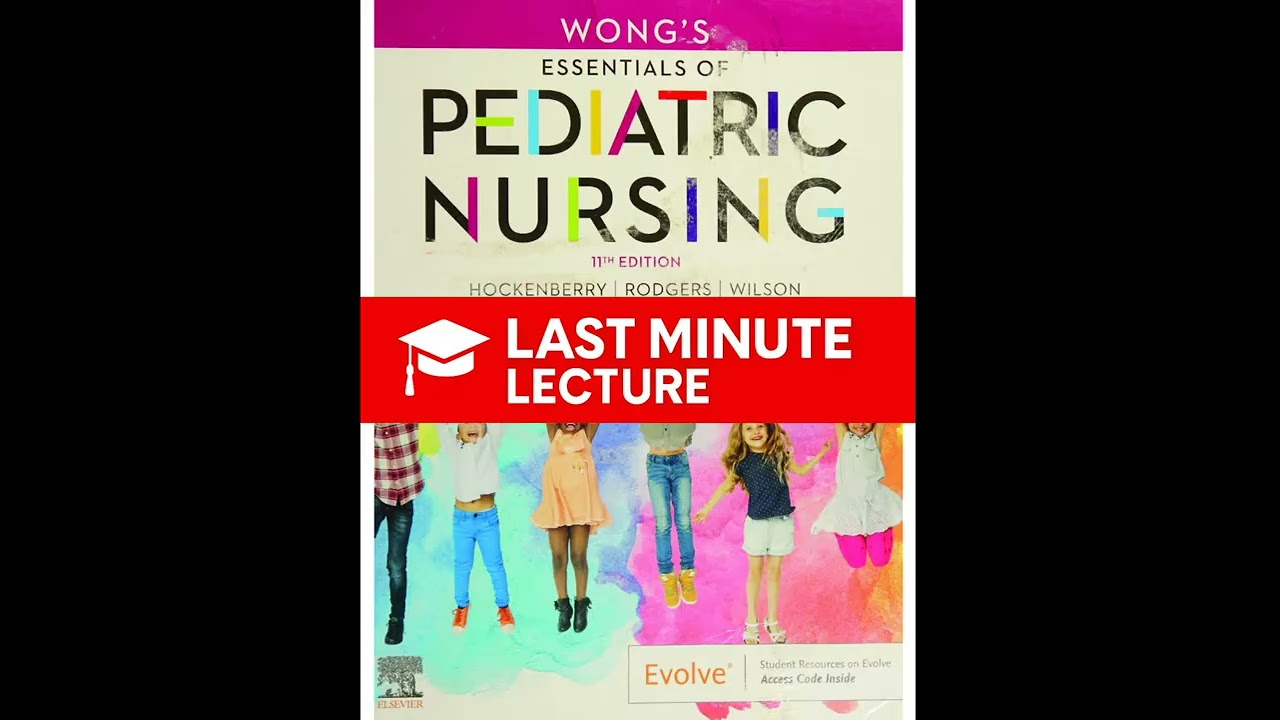
GI Dysfunction & Fluid/Electrolyte Disorders | Chapter 22 – Wong’s Pediatric Nursing (11th)
Автор: Last Minute Lecture
Загружено: 2026-01-19
Просмотров: 2
This chapter provides a comprehensive examination of gastrointestinal (GI) dysfunction in pediatric patients, emphasizing that children have unique physiologic differences, such as a higher percentage of total body water and greater extracellular fluid volume, which make them highly susceptible to fluid and electrolyte imbalances. It details the pathophysiology, clinical manifestations, and management of dehydration, classifying it into isotonic, hypotonic, and hypertonic types, and outlines critical interventions like Oral Rehydration Therapy (ORT) and parenteral fluid resuscitation for shock. Disorders of motility are thoroughly explored, including acute and chronic diarrhea caused by pathogens like Rotavirus, and constipation, with a specific focus on Hirschsprung disease (congenital aganglionic megacolon) and its surgical correction via pull-through procedures. The text analyzes inflammatory conditions, differentiating between the two major forms of Inflammatory Bowel Disease (IBD)—Crohn disease and ulcerative colitis—and covers the diagnosis and management of acute appendicitis, Meckel diverticulum, and Peptic Ulcer Disease associated with H. pylori. Obstructive disorders are detailed, specifically Hypertrophic Pyloric Stenosis, characterized by projectile vomiting and a palpable olive-shaped mass; Intussusception, noted for currant jelly-like stools and treatment via gas or hydrostatic enema; and the surgical emergency of Malrotation with Volvulus. Malabsorption syndromes such as Celiac disease (gluten-sensitive enteropathy) and Short Bowel Syndrome (SBS) are discussed in the context of life-long dietary restrictions, nutritional support (TPN and enteral), and intestinal adaptation. Hepatic disorders are covered, including the transmission, prevention, and management of viral Hepatitis (A, B, and C), the surgical management of Biliary Atresia via the Kasai portoenterostomy or liver transplantation, and the complex nursing care required for children with Cirrhosis and portal hypertension. Finally, the chapter addresses congenital structural defects, including Esophageal Atresia (EA) and Tracheoesophageal Fistula (TEF), abdominal wall defects like umbilical and inguinal hernias, and various Anorectal Malformations requiring surgical reconstruction and long-term bowel management.
📘 Read full blog summaries for every chapter:
https://lastminutelecture.com
📘 Have a book recommendation? Submit your suggestion here:
https://forms.gle/y7vQQ6WHoNgKeJmh8
Thank you for being a part of our little Last Minute Lecture family!
⚠️ Disclaimer: These summaries are created for educational and entertainment purposes only. They provide transformative commentary and paraphrased overviews to help students understand key ideas from the referenced textbooks. Last Minute Lecture is not affiliated with, sponsored by, or endorsed by any textbook publisher or author. All textbook titles, names, and cover images—when shown—are used under nominative fair use solely for identification of the work being discussed. Some portions of the writing and narration are generated with AI-assisted tools to enhance accessibility and consistency. While every effort has been made to ensure accuracy, these materials are intended to supplement—not replace—official course readings, lectures, or professional study resources. Always refer to the original textbook and instructor guidance for complete and authoritative information.

Доступные форматы для скачивания:
Скачать видео mp4
-
Информация по загрузке: