Zuse Z3/// The Genesis of Computing: From Babbage to Modern Computers
Автор: Science & Technology
Загружено: 2023-05-24
Просмотров: 598
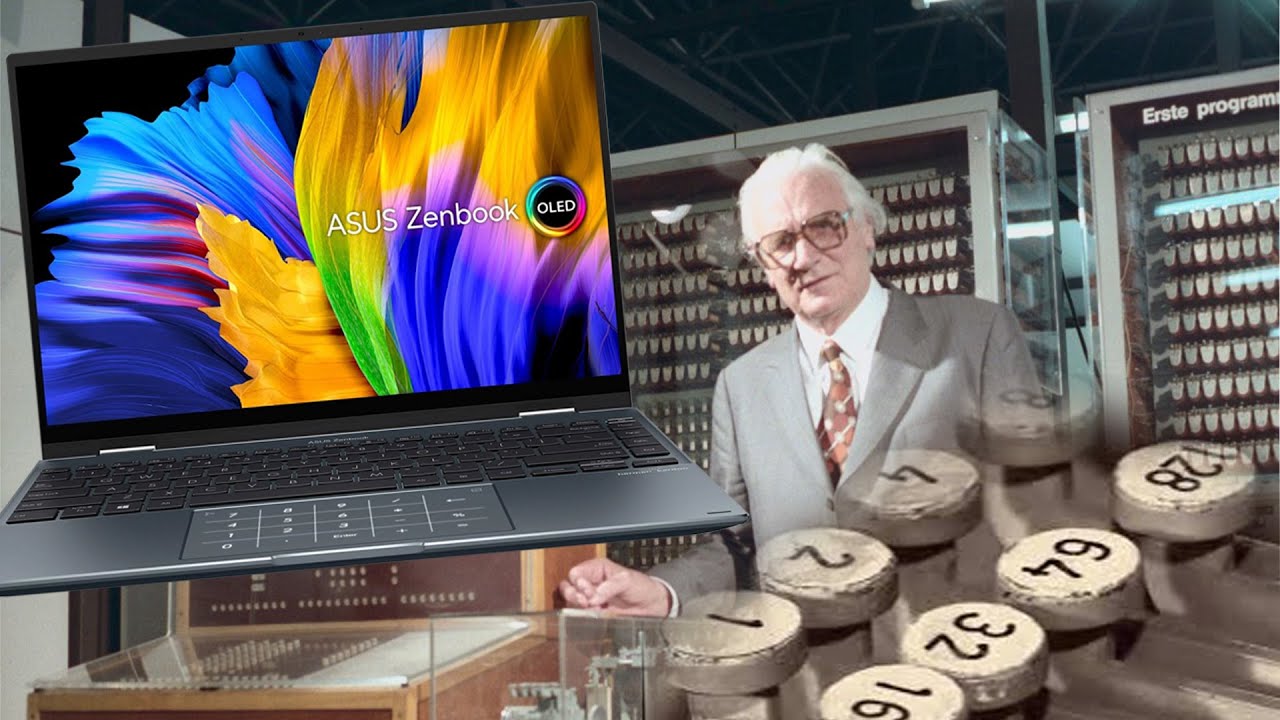
The first programmable computer, as we understand it today, is often credited to Konrad Zuse. In 1941, Zuse built the Z3, an electromechanical computer using 2,000 relays, and it was the first machine to incorporate binary logic and floating-point arithmetic.
However, the concept of a "computer" stretches back even further:
Analytical Engine: In the 19th century, English mathematician Charles Babbage designed the Analytical Engine, a mechanical general-purpose computer. Although it was never built due to financial, logistical, and sociopolitical reasons, it was intended to be capable of any kind of calculation and even had some form of programming. Ada Lovelace, a collaborator of Babbage, is credited with writing the world's first computer program, intended for implementation on the Analytical Engine.
Difference Engine: Before the Analytical Engine, Babbage also conceptualized and partially built the Difference Engine, a mechanical calculator designed to tabulate polynomial functions.
Harvard Mark I: In the United States, Howard Aiken and his team at Harvard University, in collaboration with IBM, developed the Harvard Mark I in 1944. It was a large-scale electromechanical computer with less computational power than Zuse's Z3 but still played a crucial role in computing history.
ENIAC: The Electronic Numerical Integrator and Computer (ENIAC), built by John Mauchly and J. Presper Eckert at the University of Pennsylvania, was completed in 1945. It was the first general-purpose electronic computer. Although it wasn't a stored-program computer (it was programmed using a plugboard), it was fully electronic, unlike the electromechanical Harvard Mark I and Z3.
EDSAC and Manchester Mark I: In 1949, two computers, EDSAC (Electronic Delay Storage Automatic Calculator) by Maurice Wilkes at the University of Cambridge, and Manchester Mark I by Frederic C. Williams, Tom Kilburn, and Geoff Tootill at the University of Manchester, were the first stored-program computers, closely aligning with our modern understanding of how computers work.
The evolution of computers has been a collaborative effort across decades and continents, with each development laying the groundwork for the next. Today's computers, despite being far more advanced, still fundamentally operate on principles laid down by these early machines.
Доступные форматы для скачивания:
Скачать видео mp4
-
Информация по загрузке: