🌉PSC I Girder Prestressing| Methodology For Stressing of PSC Girders | Post-Tensioning Details 🌉
Автор: Apna Site
Загружено: 2025-02-25
Просмотров: 3906
PSC I-Girder Prestressing | Methodology For Stressing of PSC Girders || Post Tensioning Girder Details || Stressing Details || FM By Apnasite 🛣️🌉⏬⏬⏬
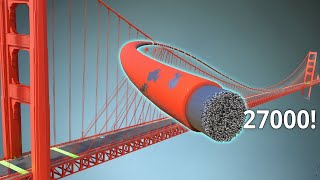
The PSC (Pre-stressed Concrete) I Girder is a type of pre-stressed concrete beam commonly used in bridge construction. The methodology for prestressing and post-tensioning these girders involves applying external forces to the girder during or after casting to induce compressive stresses, enhancing their ability to resist tensile forces. Below is an outline of the methodology for both prestressing (before casting) and post-tensioning (after casting):
1. Prestressing (Pre-Tensioning) Methodology
Pre-tensioning refers to applying tension to the steel tendons (cables or wires) before the concrete is cast. This is typically done in a controlled environment, such as a precast yard.
Steps:
1. Formwork Preparation:
Place the molds for the I-girder in the casting yard. These are the forms that will give shape to the girder.
2. Tendon Arrangement:
Place the high-strength steel tendons (wires or strands) in the formwork. These tendons are stretched between two end anchorages, which will be used to apply the tension.
Ensure the tendons are properly arranged to meet design specifications, ensuring they are placed at the correct locations for optimal stress distribution.
3. Tensioning the Tendons:
Use hydraulic jacks to apply tension to the tendons, pulling them until they achieve the desired elongation. This applies a tensile force to the tendons and a compressive force to the concrete.
4. Concrete Casting:
Pour the concrete into the formwork, surrounding the tendons. Once the concrete reaches the required strength, the tendons are cut, and the tensioned tendons transfer their stress to the concrete.
5. Curing:
Allow the concrete to cure and harden under controlled conditions, ensuring the proper bonding between the tendons and the concrete.
6. Detensioning:
After the curing period, the tendons are cut free from the end anchorages. The prestress is transferred to the concrete, and the girder is ready for transportation and installation.
---
2. Post-Tensioning Methodology
Post-tensioning is the process of applying tension to the tendons after the concrete girder has been cast and has reached a certain level of strength. This is more flexible and can be done at the construction site.
Steps:
1. Formwork and Tendon Duct Installation:
Set up the formwork and place tendon ducts (typically steel or plastic tubes) inside the form. The ducts will house the tendons and allow them to be tensioned later.
2. Concrete Casting:
Pour the concrete into the formwork, ensuring that the tendons are properly located in their respective ducts. The concrete should be allowed to cure to achieve sufficient strength for tensioning.
3. Tendon Insertion:
After curing, the tendons (usually high-strength steel strands or cables) are inserted into the ducts.
4. Tensioning the Tendons:
Hydraulic jacks are used to apply tension to the tendons, which are typically anchored at both ends of the girder. The amount of tension applied depends on the design specifications and the level of prestress required.
The tendons are stretched and held in place using anchorage systems.
5. Grouting:
After the tendons are tensioned, the ducts are filled with grout (a cementitious material) to protect the tendons from corrosion and to bond them to the surrounding concrete.
6. Curing and Final Inspection:
Allow the grout to set and the concrete to fully cure. The final girder is inspected to ensure the desired prestress and structural integrity.
---
Benefits of Prestressing and Post-Tensioning:
Enhanced Structural Performance: Prestressing and post-tensioning allow the I-girders to resist larger loads and span longer distances without excessive deflection.
Reduced Material Usage: These methods reduce the need for excessive amounts of concrete and reinforcement.
Durability: The compressive forces induced in the concrete help prevent cracking, improving the girder's lifespan.
Applications:
Bridges: PSC I girders are most commonly used in bridge construction.
Overpasses and Elevated Roads: They are ideal for structures requiring long spans and minimal weight.
This methodology provides efficient, durable, and cost-effective solutions for modern infrastructure.
#PSCGirderStressing
#Pre-stressedConcreteGirder
#GirderStressingProcess
#StressApplication
#PostTensioning
#Pre-tensioning
#BridgeConstruction
#ConcreteStressing
#ConcretePre-stressing
#BridgeGirderStressing
#CivilEngineering
#BridgeEngineering
#Pre-stressedConcrete
#TensioningEquipment
#ConcreteStrengthening
#TensioningTechniques
#BridgeConstructionProcesss
#StressDistribution
#GirderTensioning
#ConstructionTechnology

Доступные форматы для скачивания:
Скачать видео mp4
-
Информация по загрузке: