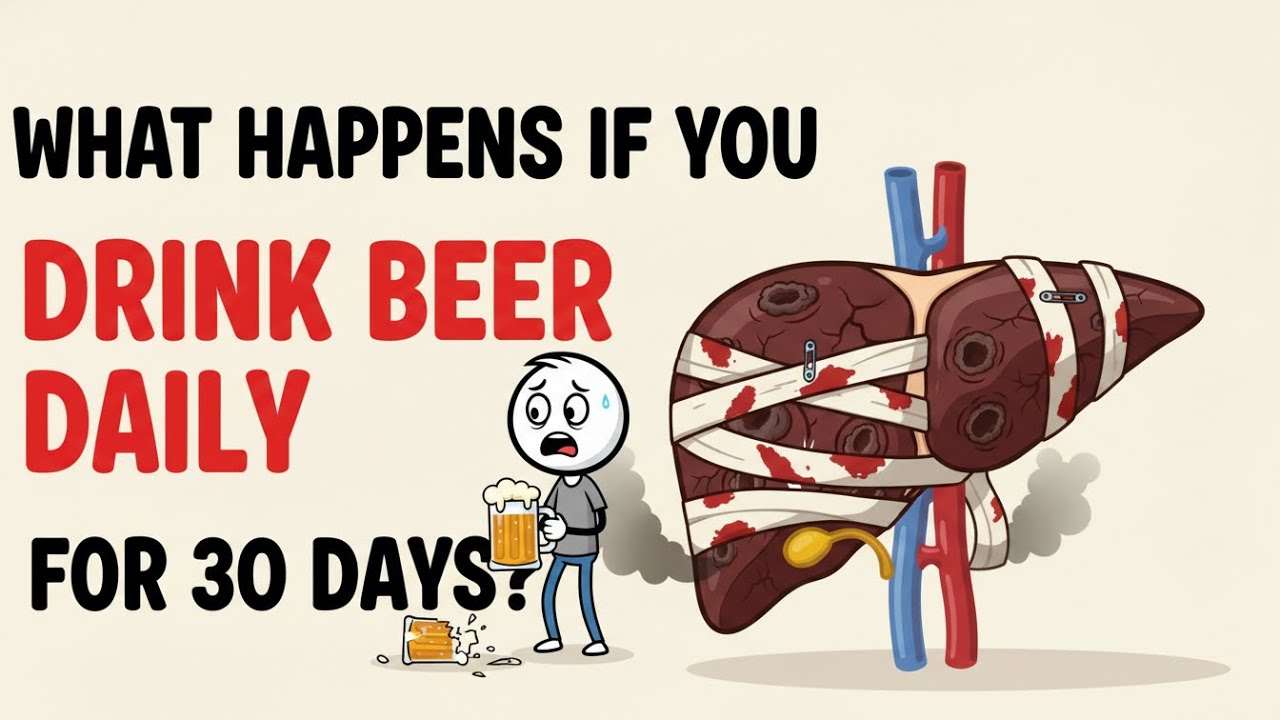
What happens if you drink beer every day for 30 days? | Science Explained
Автор: Healthy Stickman Science
Загружено: 2026-01-16
Просмотров: 795
You drink alcohol to relax, but your kidneys react violently.
Beer creates a biological paradox: it inhibits the hormone vasopressin, forcing your body to excrete water while cells shrink in a state of "subtle drought."
This episode will reveal the silent strain on your filtration system, the immune trade-offs occurring in the gut, and the profound metabolic reset that happens after just 30 days of rest.
The issue isn't about ethics. The issue is how an ancient body can adapt to modern habits.
Topics covered:
The Paradox: Why drinking lots of fluids actually dehydrates you.
The Pressure: How "thick blood" forces the kidneys to work overtime.
The Leaked Information: The Potential Impact of Alcohol on the Gut Immune System.
Recovery Process: Biological Schedule of Recovery (0–30 days).
Biology is a dialogue. Are you listening?
⚠️ Medical Note: Content is for educational purposes only. Always consult your doctor about your health condition.
📚 Sources:Epstein M. (1997). "Alcohol's impact on kidney function." Alcohol Health and Research World, 21(1), 84-92.
Siler SQ, Neese RA, Hellerstein MK. (1999). "De novo lipogenesis, lipid kinetics, and whole-body lipid balances in humans after acute alcohol consumption." The American Journal of Clinical Nutrition, 70(5), 928-936.
Cederbaum AI. (2012). "Alcohol metabolism." Clinics in Liver Disease, 16(4), 667-685.
Puddey IB, Beilin LJ. (2006). "Alcohol is bad for blood pressure." Clinical and Experimental Pharmacology and Physiology, 33(9), 847-852.
Marchi SD, Cecchin E, Basile A, et al. (1993). "Renal tubular dysfunction in chronic alcohol abuse—effects of abstinence." Nephrology Dialysis Transplantation, 8(9), 800-807.
National Kidney Foundation. (2024). "Drinking Alcohol and Your Kidneys." Kidney.org Guidelines.
Casey M, Adamson K. (2017). "Dry January: A qualitative study of the benefits of short-term alcohol abstinence." Health Psychology, 36(5), 458-466.
Adinoff B. (2004). "Neuroendocrine interaction in the pathophysiology of alcohol dependence and recovery." Alcohol Research & Health, 28(4), 198-207.
Mehta G, et al. (2018). "Short-term abstinence from alcohol and changes in cardiovascular risk factors, liver stiffness and cancer-related growth factors." BMJ Open Gastroenterology, 5(1), e000206.
Bishehsari F, Magno E, Swanson G, et al. (2017). "Alcohol and Gut-Derived Inflammation." Alcohol Research: Current Reviews, 38(2), 163-171.
Szabo G, Saha B. (2015). "Alcohol's Effect on Host Defense." Alcohol Research: Current Reviews, 37(2), 153-155.
Engen PA, Green SJ, Voigt RM, et al. (2015). "The Gastrointestinal Microbiome: Alcohol Effects on the Composition of Intestinal Microbiota." Alcohol, 49(6), 489-497.
Shelton RC, et al. (2019). "Impact of alcohol abstinence on metabolic markers." American Journal of Physiology-Endocrinology and Metabolism, 317(6), E1085-E1094.
Purohit V. (2000). "Can alcohol promote aromatization of androgens to estrogens?" Alcohol, 22(3), 123-127.
GBD 2016 Alcohol Collaborators. (2018). "Alcohol use and burden for 195 countries and territories, 1990–2016." The Lancet, 392(10152), 1015-1035.
Anderson BO, Berdzuli N, Ilbawi A, et al. (2023). "Health and cancer risks associated with low levels of alcohol consumption." The Lancet Public Health, 8(1), E1-E2. (WHO Statement).
#scienceexplains #kidney #fasting #healthscience #explains #health #HealthyScienceStickman #30DayChallenge #MensHealth #KidneyHealth #AlcoholFree #Metabolism
Доступные форматы для скачивания:
Скачать видео mp4
-
Информация по загрузке: