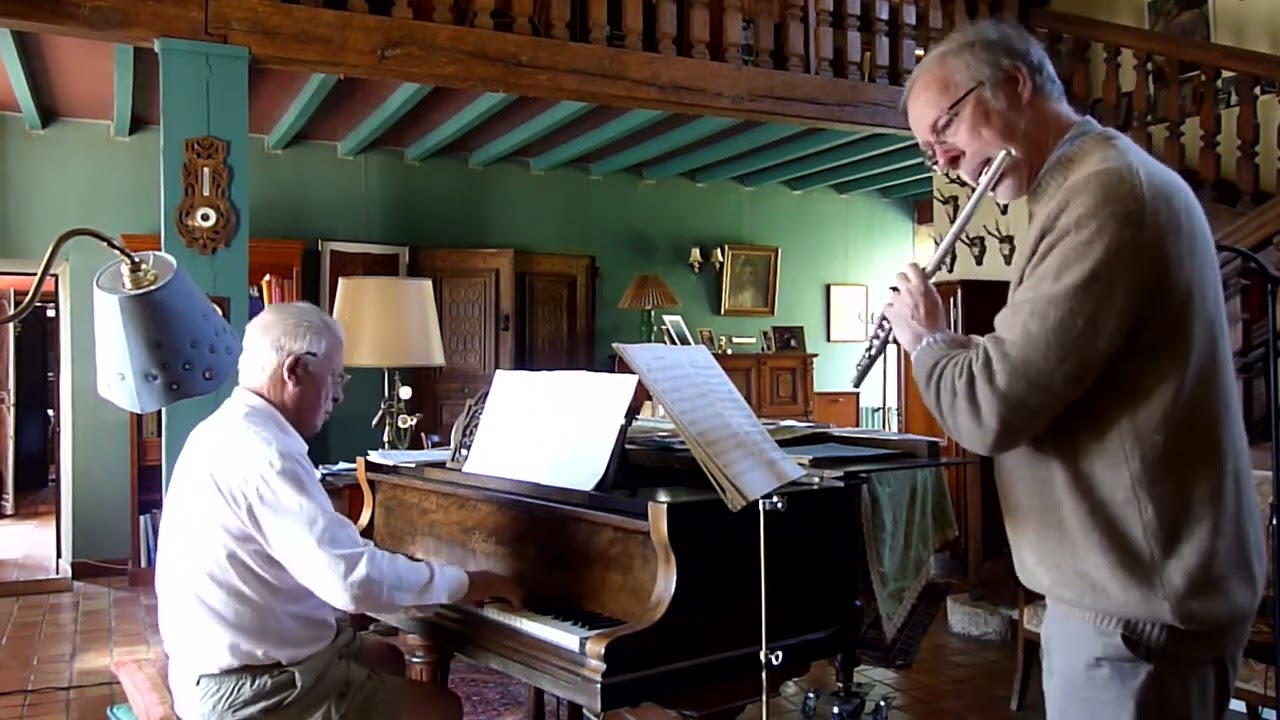
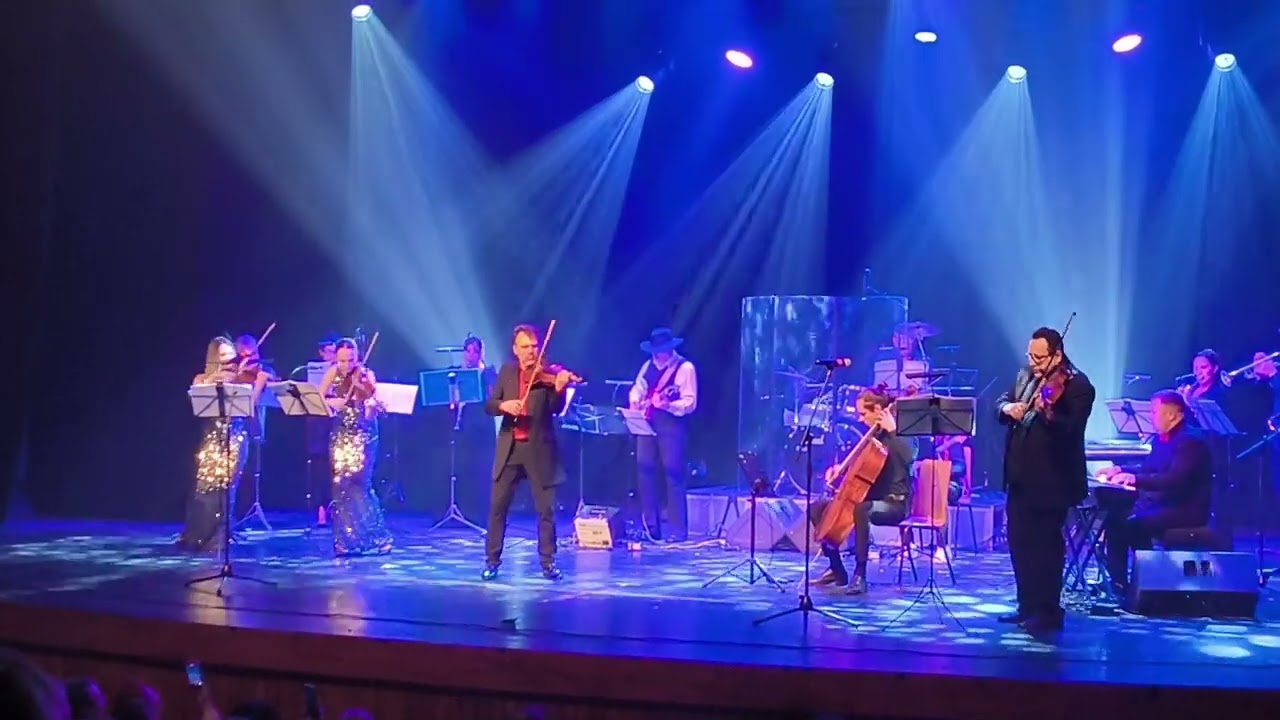
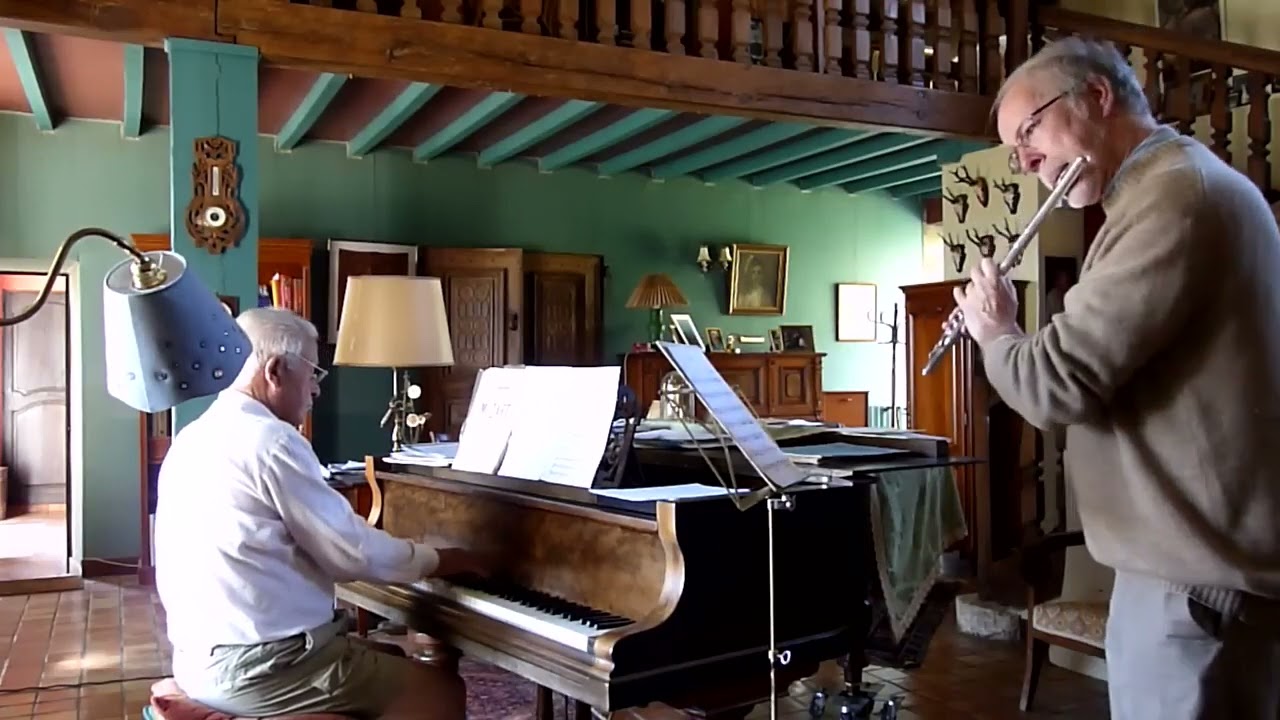
Maria Theresia v Paradis: 'Sicilienne' (flute & piano)
Автор: Willie-Whistleblower
Загружено: 2026-01-13
Просмотров: 6
• willie-whistleblower
The beguilingly simple Sicilienne...a rare eighteenth century gem attributed to a woman composer*.
Maria Theresia von Paradis was the daughter of Joseph Anton von Paradis, Imperial Secretary of Commerce and Court Councilor to the Empress Maria Theresa of Austria, for whom she was named. The Empress, however, was not her godmother, as was often believed. Between the ages of 2 and 5 she lost her eyesight.
She received a broad education in the musical arts from Salieri among others
Paradis was renowned for her excellent memory and exceptionally accurate hearing, as she was widely reported to have learned over sixty concertos by heart, as well as a large repertoire of solo and religious works.
In 1773 she was commissioned to perform an organ concerto by Antonio Salieri which survives but without its second movement. She herself also commissioned works by Salieri as well as from Haydn and Mozart -probably Piano Concerto n° 18.
By 1775, Paradis was performing as a singer and pianist in various Viennese salons and concerts.
Paradis was treated from late 1776 until the middle of 1777 by the famous Franz Anton Mesmer, who was able to improve on her blindness temporarily until she was removed from his care, amid concerns on the one hand of possible scandal, on the other hand at the potential loss of her disability pension. In any event, on her departure from Dr. Mesmer the blindness came back permanently.
Paradis did not stay confined to Vienna. In 1783, she set out on an extended tour towards Paris and London, accompanied by her mother and the librettist Johann Riedinger who invented a composition board for her. In August of that year they visited the Mozarts in Salzburg. She played in Frankfurt and other German cities, then Switzerland.
Paradis finally reached Paris in March 1784. Her first concert there was given in April at the Concert Spirituel; the review in the Journal de Paris remarked: "…one need have heard her to form an idea of the touch, the precision, the fluency and vividness of her playing." In all she made a total of 14 appearances in Paris, to excellent reviews and acclaim. She also assisted in helping Valentin Haüy ("the father and apostle of the blind") establish the first school for the blind, which opened in 1785.
Paradis traveled to Westminster in late 1784 and performed over the next few months at court, Carlton House (the town house of the Prince of Wales), and in the Professional Concerts at Hanover Square, Westminster, among other places. She played Handel fugues to George III and later accompanied the Prince of Wales, a cellist (another one!). However, her concerts were less well received and attended in England than in Paris.
She continued to tour in Western Europe (including Hamburg where she met Carl Philipp Emanuel Bach), and after passing through Berlin and Prague, ended up back in Vienna in 1786. Further plans were made for her to give concerts in the Italian states and Russia, but nothing came of these. She returned to Prague in 1797 for the production of her opera Rinaldo und Alcina.
By the year 1789, Paradis was spending more time with composition than performance, as shown by the fact that from 1789 to 1797 she composed five operas and three cantatas. After the failure of the opera Rinaldo und Alcina from 1797, she shifted her energy more and more to teaching. In 1808, she founded her own music school in Vienna, where she taught singing, piano and theory to young girls. A Sunday concert series at this school featured the work of her outstanding pupils. She continued to teach up until her death in 1824.
(By all accounts she was the very model of a "European'' and would perhaps have been dumbfounded by the UK people's decision to throw fortune to the wind with their Brexit decision).
*'Sicilienne' (quoting from Wikipedia...)
The most famous composition ascribed to Paradis, the 'Sicilienne' in E-flat major for violin and piano (played at Prince Harry's and Meghan Markle's wedding) is a musical hoax by a 20th Century violinist Samuel Dushkin.The 'Sicilienne' is based on the Larghetto movement from Carl Maria von Weber's Violin Sonata in F major, Op. 10, No.1.
(Comment: hopefully some clever person out there will be able to show us not everything we read in Wiki should be believed!)
Доступные форматы для скачивания:
Скачать видео mp4
-
Информация по загрузке: