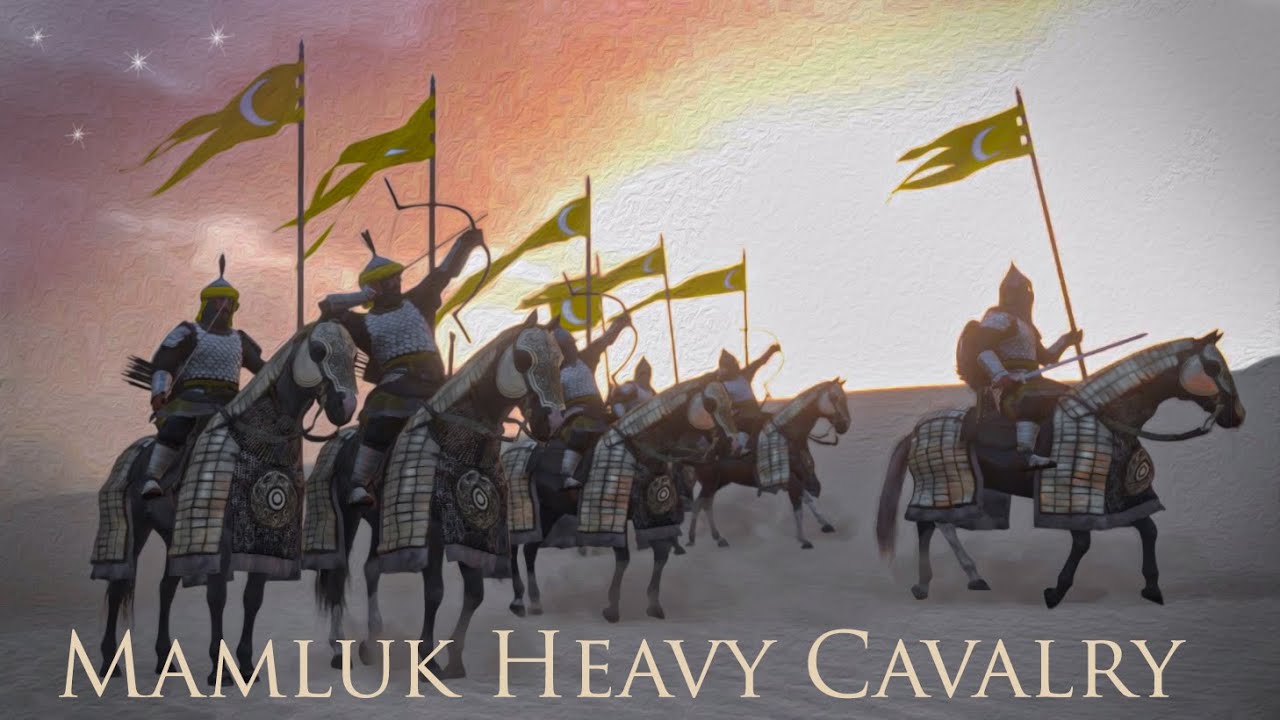
Heavy Mamluk Cavalry - Music Video
Автор: Future History Discipline
Загружено: 2022-04-04
Просмотров: 27784
Check out https://www.cardgamecourier.com/ for historical and tactical games to play with family and friends!
More about Mamluks:
The Mamluk sultanate came into being in 1250 after the mamluks overthrew the last Ayyubid ruler and proclaimed one of their own sultan. The mamluks were elite slave soldiers who served the Ayyubids. In fact, military slaves formed the backbone and elite of almost all the armies of the Muslim world from the 9th century to the 19th century. I have written on military slavery in the Muslim world and the status and training of military slaves in previous articles on Medievalists.net, so I will skip the details here and get into discussing the army that the mamluks created.
The Mamluk sultanate lasted from 1250-1517. Throughout its existence, its mainstay and power lay in its well-trained and effective military force. Being a military regime, most of the important posts in the government were held by “the men of the sword” or arbab al-sayf in Arabic; and most of these were military slaves, or former military slaves. Although the Mamluk army cannot be compared to a modern standing army or to the professional armies of later periods, it was probably one of the few professional standing armies of the High and Late Middle Ages. I will present a description of the main elements of the Mamluk army below.
Types of Mamluks
The early Mamluk army was was composed of three major groups: The Royal Mamluks (al-mamalik al-sulṭaniyya), the amirs’ mamluks (mamalik al-umara’), and the free soldiers of the ḥalqa. In the later period of the sultanate the halqa disappeared as a major element of the army, but new gunpowder unit(s) were created shortly before the fall of the sultanate. It should be noted here that the mamluk slave soldiers (or former slaves) formed the bulk of the army. In many other regimes that ruled various parts of the Muslim world these slave soldiers often only formed an elite unit within the army, which more often than not was composed of freeborn troops. Some of the earliest and most detailed studies on the Mamluk army have been conducted by scholars such as the late David Ayalon, Stephen Humphries, Robert Irwin, Amalia Levanoni and Reuven Amitai among others.
The Royal Mamluks formed the core and backbone of the army. These were the mamluks who were in the service of the sultan and formed his personal regiments. The Royal Mamluks could be divided into two groups. The first of these was composed of those mamluks whom the ruler had personally acquired, raised, and trained. In the sources from the later period of the sultanate they are referred to as julban or mushtarawat (meaning those bought/purchased). The other group that formed the Royal Mamluks were those mamluks who passed into the service of the ruler from previous sultans and deceased/disgraced amirs and are often referred to in the later sources as the qaranisa or mustakhdamun (those who have been used/veterans).
In addition to the Royal Mamluks who served the sultan directly, there were also contingents of mamluks that served the amirs, who were the officers and magnates of the regime. The mamluks of the amirs were slightly inferior in quality, equipment, and training to the Royal Mamluks. They were in the service of the amirs, and their masters did not have access to the vast resources of the sultan, and their troops did not have access to the military schools and training grounds used by the Royal Mamluks.
The sultan was the ultimate commander of the army, under him there were four major officer ranks in the Mamluk military society: amir of one hundred (amir mi’a), amir of forty (amir ṭablakhana), amir of ten (amir ‘ashara), and amir of five (amir khamsa). The numbers denoting these ranks indicate the number of mamluks the holder of that rank was entitled to have in his service. However, these numbers were not set in stone, and it is not uncommon to see the sources mention amirs of fifteen, twenty, or thirty. On the other hand, Julien Loiseau contends in his monograph Les Mamelouks XIIIe-XVIe Siècle: Une Expérience du Pouvoir dans l’Islam Médiéval that these numbers indicate the minimum number of mamluk cavalrymen the amir had to maintain at his rank and he states that some of the high ranking amirs, who were very wealthy and powerful, could have had significantly more than one hundred mamluks in their service.
Доступные форматы для скачивания:
Скачать видео mp4
-
Информация по загрузке:


![Varangian Guard: Brothers of the North Sea [Old English/Old Norse/Medieval Greek] | The Skaldic Bard](https://image.4k-video.ru/id-video/KyAKL2_ix14)


