Nero and the Great Fire of Rome
Автор: History Theology
Загружено: 2023-04-02
Просмотров: 2175
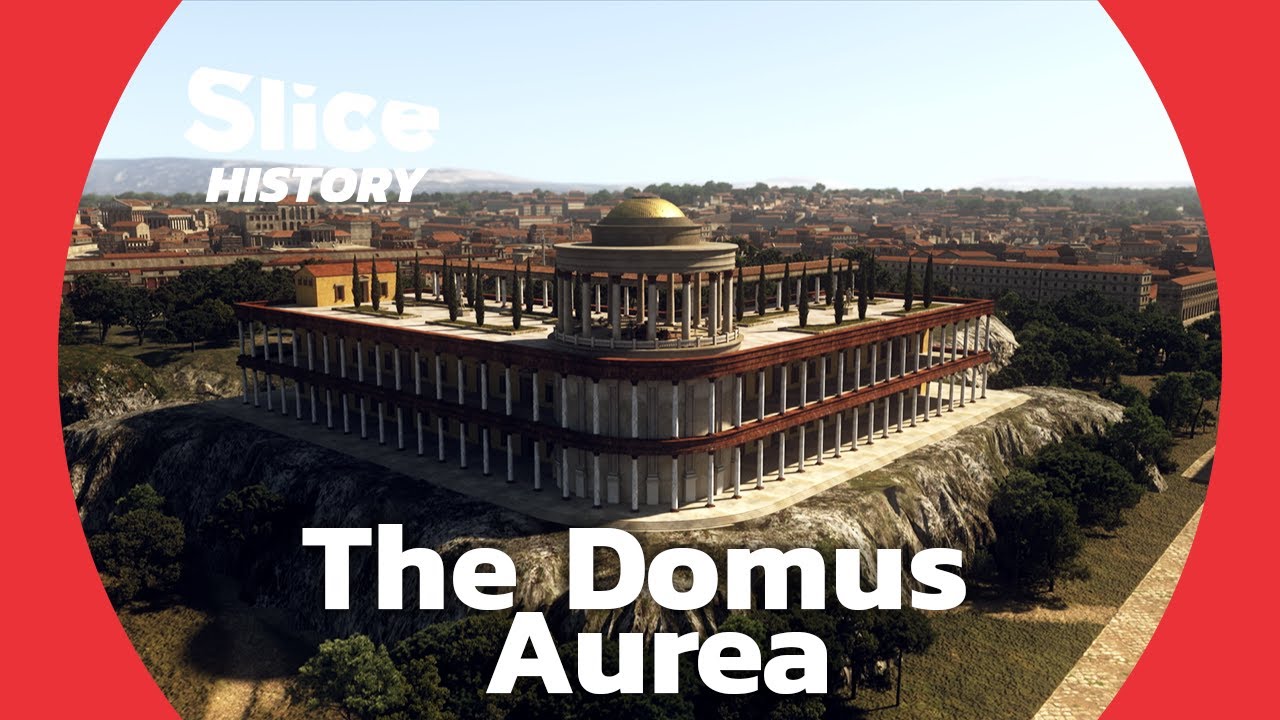
64 AD The Great Fire of Rome. The great fire that ravaged Rome in 64 illustrates how low Nero’s reputation had sunk by this time. Taking advantage of the fire’s destruction, Nero had the city reconstructed in the Greek style and began building a prodigious palace—the Golden House—which, had it been finished, would have covered a third of Rome. During the fire, Nero was at his villa at Antium 35 miles (56 km) from Rome and therefore cannot be held responsible for the burning of the city. But the Roman populace mistakenly believed that he himself had started the fire in Rome in order to indulge his aesthetic tastes in the city’s subsequent reconstruction. According to the Annals of the Roman historian Tacitus and to the Nero of the Roman biographer Suetonius, Nero in response tried to shift responsibility for the fire to the Christians, who were popularly thought to engage in many wicked practices. Hitherto the government had not clearly distinguished Christians from Jews. Almost by accident, Nero initiated the later Roman policy of halfhearted persecution of the Christians, in the process earning himself the reputation of Antichrist in the early Christian tradition.
Seeing that he could do what he liked without fear of censure or retribution, Nero began to give rein to inordinate artistic pretensions. He fancied himself not only a poet but also a charioteer and lyre player, and in 59 or 60 he began to give public performances; later he appeared on the stage, and the theatre furnished him with the pretext to assume every kind of role. To the Romans these antics seemed to be scandalous breaches of civic dignity and decorum. Nero even dreamed of abandoning the throne of Rome in order to fulfill his poetical and musical gifts, though he did not act on these puerile ambitions. Beginning about 63, he also developed strange religious enthusiasms and became increasingly attracted to the preachers of novel cults. By now Seneca felt that he had lost all influence over Nero, and he retired after Burrus’s death in 62.
The first five years of Nero’s reign were relatively benign. The young emperor seemed intent on becoming a second Augustus and made a great speech to the Senate acknowledging their authority — minting coinage bearing the stamp of senatorial authority to reinforce his words. Nero also deified his predecessor Claudius and made a show of merciful rule by avoiding the death penalty as much as possible. However, behind the scenes, the cracks were beginning to show, and Nero started to remove anyone in perceived opposition to him. In 55 BC he murdered his adopted brother Britannicus after growing tensions with Agrippina led her to shift her attention to the young Prince. Agrippina followed in 59BC, and finally, in 62 AD, Nero murdered his first wife Octavia and her elder sister.
Then in 64 AD, the Great Fire of Rome broke out. The conflagration lasted for nine days and wiped out much of the city. Nero provided emergency help and shelter for the dispossessed — but he also appropriated vast swathes of public land which he turned into a lavish palace and gardens — the so-called Golden House of Nero. These advantages to Nero led to rumors that the Emperor was the arsonist. So Nero responded by looking for other scapegoats to satisfy the mob in the form of Rome’s Christian population who he cruelly persecuted.
https://historycollection.com/emperor-nero...
Nero’s reputation amongst the elite began to plummet — although he remained popular with the people. The disastrous Boudiccan Revolt and war with Parthia did little to bolster the emperor’s reputation. Nor did the Emperor’s excesses. In 65Ad, a plot to replace Nero arose which he learned of and thwarted. However, the foiled coup only made Nero worse and widespread executions followed, including the poet Lucan and the emperor’s old tutor, Seneca. Nero even turned on his old friend Petronius, author of the Satyricon. His murderous madness finally culminated in him kicking his pregnant wife, Poppaea, to death.
In the aftermath, Nero abandoned Rome and spent a happy two years touring Greece, competing in athletic and musical contests — including the Olympic games — and basking in the adoration of his Hellenistic subjects. However, in January 68AD, the emperor’s extended foreign holiday came to an abrupt close when Helios, the freedmen he had left governing Rome, advised Nero to return to Rome quickly — or lose the purple. Nero complied — but it was too late. A famine in the city, caused by Nero cutting grain supplies had lost him the support of the populace, but worse still, Nero had lost the support of the army. They now supported a new imperial candidate, the governor of Spain, Galba. By early June 68 AD, Nero’s end was in sight. The Senate declared him a public enemy on June 9th, 68 AD. However, by the time they made the declaration, the Emperor had fled Rome.

Доступные форматы для скачивания:
Скачать видео mp4
-
Информация по загрузке: