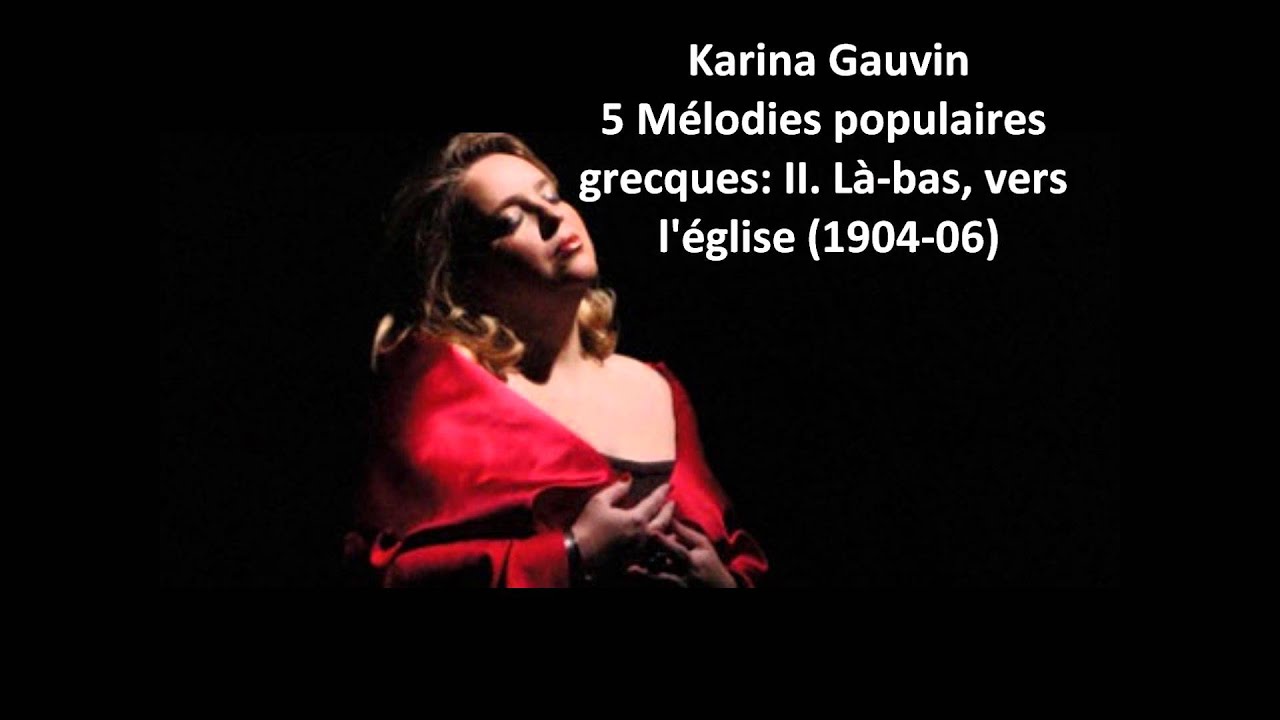
Karina Gauvin: The complete "5 Mélodies populaires grecques" (Ravel)
Автор: GilPiotr
Загружено: 2014-04-01
Просмотров: 137968
5 Mélodies populaires grecques (1904-06):
I. Chanson de la mariée 00:00
II. Là-bas, vers l'église 01:36
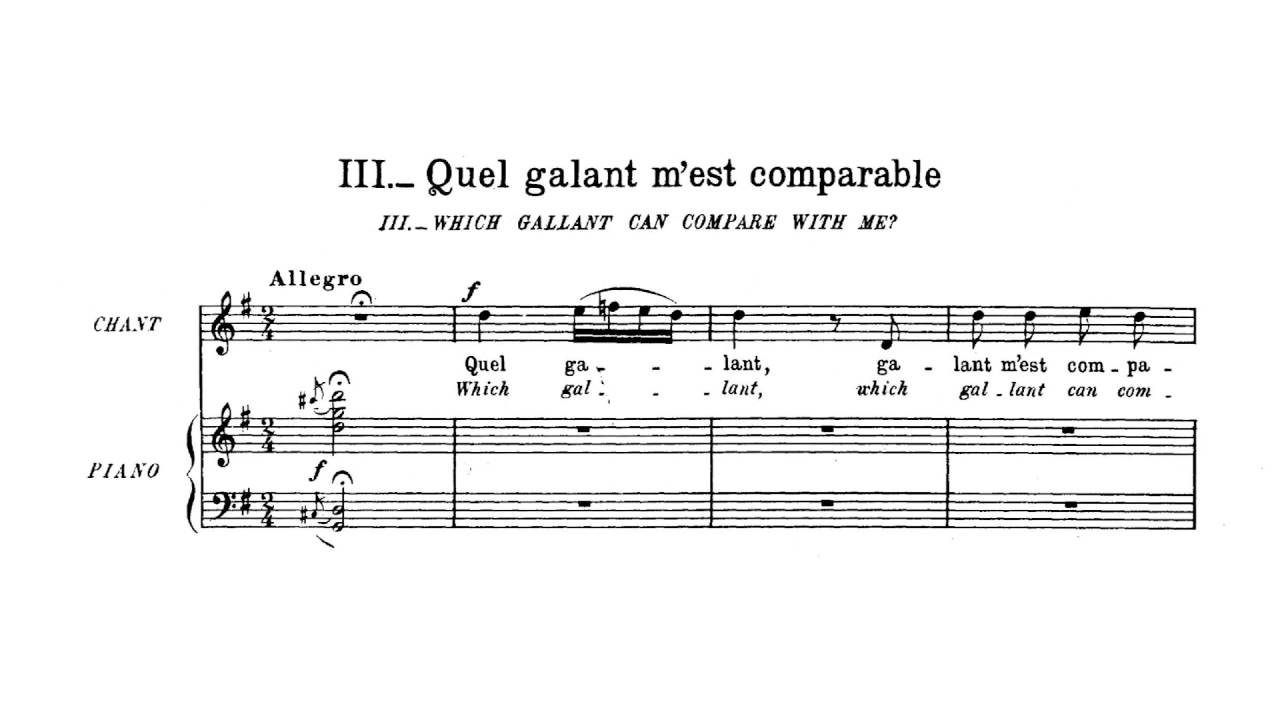
III. Quel galant m'est comparable 03:23
IV. Chanson des cueilleuses de lentisques 04:21
V. Tout gai! 07:37
Ravel, Maurice (1875-1937) -composer
Karina gauvin -soprano
Marc-André Hamelin -piano
Score: http://petrucci.mus.auth.gr/imglnks/u...
It isn't hard to figure out why singers -- and pianists, to be sure -- love Maurice Ravel's Cinq mélodies populaires grecques (Five Greek Folksongs) as much as they do. The texts, which were translated from the Greek originals into French by Michel Dimitri Calvocoressi, are charmingly short and pithy, and the music to which Ravel has set them is, despite a vague Mediterranean flavor, pure Ravel -- the kind of rich, modified-diatonic music that might to an uninitiated ear seem "impressionist" but really has an objectivity of line and a clarity, even thinness, of texture that marks it as something else altogether. The five songs were composed from 1904 to 1906; Ravel later orchestrated two of them, and the remaining three were orchestrated by another hand, making it possible to perform the entire cycle in the concert rather than the recital hall.
The Cinq mélodies populaires grecques are: 1. Chanson de la mariée (Song of the Bride), 2. Là-bas, vers église (Over by the Church), 3. Quel galant m'est comparable (Which Gallant Compares with Me), 4. Chanson des cueilleuses de lentisques (Song of the Lentisk Collectors), and 5. Tout Gai! (Be Gay! -- these days often translated less literally).
In the first song, a man asks his bride-to-be to arise and enjoy the morning with him; he offers that the two might be married, so that their families might be as close as they are. The music is moderately paced and is in G minor, though more often than not Ravel leaves out the third and we hear only an open fifth. The piano makes a quiet, arpeggiated rustle as the singer calls up a melody that over the entire course of the song covers only the span of a minor sixth (from G up to E flat) -- Ravel proves yet again that excess is not needed to create mood and inflection.
The texture of No. 2 is by comparison much stiller, but in the third song, a burst of machismo during which the singer boasts of his manliness by virtue of sword and pistol, we are treated to some rowdiness, both from the singer and from the accompaniment.
You might describe "Song of the Lentisk Collectors" as a cross between the steady, registrally-shifting chords of the second song and the flowing arpeggios of the first, though still that would but poorly describe the happenings of this gentle, Lydian mode-inflected number. A raucous outburst might be expected for the last song (it does bear the enthusiastic title "Tout Gai!" after all), but that's not really Ravel's way, and he keeps things plainly and firmly in check (the accompaniment, for instance, remains at the piano dynamic throughout), even as the singer happily explains how attractive the dancing legs are! Midway through the song the text dissolves into a good-natured "tra la la" that takes us to the end.
Доступные форматы для скачивания:
Скачать видео mp4
-
Информация по загрузке:





![Maurice Ravel - Shéhérazade [With score] (Reupload)](https://imager.clipsaver.ru/paZ7LXd_wKM/max.jpg)