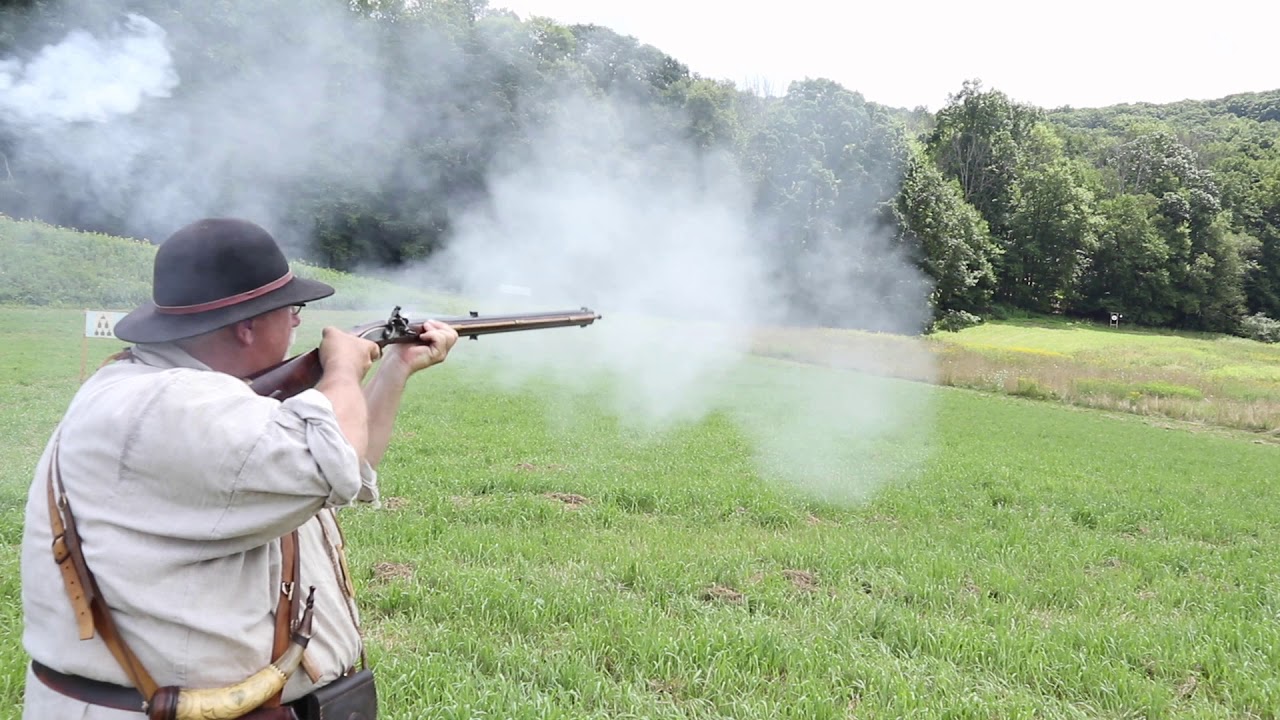
Pattern 1853 enfield
Автор: Ordinance Sgt
Загружено: 2021-03-03
Просмотров: 978
The term "rifle-musket" originally referred to muskets with the smooth-bored barrels replaced with rifled barrels. The length of the barrels were unchanged, allowing the weapons to be fired by rank, since a long rifle was necessary to enable the muzzles of the second rank of soldiers to project beyond the faces of the men in front. The weapon would also be sufficiently long when fitted with a bayonet to be effective against cavalry. Such weapons manufactured with rifled barrels, muzzle loading, single shot, and utilizing the same firing mechanism,[2] also came to be called rifle-muskets.
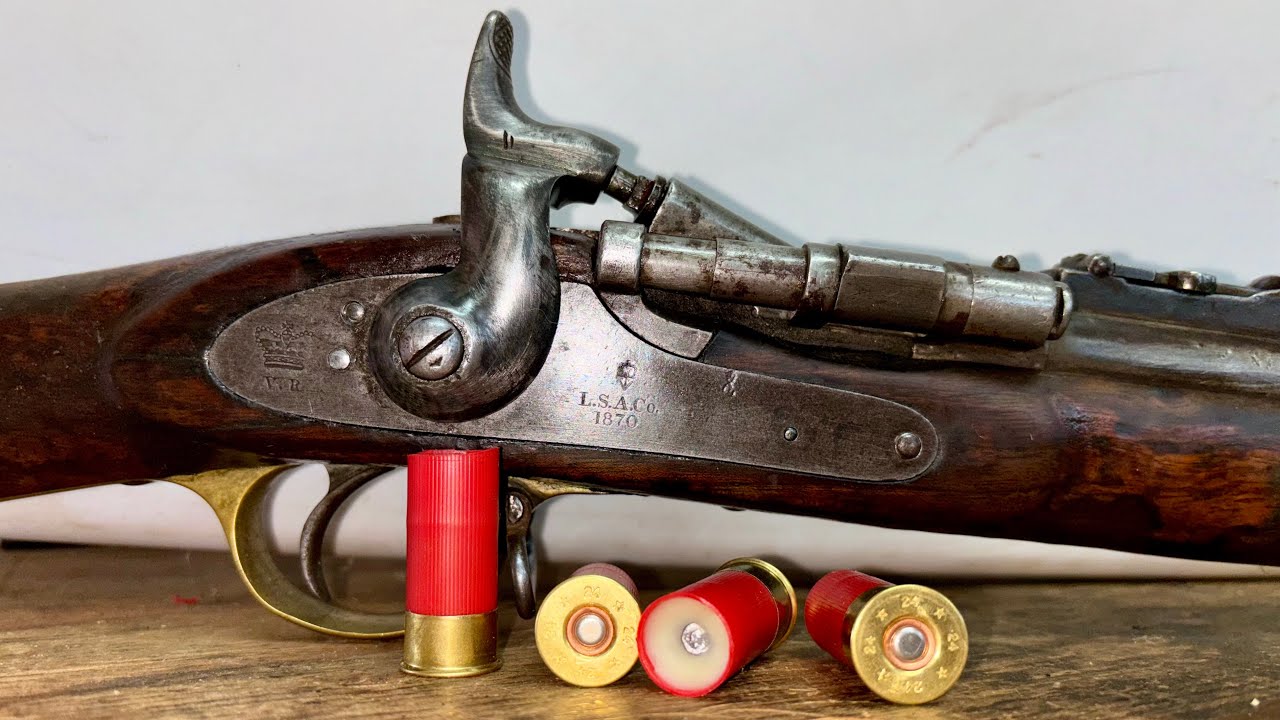
William Pritchett developed the Pattern 1853 Enfield in the 1850s. The 39 in (99 cm) barrel had three grooves, with a 1:78 rifling twist, and was fastened to the stock with three metal bands, so that the rifle was often called a "three band" model. The rifle's cartridges contained 70 grains (4.5 g)[3] of black powder, and the ball was typically a 530-grain (34 g) Boxer modification of the Pritchett or a Burton-Minié, which would be driven out at about 850 to 900 feet (259–274m) per second.
The original Pritchett design was modified by Col. Boxer, who reduced the diameter to 0.55 after troops found the original 0.568 too hard to load during the Indian Mutiny, changing the mixed beeswax-tallow lubrication to pure beeswax for the same reason, and added a clay plug to the base to facilitate expansion, as the original Pritchett design, which relied only on the explosion of the charge, was found to cause excessive fouling from too slow an expansion, allowing unburnt powder to escape around the bullet.[4] The Enfield's adjustable ladder rear sight had steps for 100 yards (91 m) – the default or “battle sight” range – 200 yards (180 m), 300 yards (270 m), and 400 yards (370 m). For distances beyond that, an adjustable flip-up blade sight was graduated (depending on the model and date of manufacture) from 900 yards (820 m) to 1,250 yards (1,140 m). British soldiers were trained to hit a target 6 feet (180 cm) by 2 feet (61 cm) – with a 2 feet (61 cm) diameter bull's eye, counting 2 points – out to 600 yards (550 m). The target used from 650 yards (590 m) to 900 yards (820 m) had a 3 feet (91 cm) bull's eye, with any man scoring 7 points with 20 rounds at that range being designated a marksman.

Доступные форматы для скачивания:
Скачать видео mp4
-
Информация по загрузке: