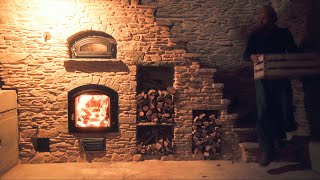
They Laughed When He Lowered the Roof to Cover Firewood — Until It Slowly Heated His Cabin to 55°F
Автор: American Survival Wisdom
Загружено: 2025-12-25
Просмотров: 1200
Frontier cabin heating, off-grid survival wisdom, and forgotten thermal engineering are at the heart of this true historical reconstruction. In the late 1800s, a mountain settler was mocked for lowering his cabin roof—not for style, but to store firewood directly above his living space. Neighbors laughed. Builders warned him. Until winter arrived.
This documentary explores how early homesteaders used thermal mass, radiant heat, convection, and slow-release energy storage to survive brutal winters with fewer resources. By stacking seasoned firewood under a low roofline, the cabin captured waste heat from the hearth, gently warming the fuel overhead and releasing that heat back into the living space over time.
With temperatures outside plunging well below freezing, this simple, ridiculed design helped stabilize the interior at 55°F (≈13°C)—without extra firewood, iron stoves, or modern insulation. Compared to neighboring cabins, wood consumption dropped dramatically, and heat retention lasted hours longer after the fire burned down.
Using plausible measurements, period-accurate materials, and vernacular engineering principles, this video breaks down:
Why lowering the roof reduced heat loss
How firewood can act as low-grade thermal mass
What early builders understood about radiant and convective heat
Why “primitive” solutions often outperformed expert advice
This is not modern engineering guidance, but historical and educational analysis, drawn from local records, oral accounts, and known physical laws. It’s a reminder that survival often favored those who observed heat—not those who overdesigned it.
They laughed—until winter made the verdict.
#frontierwisdom #offgridliving #thermalmass #homesteadhistory #survivalengineering

Доступные форматы для скачивания:
Скачать видео mp4
-
Информация по загрузке: