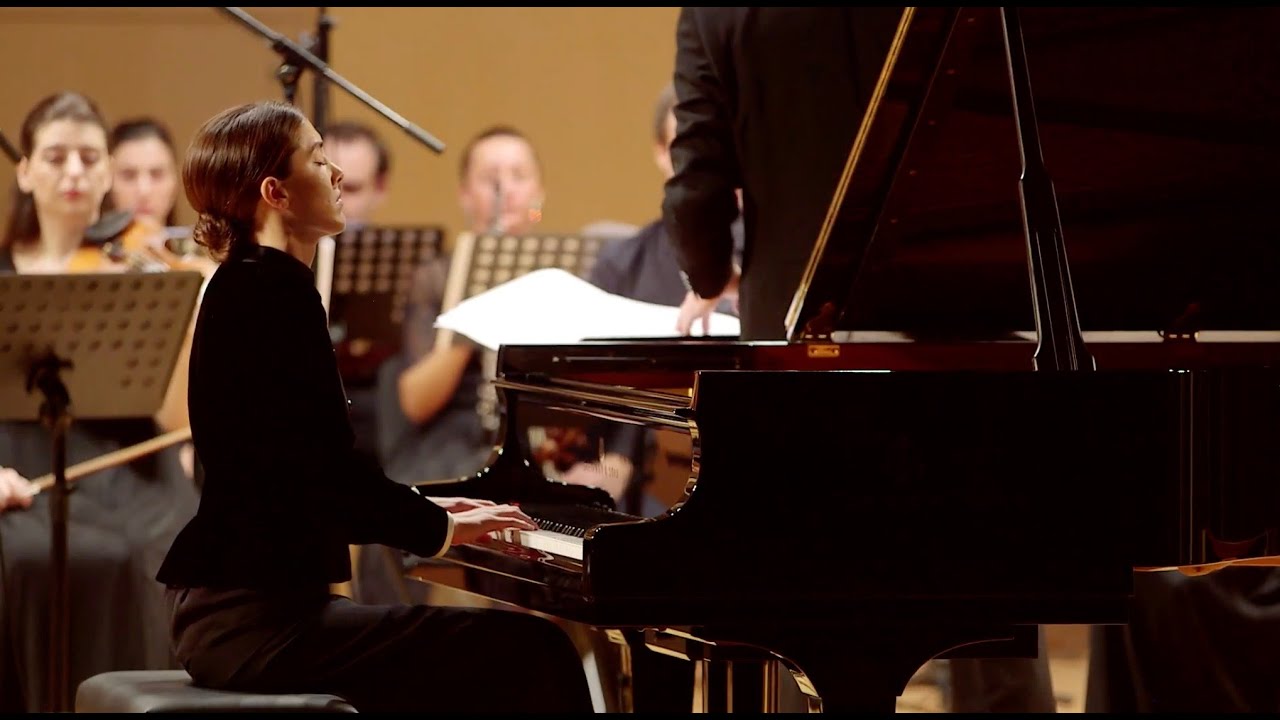
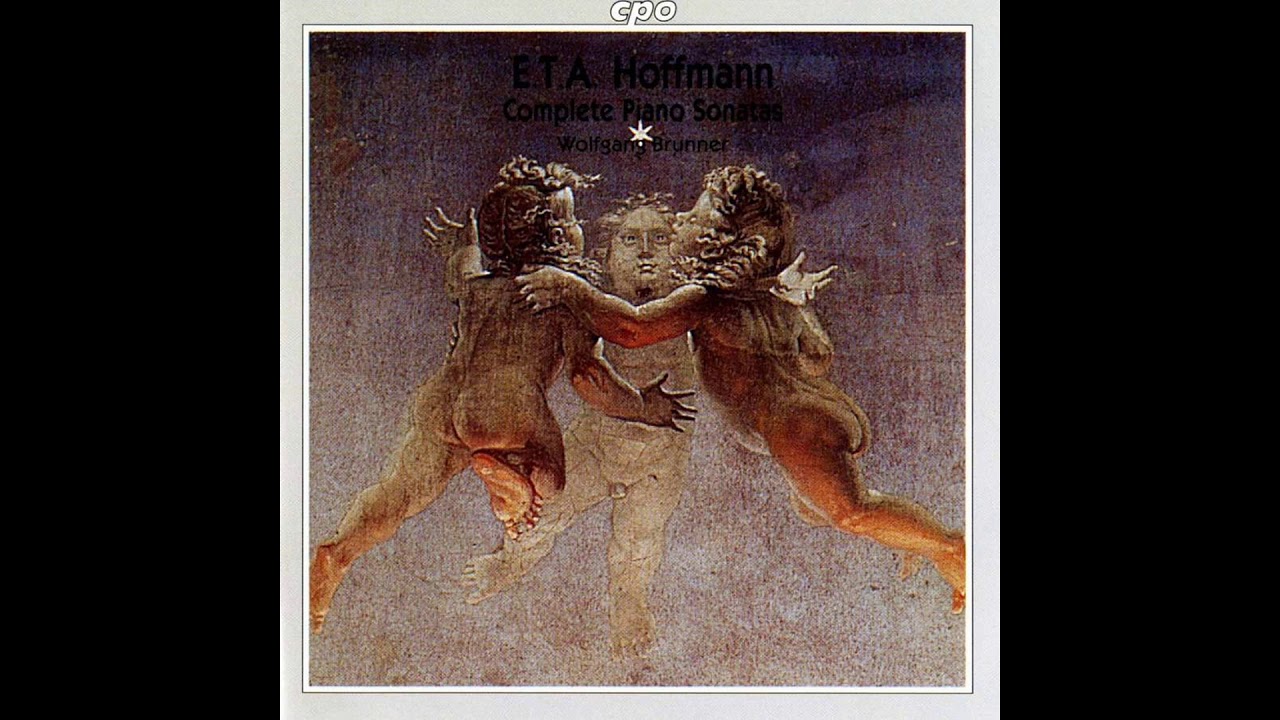
Piano Sonata No.1 in A major - E.T.A. Hoffmann
Автор: Sergio Cánovas
Загружено: 2018-12-20
Просмотров: 5204
Performed by Wolfgang Brunner.
I - Andante: 0:00
II - Menuetto I & II: 7:58
III - Allegro assai: 12:10
Hoffmann's Piano Sonata No.1 was composed around 1804-5, soon after moving to Warsaw as he detailed in a letter to his friend Theodor Gottlieb von Hippel the Younger. A fervent admirer of both Mozart and Beethoven, Hoffmann modeled the sonata after Mozart's Piano Sonata in E flat major KV 282. This was the only instrumental work Hoffmann had published during his lifetime, in Breslau, by Elsner, later a teacher of Chopin. The collection it was published in, however, did not circulate out of the provinces, and the work soon sank into obscurity.
When Hoffmann’s musical works were finally exhumed and examined in the early 20th century, researchers were disappointed that his music did not contain any of the grotesqueries or ironic humour of his famous tales; but some of it has turned out to be very solidly written and worthy of performance, as seen in Hoffmann's piano sonatas. Despite Hoffmann’s lifelong adoration of Mozart (he even legally changed his third name from Wilhelm to Amadeus in honour of his idol), in these piano sonatas the language spoken is halfway towards Beethoven. It should also not surprise us, considering his love of Mozart’s formality, that although the emotional content of the sonatas is close to Beethoven, these works also mirror the structure of Mozart. The result is a constant and fascinating tug-of-war between very Classical design and Romantic harmonies.
The first movement is structured in sonata form. It begins with a slow main theme of Mozartian reminiscences, followed by a more rhythmic and Beethovenian second theme. After a complete reexposure, follows a more dramatic development of this material, dominated by the main theme. After the recapitulation, an elegant coda ends the movement.
The second movement is written in ternary form. It opens with a two-part menuetto. In the middle section, a second menuetto is introduced, heavily derived from the main one. It is characterized by its Neapolitan beginning and the bold modulation to C major over a modified six-five chord. The opening menuetto is then reexposed, followed by a firm coda in which the famous "Mozart fifths" appear.
The third movement is also structured in sonata form. It begins with a lively and animated main theme, again reminiscent of Beethoven. It is followed by a more melodic, if hardly contrasting, second theme. After the complete reexposure, a short development section takes place with a nuanced balance between the material. The themes are then recapitulated, ending the work with a firm coda.
Musical analysis partially written by myself. Source: https://tinyurl.com/29rgxqm4
To check the score: https://tinyurl.com/2d4ulhc7
Доступные форматы для скачивания:
Скачать видео mp4
-
Информация по загрузке:


![Mily Balakirev - Piano Sonata No. 2, Op. 102 (1900-1905) [Score-Video]](https://imager.clipsaver.ru/R-ATLXEcaV0/max.jpg)