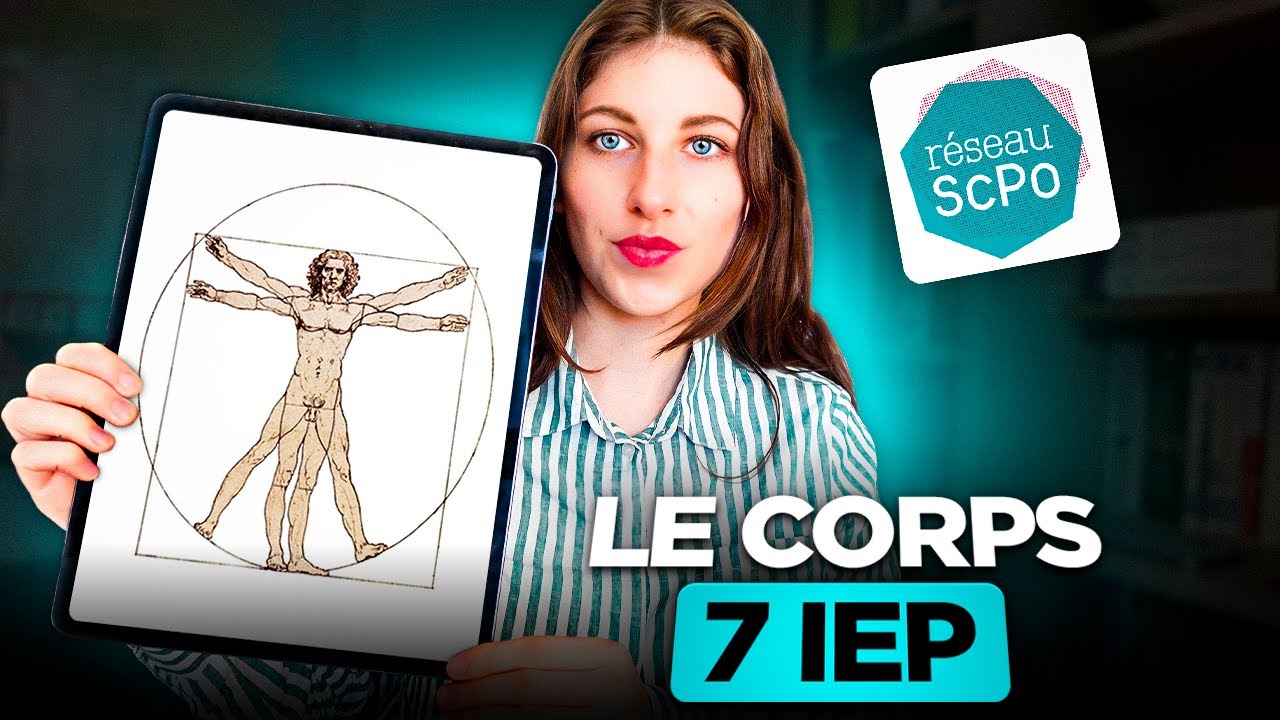
L'histoire du corps. Concours d'entrée à Sciences Po. Le corps dans l'Antiquité et au Moyen Âge
Автор: Géo Paul
Загружено: 2023-11-19
Просмотров: 21273
Retrouvez ma préparation complète au concours dans le manuel Bled 2025. Culture générale (Sciences Po. Concours commun). Dans cette vidéo, l'histoire du corps. Partie I Le corps dans les sociétés antiques et médiévales. Partie II L'invention du corps. De la Renaissance à aujourd'hui.
Mon manuel de préparation à Sciences Po : https://www.enseignants.hachette-educ...
Sciences Po. Question contemporaine. Quiz en description !
Géo Paul. Géopolitique, histoire géographie et Sciences Po.
Série de vidéo sur l'histoire du corps humain pour la question contemporaine du concours d'entrée à Sciences Po 2024 et 2025. Comment la perception du corps humain a-t-elle changé au cours de notre histoire ?
Dans cette première vidéo, les origines antiques de nos conceptions du corps. La question de la nudité dans les cités grecques et le changement de regard sur le corps porté par le christianisme naissant puis dans l'Occident médiéval.
00:25 Définition
01:52 Le corps dans l'Antiquité grecque et romaine
08:59 Le corps dans la société médiévale
Si vous avez aimé, pensez à vous abonner, à liker, partager et commenter !
Video Comprehension Questions n° 1
https://forms.gle/Xs5iM9p5crpd1NYg8
Video Comprehension Questions n° 2 (Reply in the comments to check if you've got it right ;) )
1. During which period was the idea of the body and soul distinction mainly developed?
a) The Renaissance
b) The Middle Ages
c) The Antiquity
d) The Modern Era
2. What does the word "gymnase" mean in Greek?
a) Naked
b) Exercise
c) Sports
d) Competition
3. What was the significance of the 13th century in the history of art?
a) The birth of portrait painting
b) The dominance of abstract art
c) The decline of religious art
d) The rise of landscape painting
4. What was the role of mirrors in the 14th century?
a) They were used for religious rituals
b) They were a status symbol for the elite
c) They transformed the perception of the body
d) They were primarily used for self-defense
5. How were martyrs' relics used in medieval Christianity?
a) As objects of worship and veneration
b) As tools for punishment and discipline
c) As symbols of political power
d) As sources of entertainment for the masses
6. What did the portrayal of individuals in paintings represent for the first time?
a) Their social status
b) Their spiritual enlightenment
c) Their physical existence
d) Their divine connection
7. What event led to Adam and Eve feeling shame about their bodies according to Christian belief?
a) Their exile from the Garden of Eden
b) Their encounter with the serpent
c) Their disobedience to God's command
d) Their realization of mortality
8. What concept emerged with the influence of mendicant religious orders in the 13th century?
a) The celebration of physical beauty
b) The descent of heavenly values to earthly life
c) The rejection of religious art
d) The rise of secular humanism
9. What was the significance of the 7th century in relation to the representation of nudity in art?
a) The birth of abstract art
b) The emergence of landscape painting
c) The appearance of nude sculptures
d) The dominance of religious symbolism
10. What was the primary role of the artist Praxiteles in ancient Greece?
a) He celebrated the beauty of the human body
b) He focused on abstract art forms
c) He depicted religious deities
d) He led the architectural innovations
Droits. Technique. Adobe Premiere. After Effects. Envato. Canva Pro. Images : licences Creative Commons, collection personnelle ou images issues de sites institutionnels à des fins d'étude pédagogique.
Доступные форматы для скачивания:
Скачать видео mp4
-
Информация по загрузке:
![CO ROSJANIE MYŚLĄ O POLAKACH - DUMA I UPRZEDZENIE? [SKWIECIŃSKI I BOJKE]](https://imager.clipsaver.ru/XSQhVjgtP9A/max.jpg)