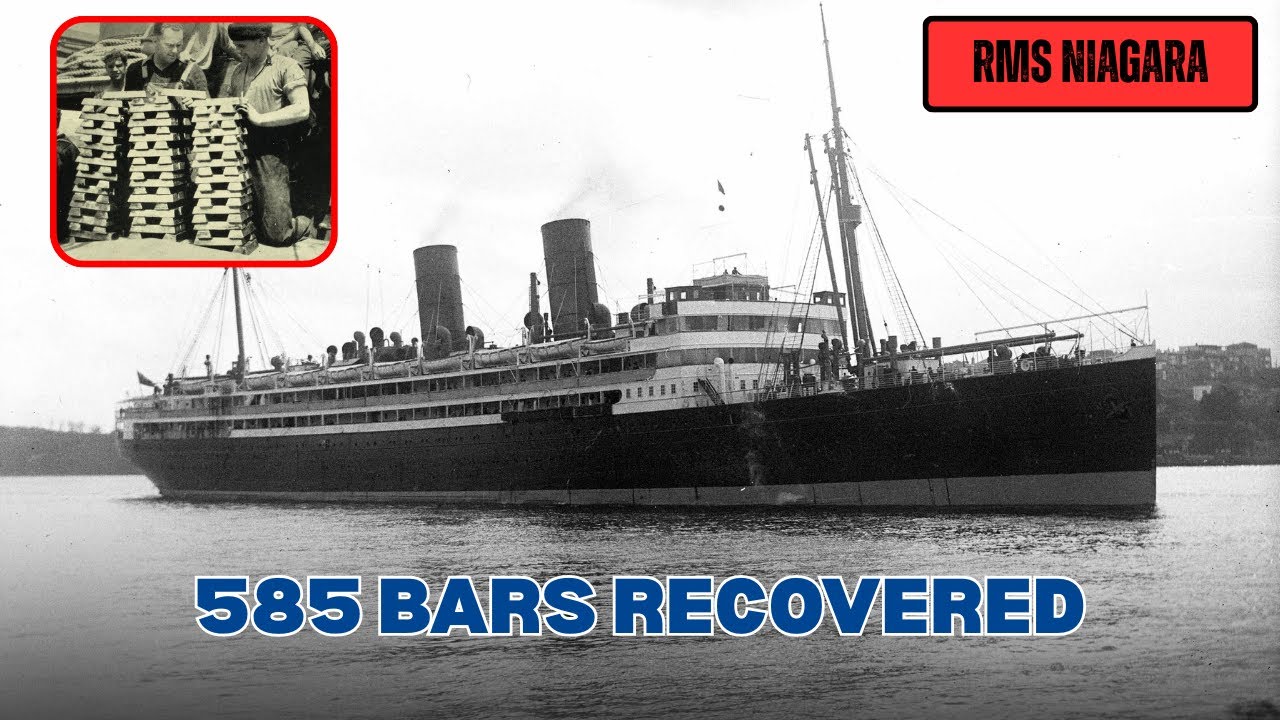
Salvaging RMS Niagara Gold: 585 Bars Recovered in a WWII Minefield
Автор: Classified Wreckage
Загружено: 2026-01-01
Просмотров: 6211
#RMSNiagara #Shipwreck #MaritimeHistory #ShipSalvage #DeepSea
RMS Niagara sank in New Zealand’s Hauraki Gulf on June 19, 1940, taking 590 gold bars to the seafloor—protected by a live WWII contact-mine field and a depth of 400 feet. In 1940, that depth was the “dead zone”: roughly 180 psi of pressure and severe nitrogen narcosis made conventional diving effectively suicidal.
To reach RMS Niagara, salvors chose a calculated risk: an aging steamer, Claymore, sweeping the bottom while German mines still armed the only road in. One wrong snag could end the entire operation in a flash.
Their breakthrough was the observation chamber—a rigid steel “bubble” held at surface pressure, linked by a telephone line—so human judgment could go deep without the human body facing the ocean. From that chamber, John Johnstone guided a massive mechanical grab in a method the script calls directed grabbing: “surgery performed by telephone.”
Then came staged underwater blasting—blast, clear with the grab, reassess—peeling decks away until the bullion room was exposed and the vault door blown free, even as ammunition “cooked off” in the wreck. RMS Niagara finally yielded gold bar after scarred gold bar.
By 1941, RMS Niagara salvage recovered 555 bars; in 1953, another team recovered 30 more, totaling 585—with only five still lost. Subscribe for more shipwreck engineering & maritime history documentaries.
This video is for educational and historical documentation. Some images are AI-generated. All materials follow YouTube Fair Use policies.
Доступные форматы для скачивания:
Скачать видео mp4
-
Информация по загрузке: