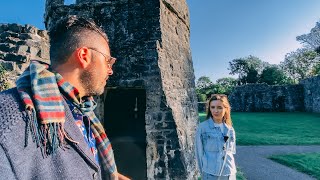
McGraths castle Petigo, Donegal, Ireland, The McGrath story.
Автор: Ever Wander
Загружено: 2023-10-13
Просмотров: 2034
Termon McGrath Castle
Termon McGrath Castle, also known as Castle McGrath, was probably built in the early seventeenth century, probably being built circa 1611, at the start of the Plantation of Ulster. The 'castle' (in reality a Gaelic towerhouse) was built for either The Most Rev. Miler McGrath, Church of Ireland Archbishop of Cashel, or, more likely, his son, James McGrath. During the campaign of 1649-1650, the castle was bombarded by Cromwellian troops, which severely damaged the structure; it seems that the castle was abandoned around this time. A small village, no longer in existence, seems to have grown up immediately outside the castle walls. There was an escape tunnel from the castle to the Belaut River. The castle and lands were sold to the Leslie family of County Monaghan, who controlled the Pettigo estate until the early 20th century.
Castle McGrath Pettigo, County Donegal
Castle McGrath also known as Termon McGrath Castle is situated on the north west shore of lower Lough Erne.
The castle is within the modern county boundary of Donegal and lies approximately one mile from Pettigo village.
The castle possesses some wonderful Elizabethan period military and domestic features, including fashioned gun loops in the lower ground floor and ornate window frames in the upper floors.
The gun loops indicate the transition from blade to firearms during the mid 16th century.
Construction commenced in the late 16th century and was completed in the early 17th century.
The castle was a hugely important symbol of the status of the Clan McGrath in the area between the Clan O'Donnell of Tirconnell, the Clan O'Neill of Tyrone and the Clan Maguire of Fermanagh.
As hereditary Corabs or Termoners of Lough Derg the Clan McGrath were in a unique position of influence and power in the region. The grant and title of Queen Elizabeth I and later of King James I warranted a suitable residence for the Clan McGrath, the result of which is the impressive fortification we see today.
In the power struggles of the early and mid-17th century the Clan McGrath were in the thick of things.
The demise of the castle and the power of the Clan McGrath came during the Irish Confederate Wars 1641 -1653.
In 1641, having sided with the rebellion, the Clan McGrath and their castle came under siege by a northern protestant militia known as the Lagganers.
Rather than surrender, the Clan McGraths burned their own castle. The castle was reported to have had a hidden escape tunnel.
Following the 1641 rebellion and the subsequent Cromwellian campaign in Ireland, the lands of the Clan McGrath, like those of the other major Gaelic families, were confiscated and their titles removed.
There were numerous plans to restore and occupy the castle by subsequent landlords but these never came to fruition.
The castle was left to degrade and crumble, serving as a potent reminder of the days when Gaelic society held sway over the land of Ulster.
Today the castle is situated on private land. There is Horses grazing in the field where the Castle stands.
The Irish Penny Journal published an article on the McGrath Castle
MEMBERS of the McGrath clan worldwide have been descending on the Border village of Pettigo, Co Donegal.
Invitations have been issued to such people as footballer Paul McGrath and GAA manager Peter McGrath to compete for the title of clan chieftain. The chieftain will be chosen at a banquet in Pettigo tomorrow night.
The three day festival was inspired by the legendary 16th century rogue Bishop of Clogher, Dr Miler McGrath, a man who became a Catholic and Protestant bishop and charmed Queen Elizabeth I.
The ubiquitous Dr McGrath was born near Pettigo in 1523 and died in Cashel, Co Tipperary, in 1623. He became a Franciscan priest and shortly afterwards became Catholic Bishop of Down and Connor. However, due to financial difficulties, the flexible Dr McGrath converted to Protestantism, moved to Tipperary and married an O'Meara. He had nine children.
#mcgrath
#ireland
#donegal
#wildatlanticway
#ancestors
#irish
#ancestry
#clan
#history

Доступные форматы для скачивания:
Скачать видео mp4
-
Информация по загрузке: