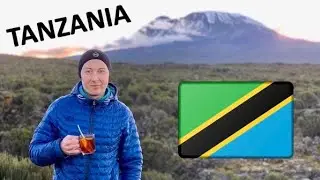
I Got F*cked Up Climbing Kilimanjaro. I Tried I Failed!
Автор: David Hoffman
Загружено: 2024-05-19
Просмотров: 3640
Let me be clear up front that I am not the mountain climber type of person. But for a period of time, I did love traveling to strange and intriguing places. I always thought that I would be safe. But here's what happened to me when I went mountain climbing.
It was in Africa. Kilimanjaro. The continent's tallest mountain. I was going to climb this mountain with one of the classiest, most expensive, top-of-the-line adventure travel tour companies, Butterfield & Robinson out of Canada.
I spent weeks preparing. Exercising. Purchasing the best hiking boots and wearing them in as they recommended. Carrying Quinine. I wasn't nervous at all. But as this video describes, when I got on the airplane and began to hear about malaria my confidence diminished. But when I got to our location at the base of the mountain the tour guide and the other climbers gave me confidence that this was going to be doable. In fact, three of the women, middle-aged, with cigarette smokers. If they could do it, so good I.
What happened to me On this adventure could've been one of the worst experiences of my life. After all, another filmmaker from my state – Maine – had died in the hospital where they put me, of cerebral malaria.
When I got sick and ran down the mountain & was taken to the nearby hospital. They took me to the Kilimanjaro Christian Medical Centre (KCMC) which is the referral hospital for the region.
But this adventure turned out to be uniquely fascinating and I got to know elements of of Africa, of Tanzania, of the Serengeti peoples, that I could never have known as a tourist climbing the mountain.
As this video describes, I got sick. Very sick. And I thought I might have cerebral malaria. I got sent to the only hospital in Moshi, Tanzania, at the foot of the mountain.
Mount Kilimanjaro, Tanzania is the highest free-standing mountain in the world. The fatality rate for Kilimanjaro climbs is around 1 in every 1,000 climbers. The most common causes of death on Kilimanjaro are altitude sickness, falls and heart attacks. 25% of climbers experience some form of altitude sickness which can cause symptoms such as headache, nausea, and shortness of breath.
The weather on Kilimanjaro is unpredictable and harsh. Climbers encounter extreme cold, high winds, rain and even snow at higher elevations.
Climbing Kilimanjaro requires careful planning and preparation which is why I signed up for a tour. Climbers need to arrange for permits, hire a guide and bring all the necessary gear and supplies.
While none of my fellow climbers got altitude sickness, several people who were in the hospital at the same time that I was did. Altitude sickness is also known as acute mountain sickness (AMS). It is a common condition that affects some mountain climbers when they ascend to high altitudes too quickly. The main cause of altitude sickness is the decrease in oxygen levels at high altitudes which can lead to a range of symptoms, including headaches, nausea, fatigue, dizziness, and shortness of breath. In severe cases, altitude sickness can lead to life-threatening complications such as high altitude pulmonary edema (HAPE) and high altitude cerebral edema (HACE). HAPE occurs when fluid accumulates in the lungs, while HACE is a swelling of the brain.
The risk of altitude sickness and its severity depends on several factors, including the altitude reached, the speed of ascent, the level of exertion, and individual factors such as age, fitness level, and previous experience at high altitudes. Some climbers are more susceptible to altitude sickness than others and there is no way to predict who will be affected.
If this story intrigues you – if you enjoyed watching – please click the super thanks button below the video screen. Your support gives me the ability and the confidence to keep telling stories and showing clips from my archive.
Thank you
David Hoffman filmmaker

Доступные форматы для скачивания:
Скачать видео mp4
-
Информация по загрузке: