| Protein |Structure of Amino acid |details |Class 11th| Chapter |Biological Molecules |
Автор: BioChem Wala
Загружено: 2025-06-03
Просмотров: 2675
What Are Proteins?
Proteins are large, complex biomolecules made up of smaller units called amino acids, which are linked together in a specific sequence. They play essential roles in the structure, function, and regulation of the body’s tissues and organs. Every cell in the human body contains protein, and it is vital for growth, repair, and metabolic processes.
Functions of Proteins:
Structural support (e.g., keratin in hair, collagen in skin)
Enzymatic activity (e.g., amylase breaks down starch)
Transport (e.g., hemoglobin carries oxygen)
Hormonal signaling (e.g., insulin regulates blood sugar)
Immune response (e.g., antibodies fight infection)
Movement (e.g., actin and myosin in muscles)
---
What Are Amino Acids?
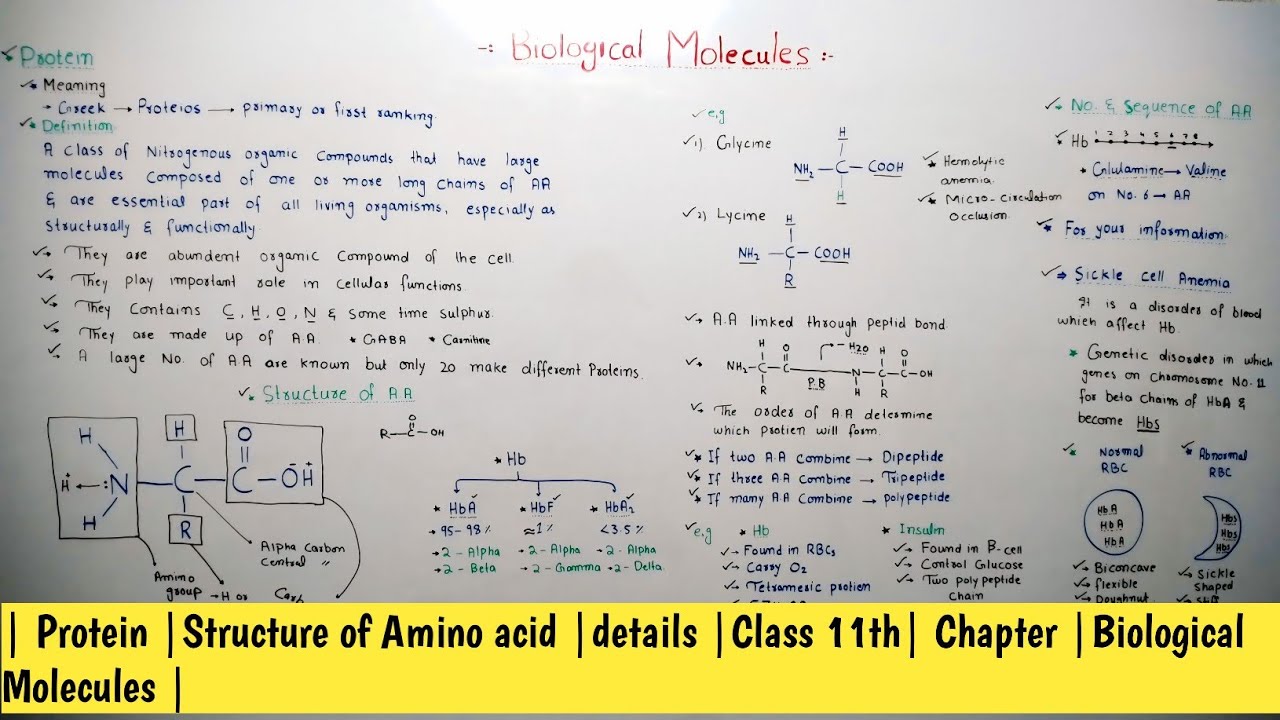
Amino acids are the building blocks of proteins. There are 20 standard amino acids, each with a basic structure: an amino group (-NH₂), a carboxyl group (-COOH), a hydrogen atom, and a unique R group (side chain) all attached to a central carbon atom.
Types of Amino Acids:
1. Essential Amino Acids – Cannot be synthesized by the body and must be obtained from the diet (e.g., lysine, leucine).
2. Non-Essential Amino Acids – Can be made by the body (e.g., alanine, asparagine).
---
Peptide Bonds and Protein Formation
Amino acids join together through peptide bonds (a chemical bond between the carboxyl group of one amino acid and the amino group of another). This forms a polypeptide chain, which folds into a functional protein.
---
Levels of Protein Structure:
1. Primary Structure – Linear sequence of amino acids.
2. Secondary Structure – Folding into α-helices and β-pleated sheets.
3. Tertiary Structure – 3D folding due to interactions between R groups.
4. Quaternary Structure – Combination of multiple polypeptide chains (e.g., hemoglobin).
---
Sources of Proteins:
Animal Sources: Meat, eggs, dairy, fish.
Plant Sources: Lentils, beans, nuts, soy products.
---
Deficiency Diseases:
Lack of proteins can cause:
Kwashiorkor – Swelling, poor growth, and immunity problems.
Marasmus – Severe undernourishment, muscle wasting.
Доступные форматы для скачивания:
Скачать видео mp4
-
Информация по загрузке:


