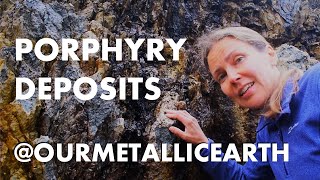
Looking for Copper- How are Porphyry Deposits formed?
Автор: Orogen Royalties
Загружено: 2021-02-09
Просмотров: 42061
Copper is one of the most important global infrastructure metals, and demand for it is rising. In 1980, less than 8 million tons were produced globally – a figure that more than doubled by 2019. And a recent World Bank report suggests demand for copper could rise tenfold by 2050 as the world moves toward a low-carbon future.
Reasons for increased demand include more widespread use of electronics, renewable energy infrastructure such as wind turbines and solar panels, and the integration of electric vehicles, which use 380% more copper than typical internal combustion engines.
Porphyry copper deposits account for more than 65% of global copper production, and these low grade, high tonnage deposits can stay in production for a long time. But how do we find more to meet future demand?
To begin, geologists understand the Earth’s crust to be made up of a number of “plates” that interact with each other by either colliding, pulling apart, or sliding alongside each other. In places where these plates are colliding, a process called “subduction” takes place, whereby one plate is drawn down underneath the other. As the subducted plate heats up at depth, partial melting occurs. In other words, residual water in the slab helps light elements melt and become buoyant, rising into the crust forming mountains called volcanic “arcs”.
Porphyry deposits are part of this partial melting process. At mid to upper crustal levels, a large magma chamber is formed. Porphyritic intrusions and fluids are exsolved from this magma chamber and pass upward through fractures in the rock to form a core of porphyry intrusions and potassic alteration, defined by the ubiquitous presence of potassium feldspar and biotite. Outboard of this potassic core is a halo of propylitic alteration defined by a green coloring of the rocks from the assemblage of minerals epidote, chlorite, calcite, and albite. Upward migration of residual acidic fluids results in the formation of the phyllic zone, defined by a muscovite (also called sericite), quartz, and pyrite assemblage. Finally, as acidic steam travels to the surface, clay alteration of the rocks takes place, forming the argillic alteration typically associated with the so-called “lithocap” environment.
Mineralization occurs primarily within the potassic core and overlying phyllic zone. Copper minerals such as chalcopyrite, bornite, and chalcocite occur along with gold and molybdenite in stockwork veins and disseminated in the host rock.
These predictable alteration and mineralization assemblages help guide geologists looking for copper porphyry deposits. Workers can use mapping and then drilling to define the mineral resource.
To find examples of porphyry copper exploration projects, check out the Llano Del Nogal and Ball Creek projects at orogenroyalties.com.
References
Garside, M., 2020, Copper – statistics and facts, statista.com
Leyo, 2007, World production trend of copper (in million tons per year), USGS report.
Arrobas et al., 2017, The Growing Role of Minerals and Metals for a Low Carbon Future, World Bank Report, https://documents.worldbank.org/en/pu....
Music from www.bensound.com

Доступные форматы для скачивания:
Скачать видео mp4
-
Информация по загрузке: