The Day U S Submarines Silently Stalked Japanese Supply Lines and Crippled Them
Автор: Ultimate War Victory
Загружено: 2026-01-05
Просмотров: 477
March 19, 1944 — Luzon Strait, Western Pacific.
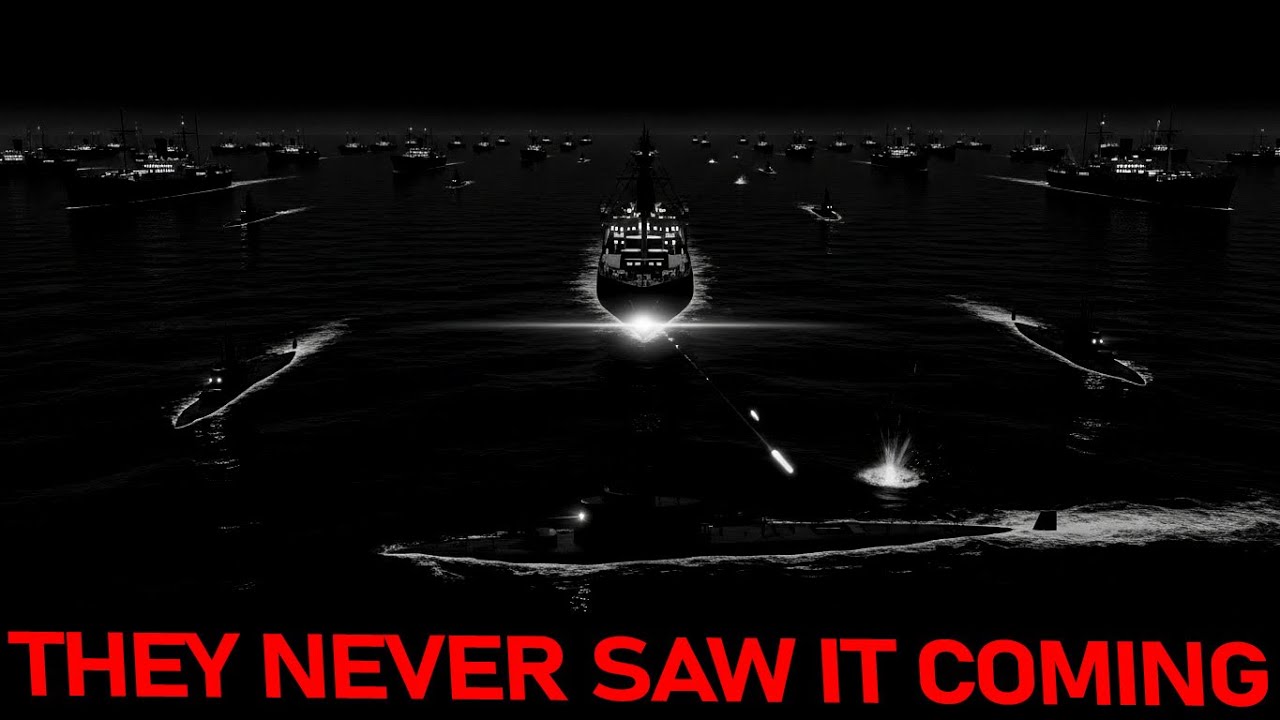
Beneath black water and heavy swells, twelve American submarines lie submerged in absolute silence, stretched across a two-hundred-mile perimeter. No radio chatter. No surface contact. No margin for error. They are not hunting blindly. They are waiting for something very specific.
Japanese Naval Intelligence believes this route is secure.
It is not.
Intercepted communications have revealed Operation Take-Ichi—Japan’s largest coordinated resupply effort in months. Thirty-two merchant vessels loaded with fuel, ammunition, aircraft, and reinforcements, escorted by eighteen warships, moving south from the Home Islands to embattled garrisons across the Pacific. If the convoy arrives intact, Japanese forces could hold their positions for another six months. If it does not, entire defensive fronts will collapse without a fight.
The geography of the Luzon Strait leaves no room for maneuver. Islands and currents funnel shipping into a narrow corridor. American submarine command sees a rare opportunity—not for attrition, but for annihilation.
Twelve submarines are committed. Nearly a quarter of the available Pacific fleet. Each boat arrives independently, under strict radio silence, converging on preassigned positions like pieces of a mechanical trap. Orders are sealed. Timing must be perfect. One premature attack would scatter the convoy and ruin everything.
Before dawn, the Japanese column enters the strait.
They are confident. Radar sweeps. Sonar pings. No contacts. No warning.
At 0445 hours, the first American submarine detects the convoy. A single coded transmission confirms what every skipper already knows—the enemy has entered the kill zone. Moments later, silence returns.
At 0532 hours, the order is given.
What follows is not a battle—it is a coordinated execution.
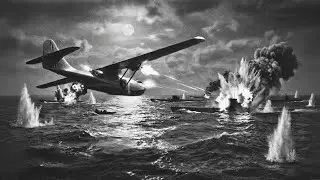
From multiple bearings and depths, American submarines unleash torpedo spreads almost simultaneously. Tankers erupt in fireballs. Freighters break apart. Transports list and sink within minutes. The convoy’s formation collapses under the shock. Escorts race toward explosions that are already obsolete, chasing threats that are no longer there.
The Japanese defensive doctrine is overwhelmed. It was built to counter lone attackers, not a synchronized net of submarines striking from every direction. Confusion spreads. Ships scatter. Radio discipline breaks down. Rescue efforts interfere with defense. The convoy fragments into isolated targets—and is hunted relentlessly.
For over two hours, American submarines stalk fleeing ships, striking methodically, disappearing before effective counterattacks can form. Depth charges fall harmlessly. Sonar contacts dissolve into nothing. The ocean itself becomes the weapon.
By sunrise, the convoy is destroyed.
Twenty-three merchant ships lie sunk or burning. Escorts are crippled or fleeing. Thousands of tons of fuel, food, ammunition, and aircraft vanish beneath the waves. The survivors drift amid oil slicks and wreckage, waiting for help that will not come quickly.
The strategic impact is immediate. Japanese garrisons across the Pacific receive nothing. Airfields go silent. Artillery runs out of shells. Soldiers begin starving without ever seeing an enemy soldier. The collapse comes not from invasion, but from absence—no fuel, no food, no ammunition.
The submarines withdraw as they arrived: unseen, uncelebrated, intact.
This documentary explores the day American submarines stopped operating as lone hunters and became a coordinated killing force—how intelligence, patience, and silence combined to sever Japan’s logistical lifelines and turn the Pacific War irreversibly.
Because empires do not always fall to bombs or battleships.
Sometimes, they drown quietly.
DISCLAIMER
This video is intended solely for educational and historical analysis purposes.
The narrative is based on declassified U.S. Navy records, wartime patrol reports, Japanese naval communications, and established academic research concerning submarine operations in the Pacific Theater during World War II.
Certain sequences are reconstructed to accurately represent tactical coordination, submarine warfare conditions, and command decision-making where complete records are unavailable.
AI-generated visuals, if used, are strictly illustrative and do not fabricate or alter verified historical events.
This content does not endorse war, violence, or military action and focuses on historical strategy, intelligence warfare, and operational outcomes.
Доступные форматы для скачивания:
Скачать видео mp4
-
Информация по загрузке: