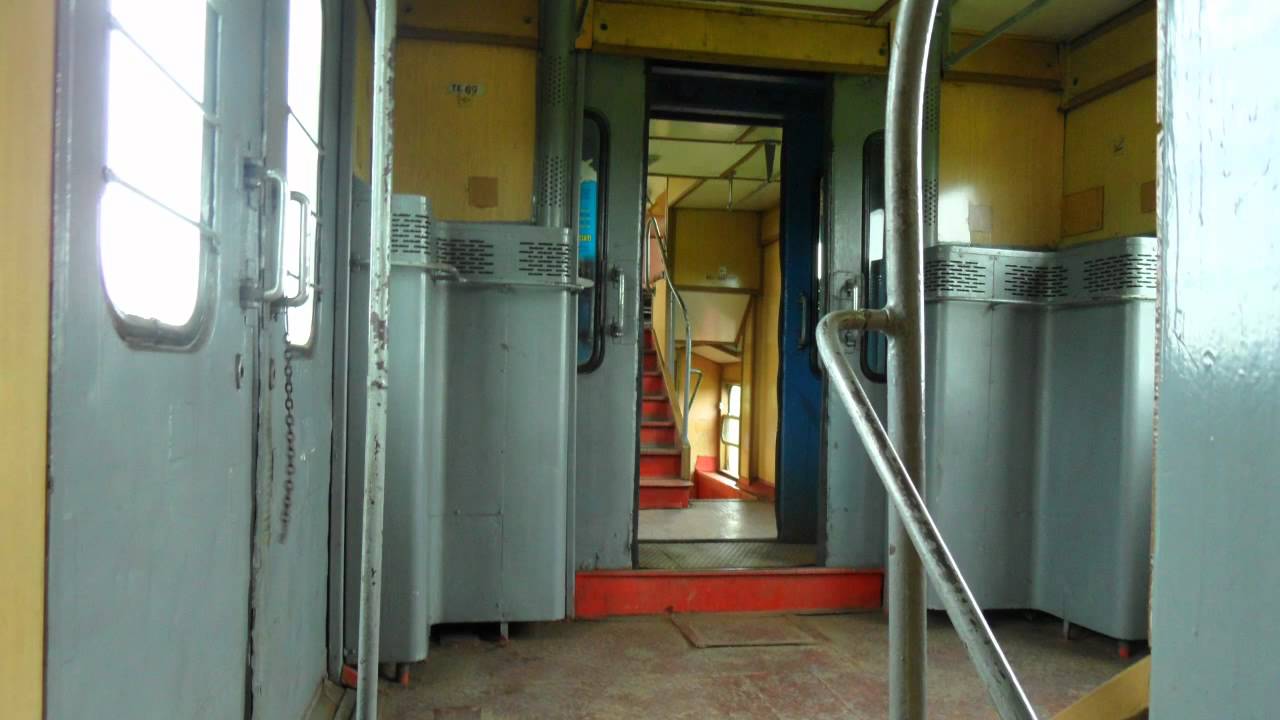
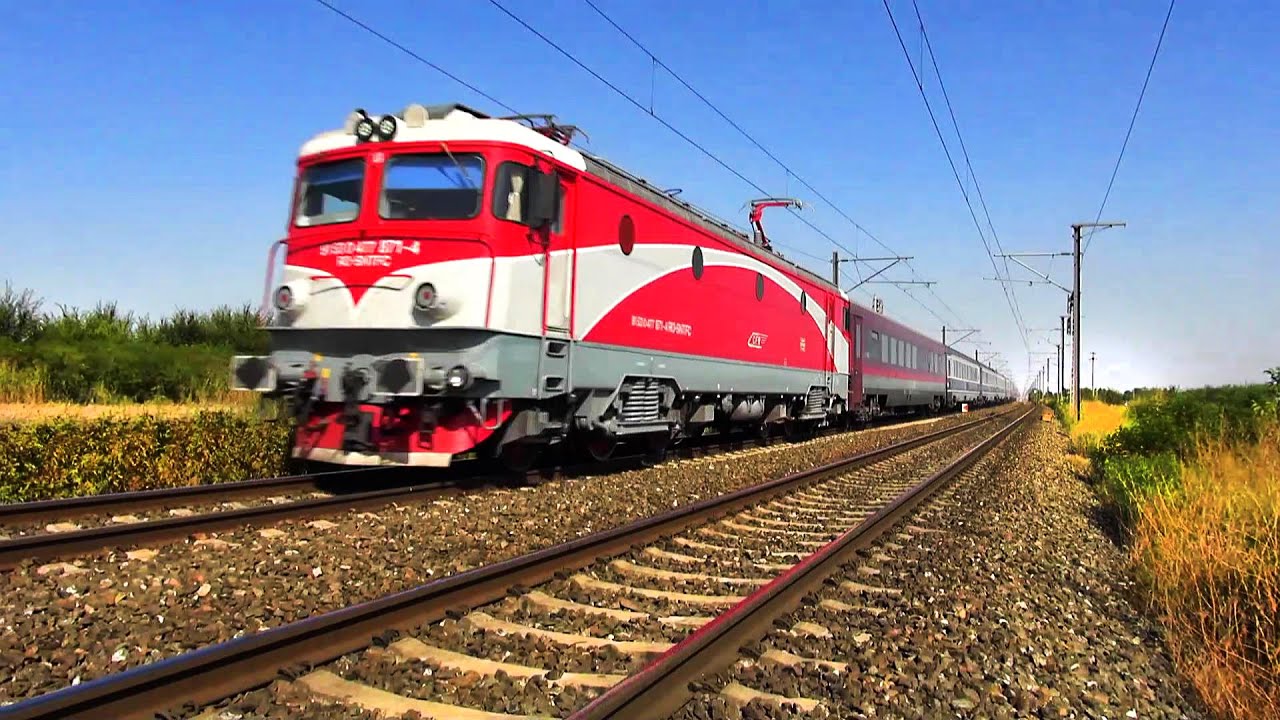
Romania: Walkthrough inside Romanian CFR Regio trains Bhp Wagon type double decker passenger stock
Автор: FrontCompVids
Загружено: 2012-05-30
Просмотров: 13119
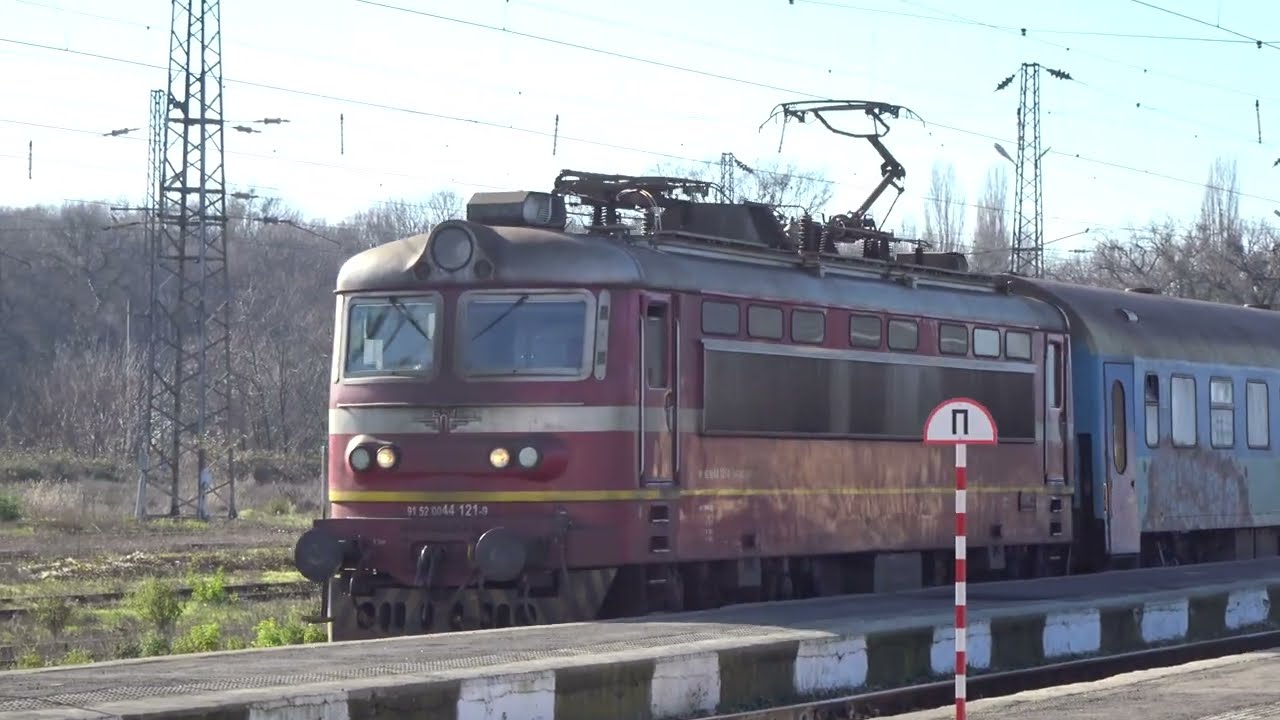
Taken on board train R5455 the 1650 from Bacau to Piatra Neamt which was hauled by CFR Sulzer diesel loco number 60-1160. Recorded 17th May 2012.
These coaches are of the Bhp Wagon (formerly Bipa) type, buit by VEB Waggonbau Görlitz, now part of part of Bombardier Transportation.
-+-+-+-+-+-+-+-+-+-+-+-+-+-+-+-+-+-+-+-+
Căile Ferate Române (abbreviated as CFR) is the official designation of the state railway carrier of Romania. The railway network of Romania consists of 11,380 km (7,070 mi), of which 3,971 km (2,467 mi) (34.9%) are electrified, and the total track length is 22,247 km (13,824 mi), of which 8,585 km (5,334 mi) (38.5%) are electrified. The network is significantly interconnected with other European railway networks, providing pan-European passenger and freight services. CFR as an entity has been operating since 1880, even though the first railway on current Romanian territory was opened in 1854.
CFR is divided into four autonomous companies:
CFR Călători, responsible for passenger services;
CFR Marfă, responsible for freight transport;
CFR Infrastructură, manages the infrastructure on the Romanian railway network; and
Societatea Feroviară de Turism, or SFT, which manages scenic and tourist railways.
CFR Călători, the passenger service division of CFR, operates seven types of passenger train, both on Romania's territory, with rolling stock and locomotives, or internationally, with rolling stock. Also, CFR operates international trains on Romanian territory with its own locomotives. The train types vary in terms of speed and type of rolling stock. In 2010, approximately 58 million passengers have traveled with the company. 10 million travelers have preferred private equity firms in particular on the side lines.
CFR train types are:
Regio (R) -- the trains have assigned numbers from 2000 to 9999
InterRegio (IR) -- the trains have assigned numbers from 200 to 499, 600 to 999, 1000 to 1999 and 10000 to 14999
InterCity (IC) -- numbered from 500 to 599
EuroCity (EC) -- numbered as IC trains from 500 to 599
EuroNight (EN) -- numbered as IC trains from 500 to 599
Special (S) -- tourist trains operated on scenic routes with vintage rolling stock, numbered from S1 to S9
-+-+-+-+-+-+-+-+-+-+-+-+-+-+-+-+-+-+-+-+
Aside from the seven main train types, CFR also operates night trains, which can be of any status (usually Rapid, InterCity or EuroNight). Freight trains, operated by CFR Marfă, have a different numbering system.
Regio trains (regional), formerly Personal trains (until December 2011), also known as commuter trains (navete or trenuri de navetiști), are the most abundant type of trains on the CFR passenger network. They are used for two main purposes, as shuttle, or commuter, trains, linking towns with neighbouring villages, and linking neighbouring cities with each other.
Personal trains now regio, have the lowest average speed (34.3 km/h in 2004) and the least-comfortable (usually oldest) rolling stock, and have a reputation for being very slow, crowded and generally unkempt which is only gradually changing. Regio trains operate mostly on local routes and stop at every station. Train fares for this type are the cheapest, since no supplement is paid, only the base fee, based on distance. Seats are not reservable.
Most Regio rolling stock consist of uncompartmented single and double-decker cars. Some train services of this type, especially on rural routes, only have 2nd class rolling stock (i.e. there are no 1st class carriages). As of 2007, most Regio trains have only 2nd class cars. The livery of most Regio cars is painted in blue, with the rolling stock built in the 1970s and 1980s. Some very short rural routes in Romania's Bukovina region use rolling stock from the 1940s and 1950s, refitted with bus seats and operating like railbuses. CFR is currently refurbishing a range of double-decker Personal cars, that will be used on Personal and Accelerat trains. The refurbished cars, painted in exactly the same livery as the old ones, have been introduced since 2003, and are cleaner, although they still use most of the old fittings. Some routes (like Sibiu--Craiova) are operated by Desiro trainsets whereas others are operated by modernized electric trainsets.
-+-+-+-+-+-+-+-+-+-+-+-+-+-+-+-+-+-+-+-+
More FrontCompVids clips are regularly added to so don't forget to Like and Subscribe!
Click / frontcompvids for more details :-)

Доступные форматы для скачивания:
Скачать видео mp4
-
Информация по загрузке:





![Prezentacja wagonu piętrowego na stacji Hel 2019 [4K]](https://imager.clipsaver.ru/2fY-FdfK0FY/max.jpg)
![Trains in Romania | Passenger & freight [August 2022] 🚆](https://imager.clipsaver.ru/m9ca_ezNE6c/max.jpg)